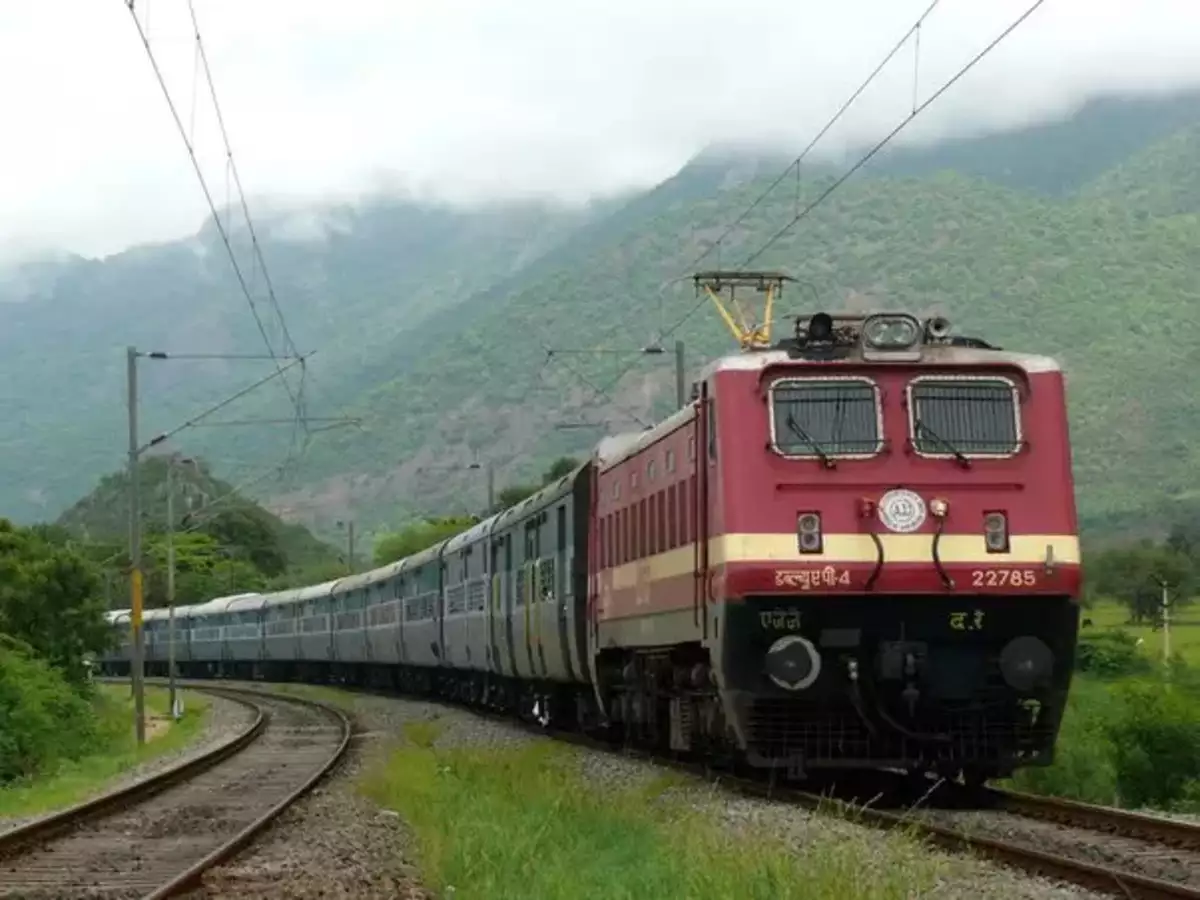
India has set a new benchmark in railway manufacturing by producing a record 1,681 locomotives during the financial year 2024-25, surpassing the locomotive output of major global regions including the United States, Europe, South America, Africa, and Australia.
This remarkable achievement underscores India’s growing prowess in the railway sector and highlights its commitment to sustainable, eco-friendly transport solutions. The production surge marks an increase of 209 locomotives, or 19%, compared to the 1,472 locomotives manufactured in the previous fiscal year. This leap not only reflects the efficiency of India’s railway manufacturing ecosystem but also the strategic focus on enhancing freight and passenger transport capabilities to support the nation’s economic growth. India’s locomotive production has seen a dramatic upward trajectory over the past decade. Between 2004 and 2014, the country produced 4,695 locomotives, averaging around 470 annually. However, the period from 2014 to 2024 witnessed a significant acceleration, with 9,168 locomotives produced, pushing the annual average to approximately 917. This growth trajectory aligns with India’s broader infrastructure development goals, aimed at transforming the country into a global logistics hub.
The majority of these locomotives are intended for freight services, underscoring the strategic emphasis on strengthening India’s supply chain network. Among the 1,681 units produced, 1,047 were WAG-9/9H locomotives, which are designed for heavy freight transport. Additionally, the production included seven WAG-9HH locomotives, 148 WAG-9 Twin locomotives, two WAP-5 locomotives, 272 WAP-7 locomotives, five NRC locomotives, 100 WAG-12B locomotives, and 100 WDG 4G/6G locomotives. The production was distributed across several key manufacturing units: Chittaranjan Locomotive Works (CLW) led with 700 units, followed by Banaras Locomotive Works (BLW) with 477 units, and Patiala Locomotive Works (PLW) with 304 units. The Madhepura and Marhowrah units contributed 100 locomotives each, highlighting the growing capacity and decentralisation of locomotive manufacturing across the country.
Officials have highlighted that the surge in production is not just a matter of quantity but also quality. The new locomotives are designed with advanced technologies that enhance energy efficiency, reduce carbon emissions, and improve operational performance. This aligns with India’s commitment to achieving net-zero carbon emissions by 2070 and its focus on sustainable infrastructure development. The emphasis on eco-friendly locomotives is evident in the adoption of technologies that minimise environmental impact. The WAG-12B and WDG 4G/6G series, for instance, incorporate energy-efficient features and are expected to play a pivotal role in the transition towards greener rail transport. These advancements are critical in reducing the carbon footprint of the freight sector, which is a major contributor to greenhouse gas emissions in India. Furthermore, the increased locomotive production capacity is expected to support India’s ambitious plans for the development of high-speed rail networks, including the Mumbai-Ahmedabad bullet train project. It will also enhance the efficiency of freight corridors, facilitating faster and more reliable movement of goods across the country, thereby boosting economic activities in various sectors.
The record-breaking production also reflects India’s strategic intent to position itself as a global leader in railway technology and manufacturing. By surpassing the locomotive production capacity of traditional railway powerhouses, India is not only enhancing its domestic transport infrastructure but also strengthening its position in the global railway market. This achievement is expected to have far-reaching impacts on employment generation, with the railway manufacturing sector creating thousands of jobs across various skill levels. Moreover, the growth in production capacity will stimulate ancillary industries, including steel, electronics, and engineering services, contributing to broader economic development.
As India continues to invest in railway infrastructure, the focus will remain on sustainability, innovation, and inclusivity. The record locomotive production in FY25 is a testament to the country’s progress in building a resilient, eco-friendly, and efficient transport network that supports both economic growth and environmental sustainability.
India Breaks Record with 1681 Locomotives in FY25 Surpassing Global Leaders