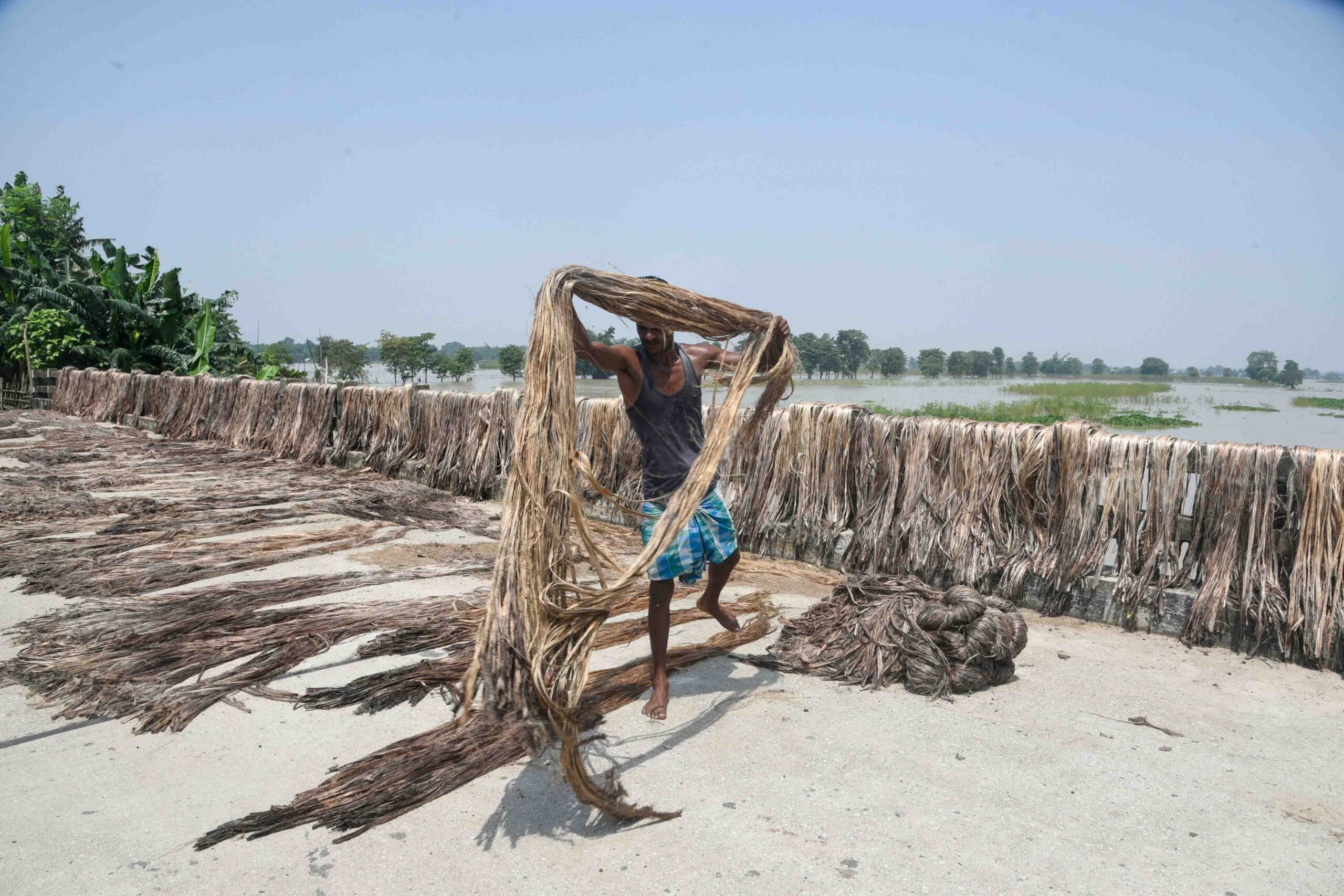
India Bans Jute Imports to Protect Rural Jobs and Local Manufacturing Economy
India has imposed restrictions on jute imports from Bangladesh, citing unfair trade practices that harm local industries and rural livelihoods. As per a new notification issued on June 27, 2025, jute and allied products will not be allowed through any Indian land or sea ports, except Mumbai’s Nhava Sheva. The move follows earlier curbs on Bangladesh’s apparel shipments.
The restrictions apply to jute fibre, yarn, and woven products from Bangladesh, including flax waste and unbleached fabrics. These products, previously enjoying duty-free access, have now been barred from entering India through all land and sea ports. Only the Nhava Sheva port remains an exception. Trade insiders say this decision aims to protect India’s jute industry, which has long suffered due to subsidised and dumped imports that suppress local market prices.
Officials explained that India’s concerns over jute subsidies were repeatedly raised with Bangladesh. However, only minimal adjustments were made despite longstanding requests. Authorities noted that incentives offered to Bangladesh’s value-added jute exports have kept Indian mills under pressure. With over four lakh workers dependent on the jute sector across states like West Bengal, Bihar, and Odisha, Indian producers have been demanding stronger safeguards against cheap imports.
Friday’s order specifically includes a range of jute-related items such as yarn waste, bast fibres, single yarn, and flax fabrics. While the restrictions don’t affect Bangladesh’s exports to Nepal and Bhutan, India has barred re-export of these items from either country into its own market. Authorities are also tightening monitoring mechanisms to prevent such backdoor entry and ensure that the new policy is fully enforced at all checkpoints.
Indian stakeholders argue that subsidised imports from Bangladesh have led to depressed prices, lower farmer incomes, and rising unemployment due to underutilised mill capacities. By restricting market access, India aims to revive domestic jute production, stabilise rural earnings, and boost industrial employment. Trade experts believe this move could mark a broader shift in India’s import policy, especially in sectors where local livelihoods are at risk due to global trade imbalances.
The entry restrictions on Bangladesh’s jute exports reflect India’s efforts to shield its rural economy and labour-intensive industries from unfair competition. By clamping down on underpriced imports, the government hopes to secure fair market conditions for jute farmers and mill workers. Officials have signalled stricter enforcement to prevent circumvention and maintain integrity in the domestic jute sector’s recovery.