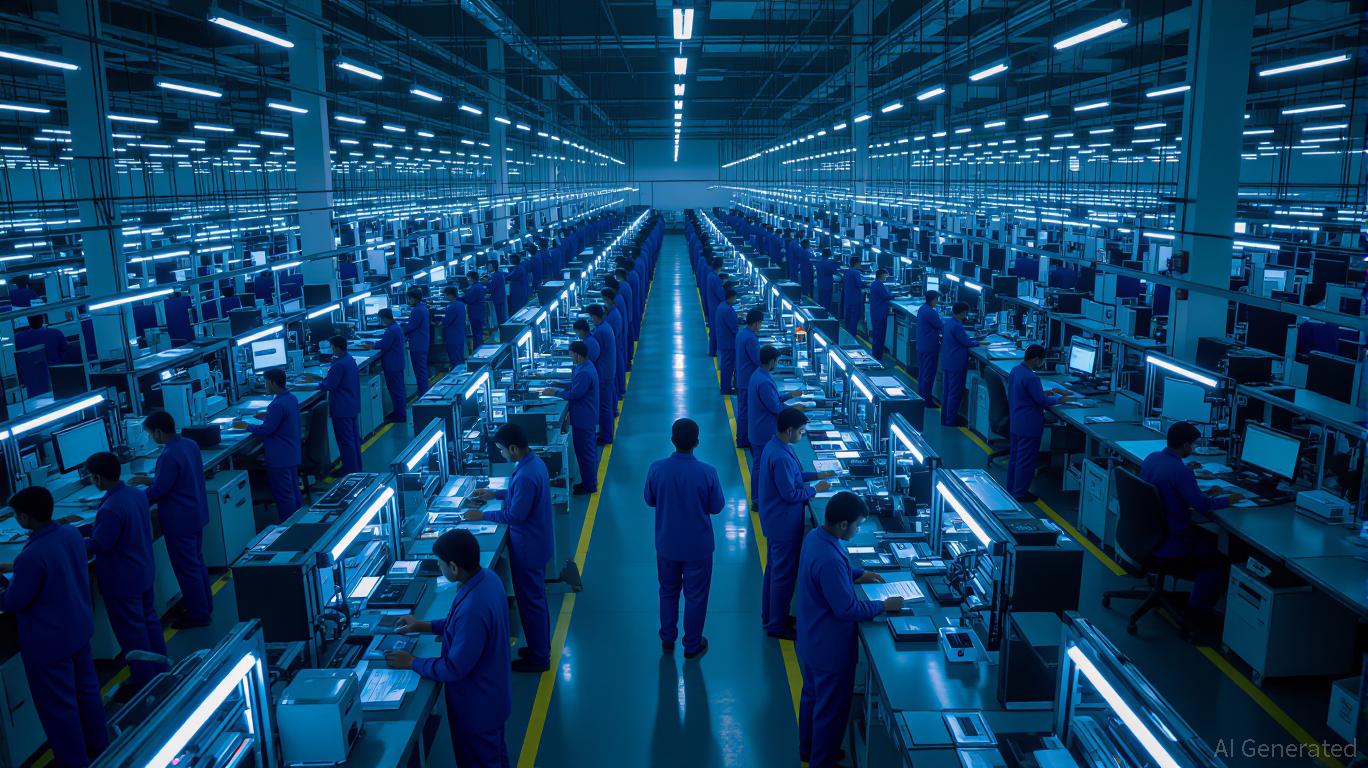
India Approves Electronics Manufacturing Expansion Across States
India has cleared a new set of manufacturing investments under its electronics component incentive framework, signalling a deeper push to localise supply chains and distribute industrial growth beyond a handful of established hubs. The latest approvals cover 22 projects across eight States, reinforcing the government’s effort to strengthen domestic electronics manufacturing while aligning industrial expansion with regional development goals.
The sanctioned proposals are expected to unlock over ₹41,800 crore in fresh investment and generate production worth more than ₹2.5 lakh crore over their lifecycle, according to official estimates. Industry analysts view the move as a critical step in reducing India’s dependence on imported electronic components, particularly in segments that underpin consumer devices, telecom networks, automobiles, and strategic electronics.Unlike earlier phases of electronics manufacturing that focused largely on final assembly, the current approvals place emphasis on upstream and mid-stream components. These include bare components such as printed circuit boards, connectors, enclosures, and lithium-ion cells, as well as sub-assemblies like camera and display modules. Supply chain materials such as aluminium extrusion and anode materials are also part of the approved portfolio, pointing to a more integrated manufacturing ecosystem.
Urban economists note that electronics components manufacturing has a disproportionate impact on city economies compared to assembly-led plants. Component facilities tend to be more capital-intensive, technology-driven, and employment-dense, creating demand for skilled labour, logistics infrastructure, and ancillary services. The projects are expected to generate close to 34,000 direct jobs, with indirect employment likely to be significantly higher as supplier networks expand.Geographically, the approved projects span States in southern, northern, western, and central India, including Andhra Pradesh, Tamil Nadu, Karnataka, Maharashtra, Haryana, Uttar Pradesh, Madhya Pradesh, and Rajasthan. This dispersion reflects a deliberate policy shift toward balancing industrial growth across regions, easing pressure on metro cities while catalysing manufacturing clusters in emerging urban corridors.
Urban planners highlight that electronics manufacturing zones often become anchors for broader city development, driving demand for housing, transport connectivity, power reliability, and water infrastructure. When aligned with sustainable planning, such clusters can support compact, employment-rich cities that reduce long-distance commuting and improve economic inclusion.The electronics component manufacturing scheme is also seen as strategically significant amid global supply chain realignments. With geopolitical uncertainties and rising costs in traditional manufacturing centres, India is positioning itself as a stable, scalable alternative for high-value electronics production.
Going forward, experts caution that timely project execution, workforce skilling, and environmental compliance will determine whether these approvals translate into durable industrial capacity. If implemented effectively, the latest tranche could mark a shift from assembly-led growth toward a more resilient, technology-driven urban manufacturing economy.