


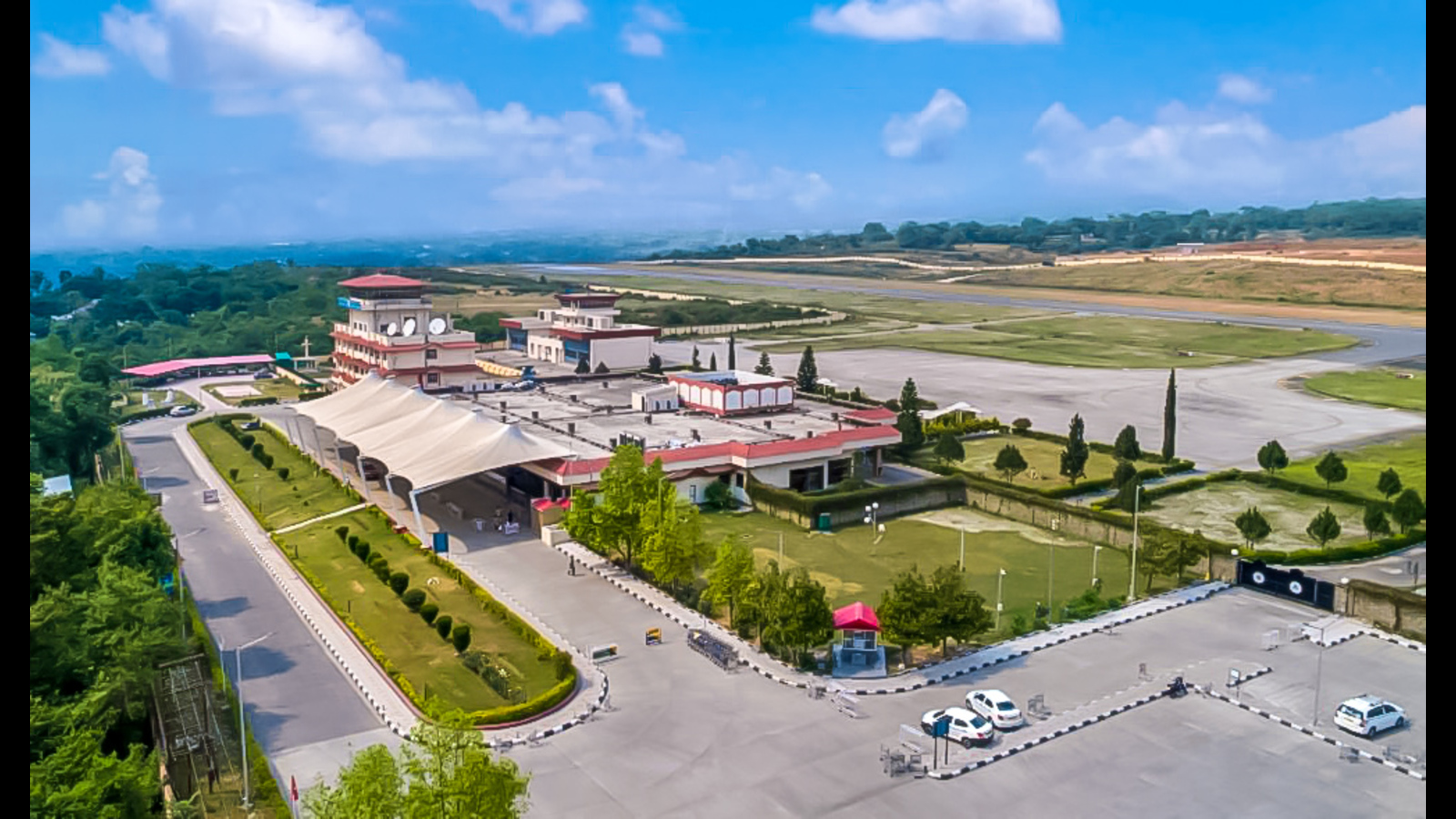
India will add 50 new airports over the next five years, a move the Union Civil Aviation Minister said will significantly reshape urban growth and unlock fresh real estate corridors across the country. The expansion signals a deeper alignment between aviation infrastructure and land development, particularly in emerging regional markets.
Speaking at an industry conclave in the capital, the minister described airports as foundational infrastructure that catalyse commercial districts, logistics parks, housing clusters and hospitality projects. India currently operates 165 airports and has been among the fastest-growing aviation markets globally. Officials say the pace of construction averaging a new airport or terminal roughly every month reflects both passenger growth and policy thrust on regional connectivity. The government’s target to scale up aviation infrastructure is expected to accelerate land value discovery around upcoming airport zones. Urban economists note that airport-led development typically drives mixed-use townships, warehousing hubs and office clusters within a 20–30 kilometre radius. For secondary cities, this can alter economic geography by drawing investment away from saturated metropolitan cores. Policy discussions are also underway to rationalise height restrictions near airports while maintaining safety compliance. Developers have long flagged that rigid obstacle limitation norms constrain urban form and limit high-density projects in prime zones. Any calibrated reform, planners suggest, would need to balance aviation safety with optimal land utilisation.
The aviation push coincides with projections that India’s real estate sector could reach a trillion-dollar valuation by 2030 and expand multiple times over the next two decades. Analysts say such growth will depend less on speculative demand and more on infrastructure-backed urbanisation. Airport ecosystems often described as aerotropolises integrate cargo terminals, business parks, retail, hotels and residential neighbourhoods in a single planning framework. Globally, cities such as Dubai and Singapore have demonstrated how aviation-led planning can anchor economic diversification. In India, similar models are emerging around greenfield airports in states including Uttar Pradesh, Maharashtra and Gujarat. However, urban policy experts caution that infrastructure-led growth must integrate sustainability benchmarks. Airports are high-energy assets, and the surrounding development footprint can intensify carbon emissions unless mitigated through transit-oriented planning, renewable energy adoption and water-sensitive design. Ensuring affordable rental housing within these corridors is equally critical, especially as young professionals migrate to new economic hubs. The minister also emphasised a shift from focusing solely on asset creation to improving overall liveability. Real estate, he noted, must address not just standards of living but quality of living an area linked to pollution control, public transport integration and access to green spaces.
As India expands its aviation grid, the next five years could redefine how infrastructure shapes land markets. Whether this transformation delivers inclusive and climate-resilient urban growth will depend on how effectively airport expansion is integrated with planning reforms, housing strategy and environmental safeguards.
Also Read: Pune real estate eyes healthcare infrastructure push
India airport expansion to spur real estate
