


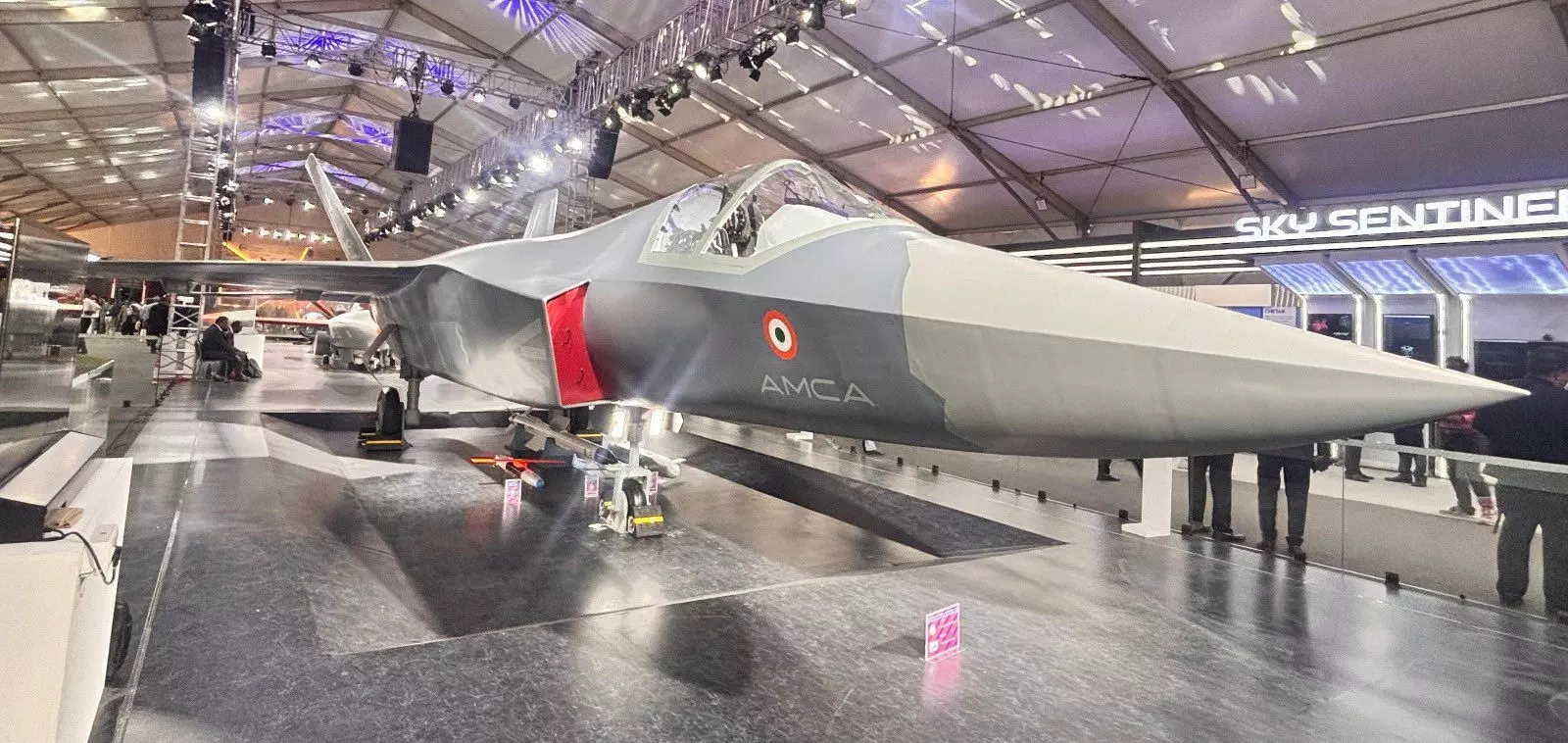
India has taken a significant leap in advancing its indigenous defence capabilities with the approval of the execution model for the country’s ambitious fifth-generation stealth fighter jet, the Advanced Medium Combat Aircraft (AMCA).
The Defence Ministry has sanctioned the detailed framework that will guide the design and production of this state-of-the-art combat aircraft, underscoring India’s resolve to fortify its air power amid shifting geopolitical realities. The AMCA, envisaged as a medium-weight deep penetration stealth fighter, is expected to complement the Indian Air Force’s existing fleet, particularly alongside the Tejas Light Combat Aircraft. The indigenous programme seeks to position India among the select nations capable of producing a cutting-edge stealth fighter with advanced avionics, radar evasion, and enhanced combat capabilities.
According to defence officials, the Aeronautical Development Agency (ADA) will spearhead the project’s development, in close collaboration with leading industry partners from both public and private sectors. This partnership model is intended to harness domestic expertise while promoting technology transfer and manufacturing scalability, thereby supporting India’s broader push for self-reliance in defence production under the ‘Make in India’ initiative. The execution model’s approval follows in-principle clearance from the Cabinet Committee on Security, which had endorsed the AMCA programme last year in response to rising regional defence challenges. The growing military capabilities of neighbouring countries, especially China’s rapid technological advancements in air power, have intensified the strategic imperative to develop indigenous advanced fighter jets.
Financially, the project’s initial outlay has been estimated at approximately Rs 15,000 crore, reflecting the complex and capital-intensive nature of developing a fifth-generation fighter. This investment is not only a testament to India’s ambition but also indicative of the long-term vision to sustain air defence superiority. Experts highlight that the AMCA project has considerable potential to catalyse innovation in aerospace engineering and defence technology within India, generating employment and strengthening the domestic industrial ecosystem. The emphasis on stealth technology and fuel efficiency also aligns with sustainable defence development, reducing carbon footprint while enhancing operational capabilities.
The Indian Air Force’s endorsement of the AMCA is pivotal, as it envisages the fighter as a critical asset to meet future combat requirements and maintain aerial dominance. The advanced stealth features will enable the aircraft to operate in high-threat environments with greater survivability and lethality. While the project is in its early stages, officials indicate that the focus will remain on rigorous testing, iterative design improvements, and adherence to global standards of quality and safety. This cautious yet progressive approach aims to ensure that the final aircraft meets operational readiness timelines and delivers on performance expectations.
India’s pursuit of the AMCA reflects a broader strategic narrative that intertwines technological innovation with national security and economic self-sufficiency. By fostering indigenous capabilities, the country not only reduces dependency on foreign imports but also strengthens its position in the global defence manufacturing arena. As the programme moves ahead, it will be closely monitored by defence analysts and industry observers for milestones in prototype development, engine integration, and stealth technology validation. Success in this venture could pave the way for future upgrades and export opportunities, contributing to India’s stature as a regional and global power.
In summary, the Defence Ministry’s approval of the execution model for the AMCA represents a milestone in India’s defence modernisation journey. It reflects a blend of strategic foresight, technological ambition, and sustainable development principles that are essential for building a resilient, future-ready air force.
Also Read : India’s Indigenous Fighter Jet Project Receives Approval
