


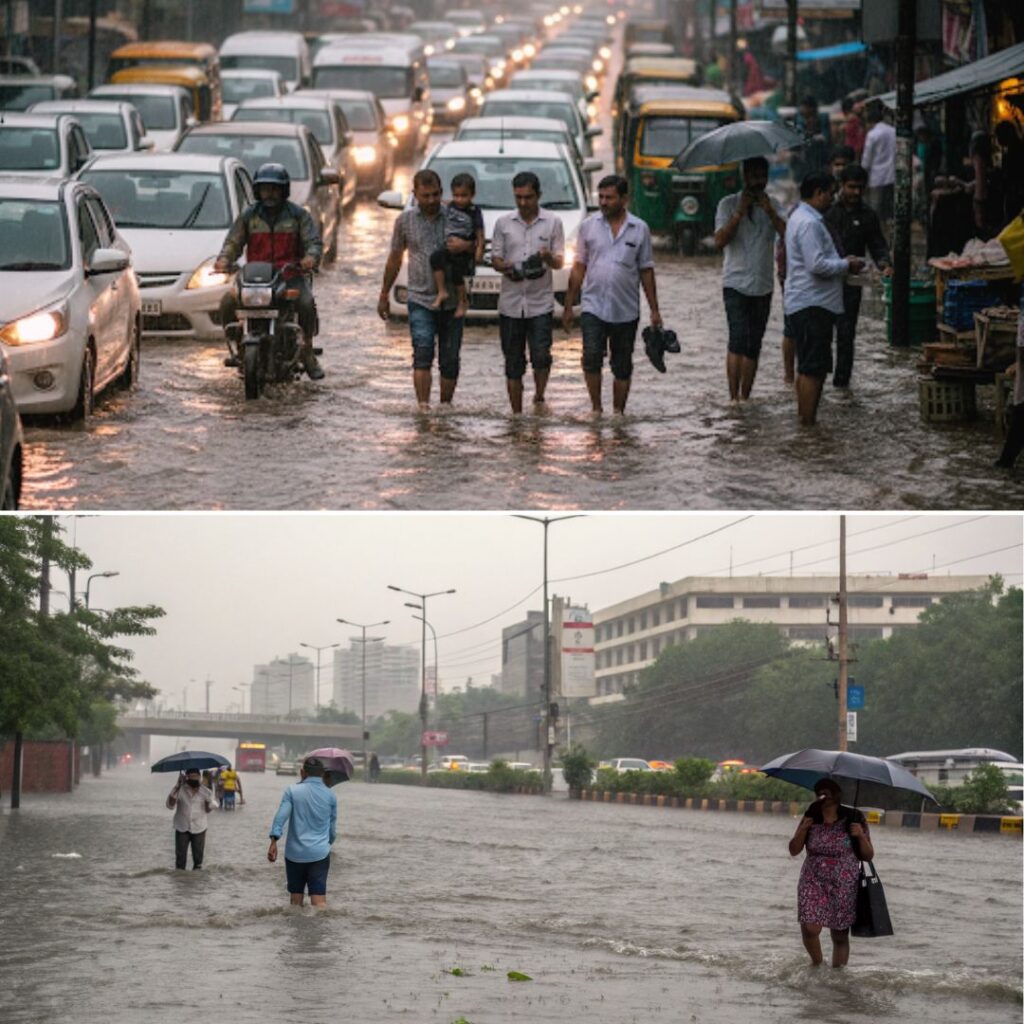
Mumbai rains have once again put Maharashtra on edge, with the India Meteorological Department (IMD) issuing an orange alert for four districts including Mumbai, Raigad, Thane and Palghar. Over the past 48 hours, incessant downpour has led to the loss of more than ten lives and forced the evacuation of thousands across the state. Officials confirmed that Mumbai has already crossed the 3,000 mm rainfall threshold this monsoon season, underlining the severity of this year’s climatic event.
The State Disaster Management Department reported multiple rain-linked fatalities, with four deaths in Nashik, two each in Dharashiv and Ahilyanagar, and one each in Jalna and Yavatmal. In parallel, more than 11,800 residents have been rescued from inundated zones across Maharashtra. Relief camps are witnessing an inflow of families displaced by the floods, a reminder of the state’s vulnerability during extreme monsoon cycles. One of the most pressing developments has been the overflow of the Jayakwadi dam on the Godavari River in Marathwada. Authorities were compelled to open all 27 gates, discharging 1.25 lakh cusecs of water. This move, while critical for dam safety, led to the evacuation of nearly 7,000 people from Paithan in Chhatrapati Sambhajinagar. The nearby Harsul Circle recorded an alarming 196 mm of rainfall in just 24 hours, with adjoining districts such as Beed, Nanded and Parbhani also experiencing intense showers.
The frequency and intensity of such heavy rain events are increasingly being linked by climate experts to the impacts of global warming and erratic weather patterns. Urban planners warn that unplanned urbanisation, concretisation, and inadequate stormwater systems are aggravating the damage caused by extreme rainfall, particularly in a megacity like Mumbai. Experts emphasise that the need for climate-resilient infrastructure, sustainable drainage systems, and equitable housing has never been more urgent. Beyond the immediate tragedy, these rains highlight the looming climate risks that threaten both urban and rural Maharashtra. Officials have underscored that disaster management strategies are being deployed, including round-the-clock monitoring and coordinated relief measures. However, environmental analysts argue that such responses remain reactive and must evolve into long-term climate adaptation strategies.
The unfolding crisis is not merely about disrupted transport or delayed services; it is about human survival in an increasingly fragile environment. The displaced households, loss of lives, and repeated flooding events serve as stark reminders of the pressing need to redesign Indian cities around sustainability and resilience. Unless both state and civic bodies invest in green infrastructure, restore natural floodplains, and strengthen community preparedness, Mumbai and its neighbouring districts may continue to endure the brunt of climate-induced disasters.
Also Read: Kochi High Court Forms Panel To Review Sewerage Network
