


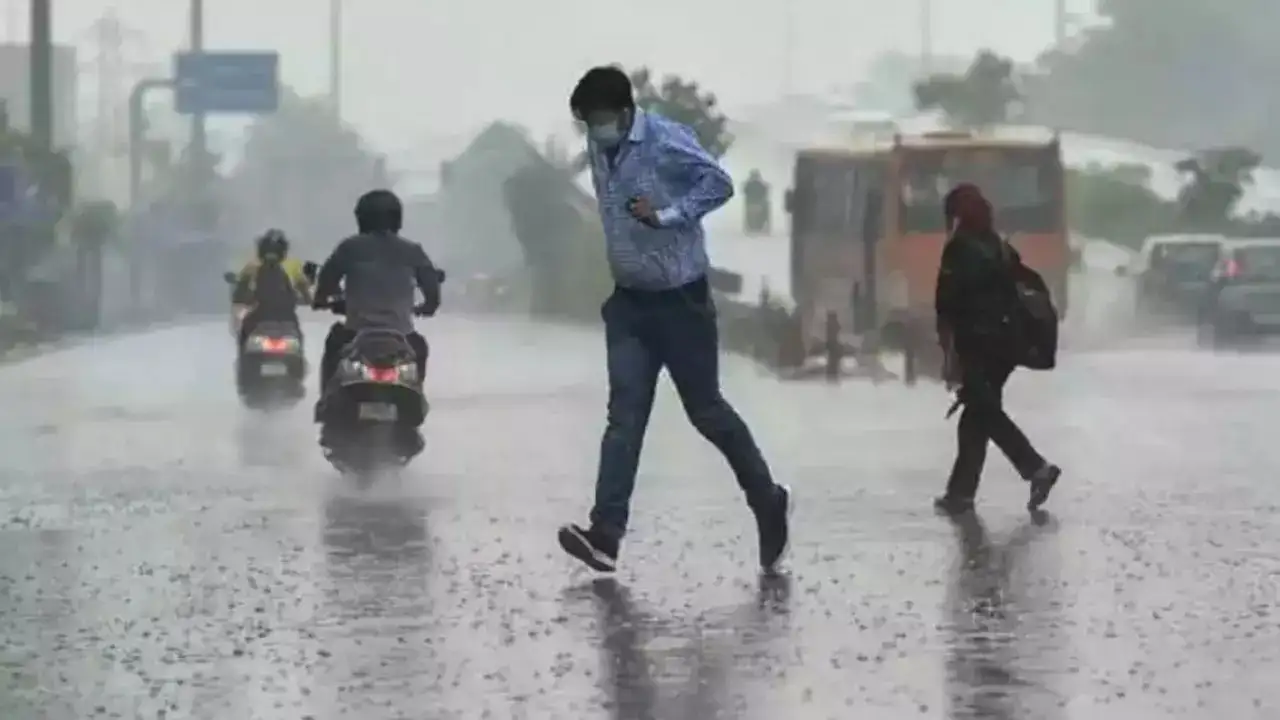
Mumbai was placed under an orange alert on Friday evening after persistent rain escalated into a heavy downpour, disrupting normal routines and forcing weather officials to raise the warning level. The advisory, issued by the India Meteorological Department (IMD), remained in effect till early Saturday, cautioning residents of the possibility of heavy to very heavy rainfall in isolated areas.
The day began with overcast skies and intermittent showers, but conditions deteriorated as the afternoon progressed. A steady spell of rainfall soon overwhelmed traffic movement, slowed down public transport, and dampened a large-scale protest at Azad Maidan. By 4 pm, the IMD revised the city’s status from a yellow to an orange alert, reflecting the growing intensity of the showers. Officials confirmed that no weather alerts have yet been sounded for Saturday. Orange alerts signify conditions that demand preparedness, urging civic authorities and citizens to remain cautious about flooding, waterlogging, and possible transport disruption. With Mumbai’s dense population and fragile drainage systems, such alerts often raise concerns about how effectively the city can withstand climate-linked challenges.
Experts highlighted that the shift from yellow to orange reflects a precautionary approach aimed at strengthening disaster readiness. “The monsoon pattern is shifting with heavier spells in shorter windows. This makes drainage capacity, public transport resilience, and community preparedness crucial in safeguarding the city,” said an official monitoring urban climate adaptation. The rain’s impact was felt across several city zones, with commuters struggling as trains and buses slowed down. Suburban stretches reported water accumulation, while arterial roads witnessed traffic bottlenecks. The disruption also underscored the vulnerability of large gatherings, with the ongoing protest at Azad Maidan forced to thin out as waterlogging intensified.
Urban planners have consistently flagged the need for sustainable interventions to handle such recurring climate events. Expanding green cover, integrating rainwater harvesting systems, and strengthening stormwater drainage are viewed as urgent measures that can mitigate the impact of such heavy downpours. Without these, the city risks a cycle of alerts, warnings, and disruption every monsoon season. Meteorological officials continue to track the rainfall system hovering over the western coast. While the immediate concern is localised flooding, experts suggest that erratic monsoon behaviour in metropolitan centres is becoming more frequent, pointing to the broader impact of climate change.
For Mumbai residents, Friday’s rain was yet another reminder that extreme weather is no longer occasional. It demands resilient infrastructure, swift governance, and a shift in collective urban practices. With the IMD’s warning in place till Saturday morning, the city’s preparedness remains under close scrutiny, reflecting the fragile balance between nature’s intensity and human response.
Also Read : Mumbai Monorail Faces Disruption As Two Trains Stop Running After Technical Glitches
