


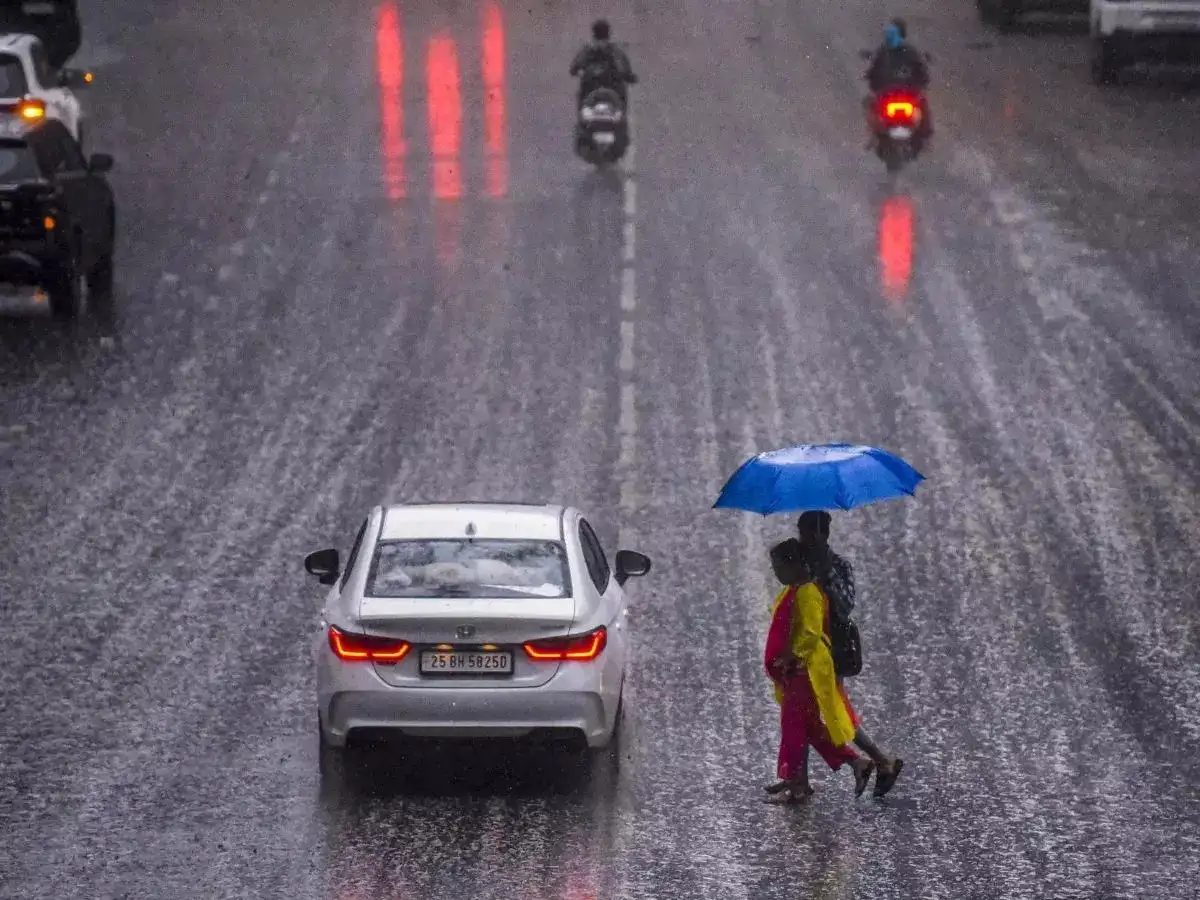
Pune is set for a week of persistent showers under cloudy skies, with the India Meteorological Department (IMD) forecasting moderate to light rainfall from Monday through Saturday and temperatures hovering between 27–29 °C. Humidity is expected to remain steady around 55–88%, following an orange alert for nearby ghats and ghat region warning of possible intensification on 26 June.
Mumbai-region ghats, including Tamhini and Lonavla, have already experienced significant recent precipitation, with the former recording 370 mm and the latter 205 mm in just one day. Pune’s own rainfall was modest by comparison but still impactful—Shivajinagar saw 25.7 mm, while Pashan and Lohegaon recorded 33.8 mm and 26.6 mm respectively. The city’s reservoir system has benefitted from the wet spell: Khadakwasla, Panshet, Varasgaon, and Temghar dams collectively hold 10.17 TMC (34.9% of total capacity), bolstered by recent inflows—Khadakwasla alone recorded over 40 mm in a 24-hour period. This inflow allows safer drawdowns to manage rainfall runoff.
Despite the saturation, IMD alerts warn of rising rainfall intensity across northwest and central India, including Maharashtra’s ghats, with a sizeable low-pressure system approaching. However, statewide rainfall remains spatially uneven: while Pune district has exceeded its June norm with 248.8 mm (110% of average), at least 20 Maharashtra districts, particularly in Marathwada and Vidarbha, still record large deficiencies—from 60% to nearly 90% below normal. The gap is partly due to most earlier weather disturbances tracking over the Arabian Sea rather than the Bay of Bengal. For everyday life and city operations, this month-long #zeroemissions rainfall offers both relief and resistance. The monsoon encourages water replenishment, cools urban heat, and supports ecological vitality—but also imposes stress on infrastructure. Pune Municipal Corporation (PMC) has acted swiftly, de-silting drains and curbing dam releases to control flooding risks. Yet residents still report potholes and underpass issues.
Humidity meanwhile is projected to stay within a narrow band of 55–88%. The IMD notes that humidity spikes typically coincide with moderate to heavy showers, but no steep rise is foreseen in dry intervals. From an environmental standpoint, consistent monsoon rainfall supports Pune’s goal of resilient, green city living. Yet it also tests drainage capacity, urban mobility, and planning. The rains highlight the importance of functional natural and built water management systems—from wetlands and permeable urban surfaces to well-mapped drainage corridors. As IMD signals further rain through the weekend, with potential intensification on Friday, residents and authorities should prepare accordingly: ensure roads are clear ahead of storms, robust water discharge points remain functional, and safety advisories are issued in vulnerable areas.
With six of the seven-day window pressing ahead under wet conditions, Pune’s monsoon narrative reflects a larger climate reality: balancing nature’s rhythm with city resilience. The next rainfall peak on 26 June will be a key moment to evaluate preparedness, equity in water management, and the capacity of a growing metropolis to adapt sustainably.
Also Read : Pune Metro logs 5 lakh riders in 2 days during Waris
