


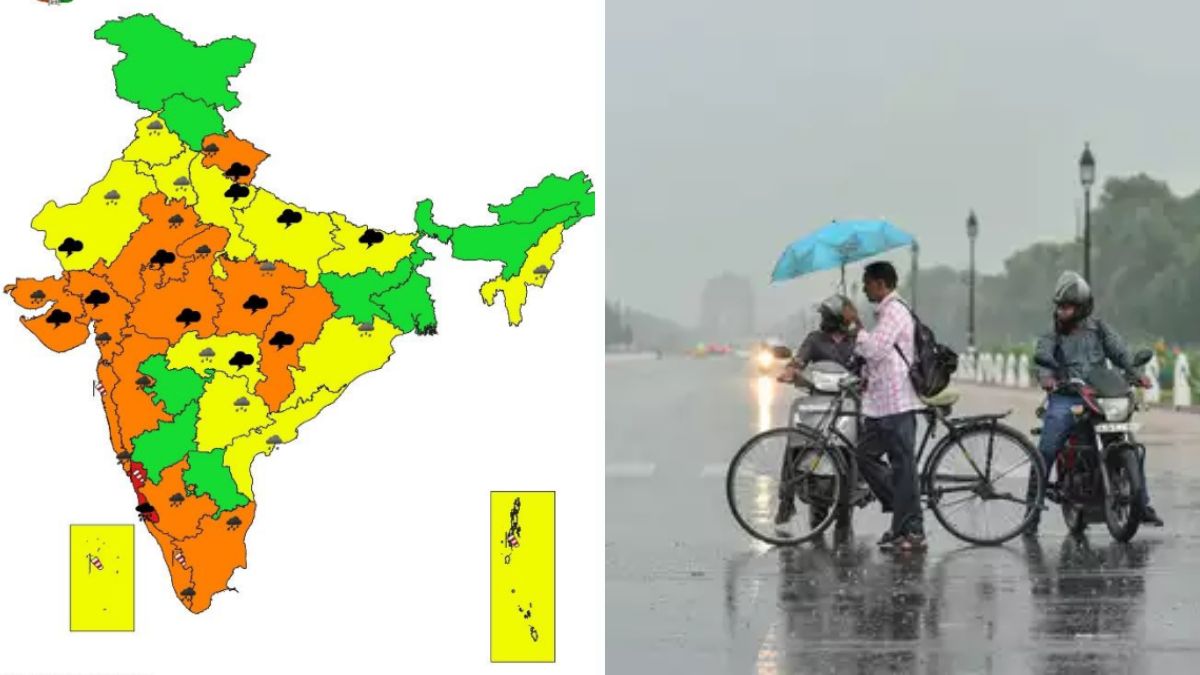
After days of relentless rainfall that disrupted life across Mumbai, the intensity of showers has finally reduced, offering residents much-needed relief. The India Meteorological Department (IMD) on Thursday indicated that rainfall activity is expected to weaken, though a yellow alert remains in place, signalling the likelihood of isolated heavy spells in the city.
The improved weather conditions brought visible change on the ground. Waterlogging in low-lying neighbourhoods receded, traffic congestion eased, and public transport services, including suburban trains and buses, resumed regular operations. Schools and colleges, which had earlier remained closed due to flooding, reopened as educational activity picked up again. Despite the overall improvement, the IMD cautioned that rainfall would not completely abate. According to data, the Santacruz observatory recorded 200 mm of rain in a 24-hour period ending Wednesday morning, while other parts of the city such as Vikhroli and Byculla registered 229.5 mm and 193.5 mm respectively. The Colaba observatory, representing south Mumbai, noted 107.4 mm during the same period, underscoring the uneven intensity across regions.
State officials confirmed that while the immediate risk of widespread flooding has reduced, disaster response teams remain deployed across sensitive zones. Authorities are actively monitoring water levels in major reservoirs and dams to prevent uncontrolled discharges that could trigger downstream flooding. The coordinated approach between the state government and neighbouring regions has ensured smoother regulation of water flow. The spell of intense rainfall has not only impacted city infrastructure but also raised concerns for the state’s agrarian economy. Preliminary assessments suggest that crop losses across Maharashtra may extend to nearly 14 lakh hectares, leaving farmers vulnerable. Officials assured that systematic evaluation is under way to determine the scale of compensation required under the existing disaster relief framework.
Urban planners argue that Mumbai’s recurring rain-induced disruptions highlight deeper systemic issues around drainage, land use, and unregulated construction. As climate change accelerates extreme weather events, experts advocate for investment in sustainable, carbon-neutral infrastructure, capable of absorbing heavy rainfall without paralysing the city. Emphasising resilience, they call for green solutions like expanded wetlands, urban forests, and permeable road surfaces that can collectively minimise flooding risks. While the current yellow alert signals moderation, Mumbai’s monsoon experience this year serves as a reminder of both the vulnerabilities of a mega city and the urgent need for adaptive planning. For now, residents may breathe easier, but the season’s unpredictability remains a pressing challenge for administrators and citizens alike.
Also Read : IMD Predicts Very Heavy Rainfall Places Mumbai And Thane Ghat Regions On Alert
