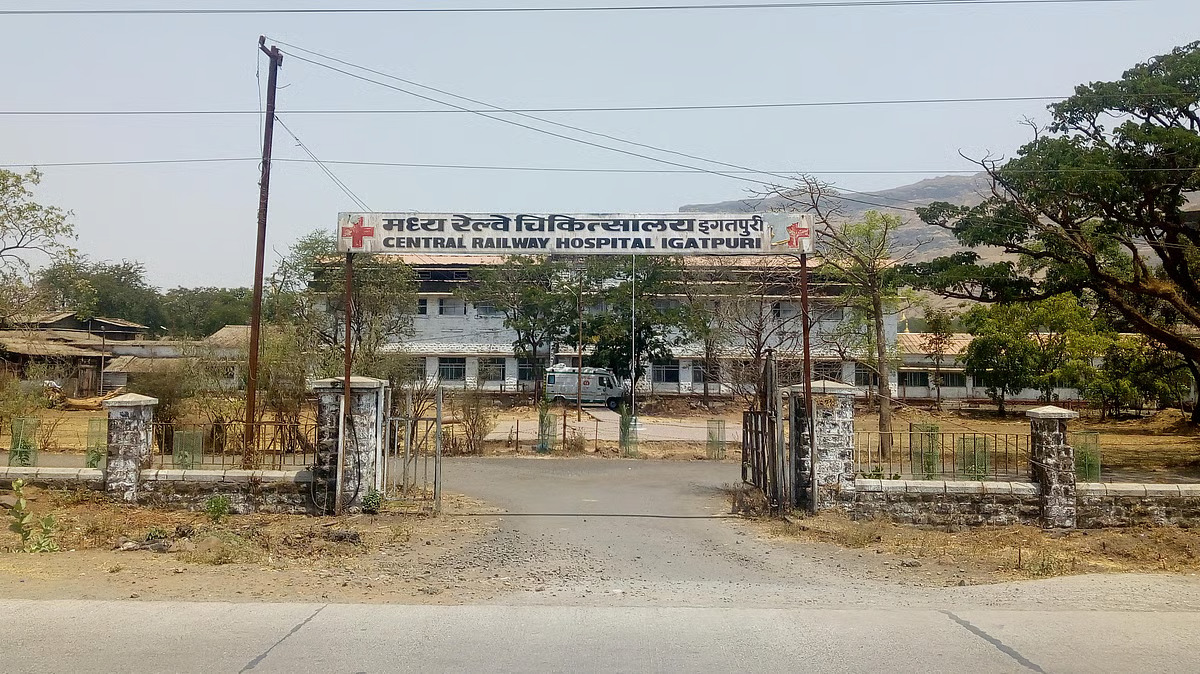
A century-old railway hospital in Igatpuri, once a beacon of healthcare for a vast population, is now languishing in a state of neglect, triggering a public health crisis and a chorus of demands for its revival. Established by the erstwhile Great Indian Peninsular Railway Company, this institution, now under the purview of Central Railway, has seen a stark decline from its former glory. Its current dilapidated state and limited services not only compromise the health of thousands of railway employees but also leave a significant portion of the surrounding community without access to critical medical care.
Originally inaugurated in 1923, the hospital was a pioneering facility, boasting 70 beds, a full team of doctors, and an array of speciality services. According to accounts from retired employees and union representatives, it was a regional medical hub, attracting patients from as far away as Bhusawal and Jhansi. Today, that legacy has faded. The hospital, once equipped with an operation theatre and a tuberculosis ward, is now reportedly capable of treating only minor ailments like colds and fevers. This dramatic reduction in services has left the facility “counting its last hours,” turning a once-proud institution into a symbol of neglect.
The lack of a functional, full-service hospital has created a severe healthcare inequity for the region. Over 5,000 railway employees and the residents of 127 surrounding villages are now forced to depend on hospitals in distant cities like Nashik or Kalyan for any serious medical emergency. The Igatpuri region, situated in a known accident-prone ghat section, makes this travel time particularly perilous. Medical experts highlight the concept of the ‘golden hour,’ a critical period in which a patient’s life can be saved. The hour-and-a-half journey to a city hospital often falls outside this window, turning what could be a treatable condition into a tragedy. The absence of a nearby trauma centre underscores a critical gap in the public health infrastructure of the region.
From a sustainability and urban planning perspective, the revival of this existing hospital is a far more prudent and eco-friendly approach than allowing it to decay. The restoration of this century-old infrastructure represents a commitment to adaptive reuse and efficient resource management. Rather than building a new, carbon-intensive facility from scratch, revitalising the existing structure is an environmentally conscious decision. It is an investment in a sustainable model of development that honours the past while securing a more resilient and healthy future for the community.
The plight of the Igatpuri Railway Hospital is a stark reminder of the broader challenges in ensuring equitable public services. Labour unions have been vocal in their protests, warning of more significant action if their demands for increased facilities, including ICU wards, are not met. This is a crucial test for the authorities to demonstrate their commitment to the welfare of their employees and the larger community. The revival of this hospital is not merely about restoring a building; it is about providing fundamental healthcare access, ensuring safety, and upholding the principles of a just and equitable society.