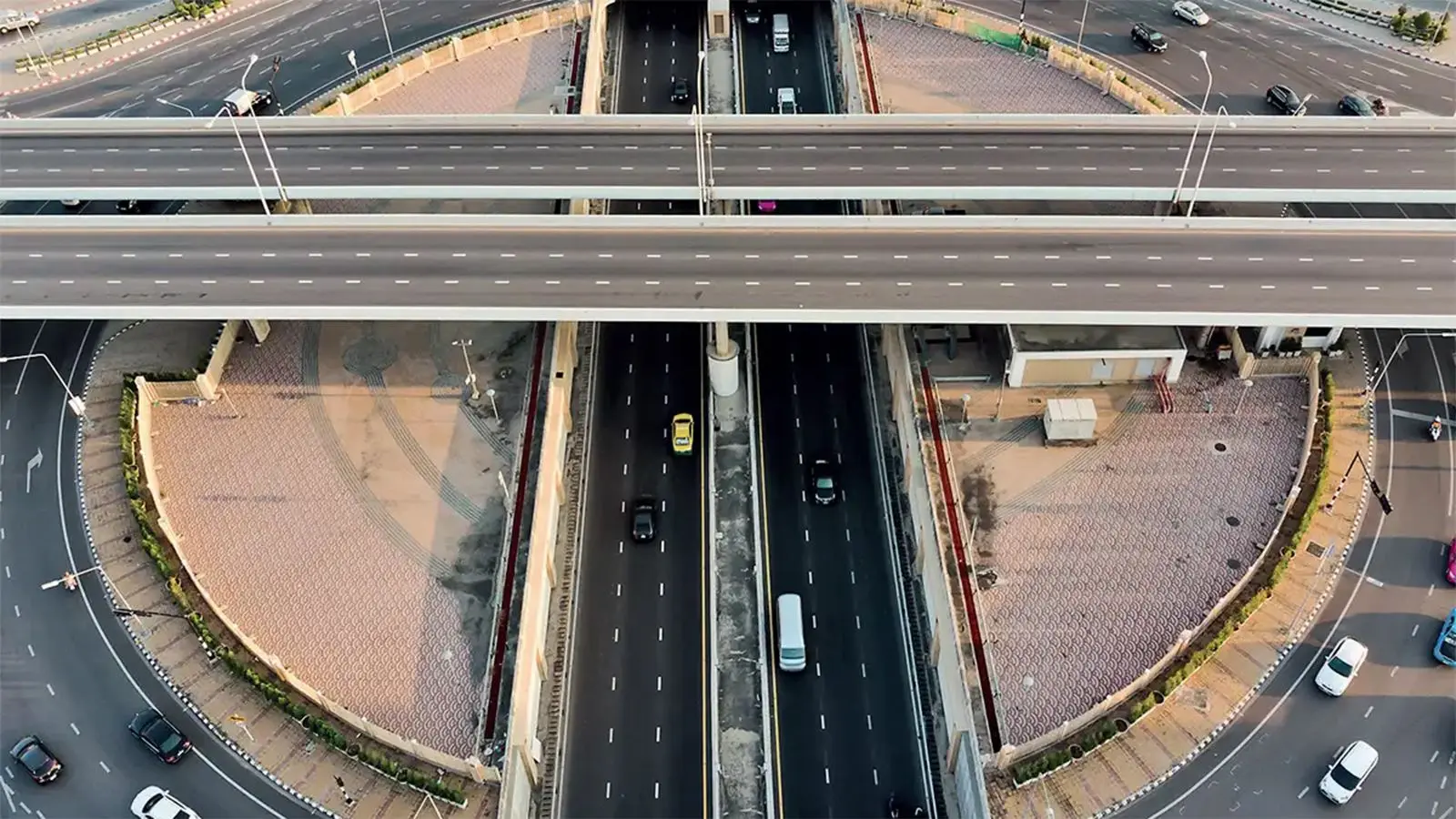
Hyderabad’s fast-growing western corridor is poised for a coordinated transport overhaul as the metropolitan planning authority moves towards an integrated mobility intervention aimed at easing congestion across Cyberabad. The initiative, now under preparation, signals a shift away from piecemeal road works towards an area-based strategy that aligns infrastructure upgrades with long-term urban growth and economic activity.
Officials involved in the planning process indicate that the proposed programme will focus on synchronising multiple layers of road infrastructure arterial corridors, junctions, pedestrian facilities and missing network links within a single framework. For a region that houses major technology campuses, financial districts and high-density residential clusters, the approach reflects mounting pressure on existing roads that were not designed for current traffic volumes. The study area spans some of Hyderabad’s most commercially valuable and rapidly urbanising neighbourhoods. It includes residential hubs in the northwest, key transit corridors connecting to employment centres, and the southern growth belt around the Outer Ring Road where large office parks and mixed-use developments have emerged over the past decade. Planners note that this spatial concentration of jobs and housing has resulted in short but intense daily travel patterns, overwhelming intersections and feeder roads.
Under the integrated mobility plan, authorities are expected to prioritise a combination of road widening, structural strengthening and network completion. Proposed interventions include grade-separated junctions, flyovers, underpasses and elevated corridors to streamline vehicle movement, alongside foot overbridges, skywalks and improved pavements to address pedestrian safety. Urban transport experts stress that this balance is critical in high-employment districts, where walkability and last-mile access directly influence public transport use.
The initiative is designed to complement Hyderabad’s long-term Comprehensive Mobility Plan rather than replace it. While the citywide plan provides a macro-level vision extending to mid-century, officials acknowledge that it does not fully capture localised traffic behaviour in hyper-developed zones such as Cyberabad. A meso-level study is therefore being readied to analyse corridor-specific demand, junction performance and short-distance travel flows, feeding more accurate data into regional transport models. From a business and real estate perspective, improved mobility in the western corridor carries wider implications. Reduced travel times and predictable commutes are closely linked to office occupancy, residential values and workforce participation, particularly for women and shift-based employees.
Infrastructure economists also point out that integrated planning can lower lifecycle costs by avoiding repeated road cutting and uncoordinated upgrades.
As Hyderabad continues to expand westward, the success of the integrated mobility plan will hinge on execution and sequencing. Urban planners emphasise the need to align construction with climate-resilient design, minimise disruption, and protect pedestrian space during works. If delivered as intended, the programme could recalibrate how fast-growing Indian cities manage congestion by treating mobility as a system rather than a series of isolated fixes.
Hyderabad Western Corridor Set for Mobility Overhaul