


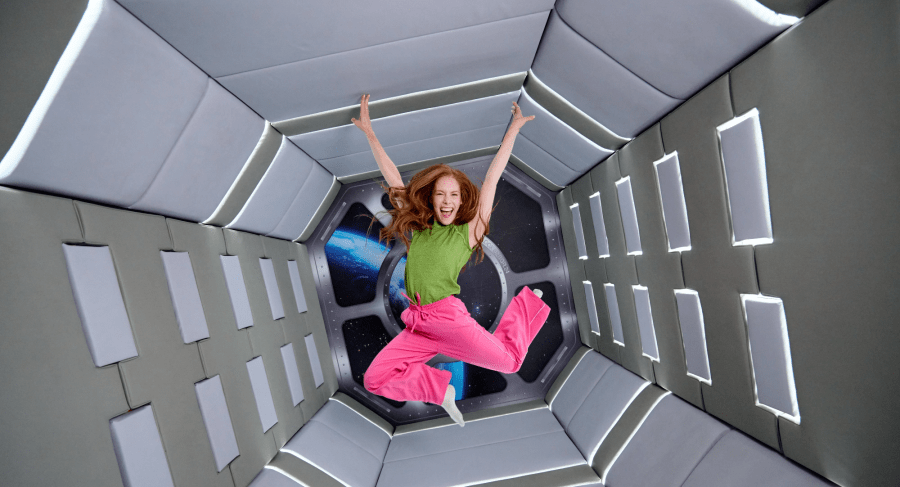
Hyderabad’s evolving leisure and cultural landscape expanded this week with the launch of Paradox Museum, an interactive, illusion-based experience centre in Somajiguda. The arrival of the global edutainment brand reflects growing investor confidence in the city’s premium retail and mixed-use corridors, while signalling a shift towards experience-led urban destinations.
Located within a commercial development near a key Metro station, the new Paradox Museum spans a curated indoor environment featuring more than 50 installations that blend visual science, spatial design and interactive art. The format encourages visitors to engage physically with exhibits that challenge perception, balance and scale, positioning the venue as both a recreational and informal learning space.The Paradox Museum concept, founded in Europe in 2022, has expanded across major global cities including London, Paris, Berlin and Shanghai, attracting millions of visitors. Its Hyderabad entry follows a similar rollout in Mumbai, underscoring India’s emergence as a priority market for global experiential brands seeking high footfall urban centres.
Urban development experts say such formats are increasingly shaping real estate decisions. “Entertainment is no longer limited to multiplexes and food courts,” noted a retail consultant involved in mixed-use planning. “Interactive spaces that combine art, science and social media engagement are becoming anchors for commercial developments.”The Hyderabad facility includes installations designed to create optical illusions and immersive environments, ranging from gravity-defying rooms to mirrored labyrinths and perspective-altering chambers. The layout is structured as a 60 to 90-minute walkthrough experience, catering to families, students and young professionals.
Its location in Somajiguda, a dense commercial and residential micro-market, is strategically significant. Proximity to public transport infrastructure, including the Metro, enhances accessibility and reduces dependence on private vehicles — a key consideration in building low-carbon, transit-oriented urban clusters.City planners argue that experiential centres such as Paradox Museum can contribute to more inclusive urban culture if pricing and programming remain accessible to diverse demographic groups. Hyderabad’s expanding middle class and student population provide a strong base, but affordability and integration with local creative communities will influence long-term sustainability.
The growth of such attractions also signals a broader diversification of Hyderabad’s economy beyond information technology and pharmaceuticals. Leisure, hospitality and cultural infrastructure are increasingly viewed as essential components of a globally competitive city.As Hyderabad continues to densify and redevelop commercial corridors, developers are likely to integrate more immersive and interactive formats within office-retail complexes. The success of Paradox Museum in the city may serve as a test case for how experience-driven destinations can coexist with responsible urban expansion, balancing economic vitality with accessible public engagement.
Also Read:Bengaluru Talguppa Rail Services Increased For Jatra Event
Hyderabad Welcomes Paradox Museum Attraction
