


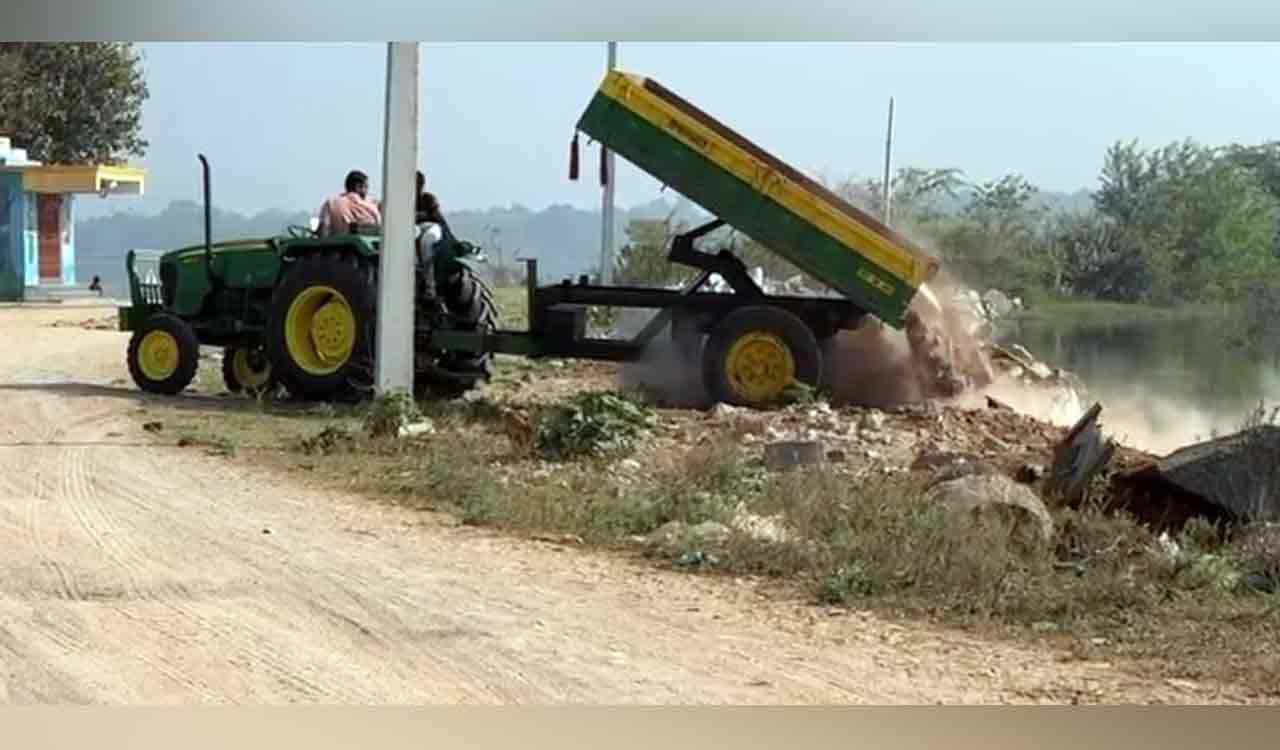
An attempt to dump construction debris near one of Hyderabad’s most critical drinking water reservoirs was intercepted this week, underlining growing pressure on the city’s water ecosystems amid rapid urban expansion. The intervention, carried out by the city’s water utility during routine surveillance, prevented waste from entering the catchment of the Gandipet reservoir, a key component of Hyderabad’s potable water network.
The incident occurred on the urban fringe where construction activity has intensified alongside residential and infrastructure growth. Officials monitoring the reservoir periphery identified a vehicle attempting to unload debris within the designated water body protection zone. Enforcement teams halted the activity on site and initiated legal proceedings under environmental and municipal regulations.Urban water experts say such incidents are becoming more frequent as metropolitan boundaries expand into formerly rural zones. Construction debris, if allowed to accumulate near reservoirs, can reduce storage capacity, degrade water quality, and increase treatment costs. For a city already facing seasonal water stress, safeguarding surface water sources is directly linked to long-term water security and household affordability.
The Hyderabad water authority has in recent years strengthened patrols around lakes, reservoirs and feeder channels supplying the city. Senior officials involved in urban water management note that enforcement alone is insufficient without coordinated action across planning, construction oversight and waste disposal systems. In peri-urban areas, limited authorised dumping facilities often push small contractors towards illegal disposal near water bodies.Beyond the immediate environmental risk, the issue has broader economic implications. Reservoir contamination raises operating costs for water utilities, which ultimately affects municipal finances and consumers. Increased treatment requirements also carry a higher energy footprint, undermining efforts to build low-carbon urban infrastructure.
The recent enforcement action is part of a wider compliance drive that includes identifying unauthorised sewer and water connections linked to road works and private developments. According to officials familiar with the process, unapproved connections and dumping often occur simultaneously in fast-developing neighbourhoods where oversight gaps emerge during infrastructure upgrades.Urban planners argue that protecting drinking water assets must be integrated into land-use approvals and construction permits. Clear accountability for debris removal, digital tracking of construction waste, and stronger penalties for violations are increasingly seen as essential tools for fast-growing cities.
For Hyderabad, where reservoirs also serve as ecological buffers against flooding and heat stress, maintaining their integrity is central to climate resilience planning. Water bodies regulate microclimates, support biodiversity, and act as emergency reserves during drought years.Authorities have indicated that surveillance around critical water infrastructure will continue, with an emphasis on early detection and swift action. As the city grows outward, balancing construction-led economic activity with the protection of natural assets will remain a defining challenge for sustainable urban development.
Also Read:Kochi Metro Expands Research Ties To Innovate Mobility
Hyderabad Water Authority Blocks Reservoir Debris Dumping
