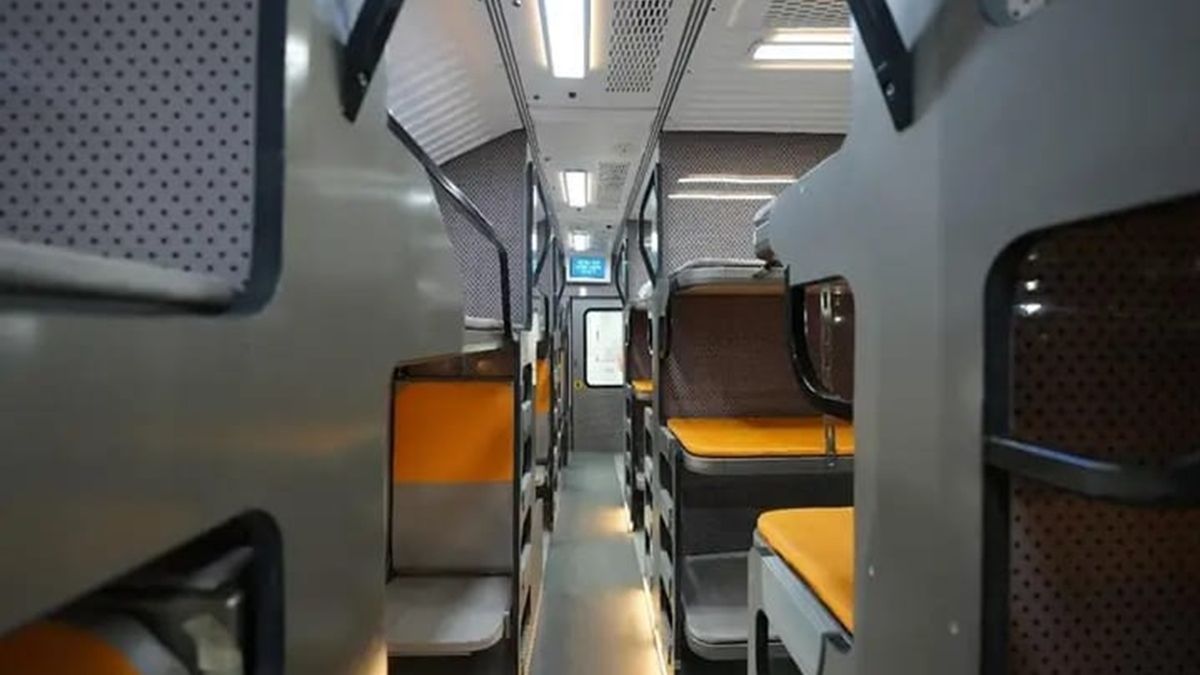
Hyderabad is watching closely as Indian Railways prepares to introduce its first long-distance Vande Bharat Sleeper service elsewhere in the country, highlighting the city’s growing demand for faster and more efficient overnight rail connectivity. While the inaugural sleeper service is expected to link eastern metros, Hyderabad remains outside the initial rollout, despite strong passenger volumes and sustained calls for improved north–south rail links.
The anticipation reflects a broader shift in how long-distance travel is evolving across India’s major urban centres. Hyderabad, now one of the country’s fastest-growing economic hubs, generates significant business, education and administrative travel to the national capital. Yet current premium options on the corridor rely on legacy train sets that, while reliable, require nearly a full day of travel. Urban mobility experts say this time cost has tangible economic implications for professionals, students and small businesses dependent on inter-city movement. The Vande Bharat Sleeper concept is positioned as a response to these pressures. Designed for overnight journeys, the train sets are expected to combine higher average speeds with modern onboard systems, allowing passengers to save several hours while travelling long distances. Transport analysts note that even marginal reductions in journey time can influence travel choices, particularly when rail competes with aviation on cost, comfort and carbon impact.
For Hyderabad, inclusion in future phases of the Vande Bharat Sleeper network could play a strategic role in supporting sustainable mobility. Railways remain among the lowest-emission mass transport options for long-distance travel, and improved sleeper services may reduce dependence on short-haul flights, which carry a higher per-passenger carbon footprint. Urban planners argue that strengthening such rail corridors aligns with climate-resilient city planning, especially as Hyderabad continues to expand as a regional employment magnet. There is also a spatial development dimension. Faster overnight rail services can effectively shrink distances between cities, supporting distributed work patterns and easing pressure on aviation infrastructure. For real estate markets, improved rail connectivity often translates into stronger demand around stations and transit-linked commercial hubs, encouraging denser, transit-oriented development rather than car-led sprawl.
However, railway officials caution that route selection for new-generation trains depends on multiple factors, including track capacity, signalling upgrades, maintenance readiness and operational feasibility. Corridors with high traffic density require careful scheduling to ensure new services do not disrupt existing networks. Investments in track modernisation and safety systems remain a prerequisite before additional high-speed sleeper services can be deployed. As Indian Railways expands its premium fleet in phases, Hyderabad’s case underscores a wider national challenge: balancing regional equity with operational readiness.
The city’s growing population and economic footprint suggest strong fundamentals for inclusion, but timelines will depend on infrastructure preparedness across the corridor. For now, Hyderabad’s commuters continue to rely on established overnight trains. Whether the Vande Bharat Sleeper reaches the city soon will be a key indicator of how rapidly India’s rail modernisation agenda can translate into tangible benefits for its expanding urban regions.
Hyderabad waits as Vande Bharat Sleeper expands