


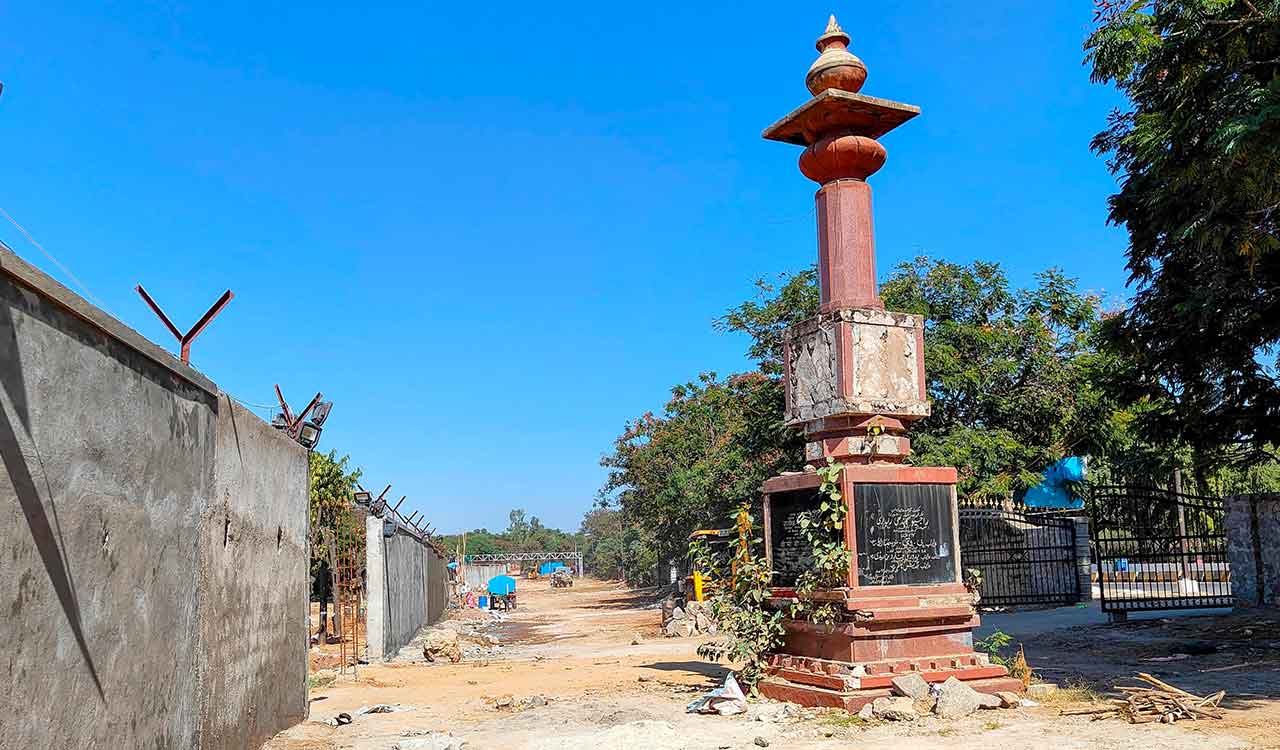
Construction activity linked to a proposed elevated road corridor in Hyderabad has triggered concern among local residents and former athletes after part of the historic Trimulgherry football ground in Secunderabad was fenced off for road expansion works.A section of the two-acre playground has been handed over by the Secunderabad Cantonment Board to the Hyderabad Metropolitan Development Authority for widening works connected to an elevated corridor planned between Gymkhana Grounds and the Outer Ring Road towards Shamirpet along State Highway 1. Excavation and compound wall construction are currently under way inside the ground.
The Trimulgherry football ground has long functioned as a public sports facility and training space, producing several national-level and Olympic footballers over the decades. Veterans who continue to use the field say the ongoing works risk limiting access and shrinking playable space in one of the few remaining open grounds in the cantonment area.Officials from the cantonment board confirmed that a portion of the land was transferred to facilitate the transport project. The elevated corridor is intended to decongest traffic along the Secunderabad–Shamirpet stretch, a rapidly urbanising corridor that connects defence establishments, residential colonies and institutional campuses.
Urban planners acknowledge the need for improved mobility infrastructure but warn that transport-led development often comes at the expense of community open spaces. In dense city precincts such as Secunderabad, playgrounds serve not only as sports infrastructure but also as critical urban commons that mitigate heat, support groundwater recharge and provide inclusive recreational access.Archival records show that the land parcel was historically earmarked as a civilian playfield. Defence ministry correspondence in the early 1980s had indicated no objection to its continued use as a football ground for local residents. The recent decision to utilise part of the land for road infrastructure has revived questions about balancing mobility expansion with preservation of public assets.
Infrastructure analysts note that elevated corridors can reduce surface congestion and cut travel time, potentially lowering vehicle emissions if integrated with broader transport planning. However, they caution that car-centric solutions without parallel investment in public transport and non-motorised mobility risk inducing further traffic demand.The controversy also highlights the governance complexity of land management in cantonment areas, where defence, municipal and metropolitan authorities often share overlapping jurisdiction.
For Hyderabad, which has seen rapid real estate growth along its northern and eastern corridors, the episode underscores a wider planning dilemma: how to expand road capacity while protecting scarce urban green and recreational spaces.As construction progresses, stakeholders say transparent communication, alternative access planning and potential compensatory open space provisions will be critical. The long-term challenge lies in ensuring that infrastructure upgrades strengthen connectivity without eroding the social and environmental value of historic community grounds.
Also Read:Pune housing costs reshape HRA exemption rules
Hyderabad Trimulgherry Football Ground Faces Corridor Impact
