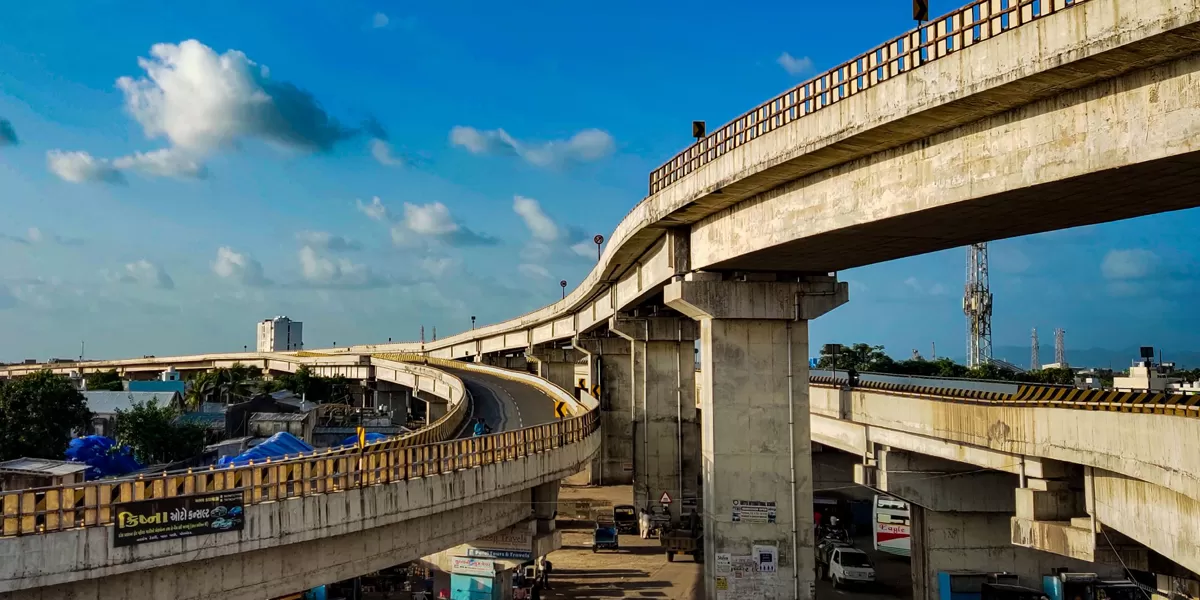
Hyderabad’s first third-level flyover—connecting Kondapur to Gachibowli—is set for inauguration on June 28, marking a major milestone in the city’s urban mobility upgrades. Spanning 1.2 km with six lanes, the structure arches over two existing flyovers and is expected to significantly ease congestion at Gachibowli Junction.
The Kondapur–Gachibowli flyover represents Hyderabad’s entry into advanced multi-tier traffic engineering. As the first third-level flyover in the city, it exemplifies modern urban planning solutions to traffic congestion in high-growth IT corridors. Arcing over two existing flyovers, the new structure is designed to streamline continuous traffic flow, reduce signal stoppages, and optimise east–west vehicular movement between major tech and residential zones.
Located in the bustling Gachibowli area—home to tech parks, universities, and arterial routes to the airport—the flyover is poised to ease chronic bottlenecks. Officials project a significant drop in commute times, particularly for travellers headed to Rajiv Gandhi International Airport in Shamshabad. This aligns with the city’s broader efforts under the Strategic Road Development Plan (SRDP) to decongest core urban junctions.
In a move combining infrastructure development with legacy recognition, Telangana’s CM has suggested naming the flyover after P. Janardhan Reddy (PJR), a respected former Congress leader and Hyderabad MLA. If adopted, this would not only commemorate his contributions to city development but also reinforce the role of local history in shaping contemporary civic identity and naming conventions in public works.
The Greater Hyderabad Municipal Corporation (GHMC) has overseen project execution in coordination with the Telangana government, reflecting growing institutional synergy in civic infrastructure delivery. With more multi-tier flyovers and signal-free corridors on the anvil, this project serves as a blueprint for managing vertical expansion of road networks in land-constrained urban zones. Public response and operational efficiency will guide future investments.
The Kondapur–Gachibowli third-level flyover signals Hyderabad’s evolving infrastructure vision—where engineering innovation, traffic decongestion, and civic legacy intersect. As the city balances growth with connectivity, such high-capacity urban corridors are key to future-proofing transit efficiency. Naming the structure after PJR adds a cultural dimension to this functional asset, reinforcing the role of inclusive planning in building sustainable and people-centred cities.