


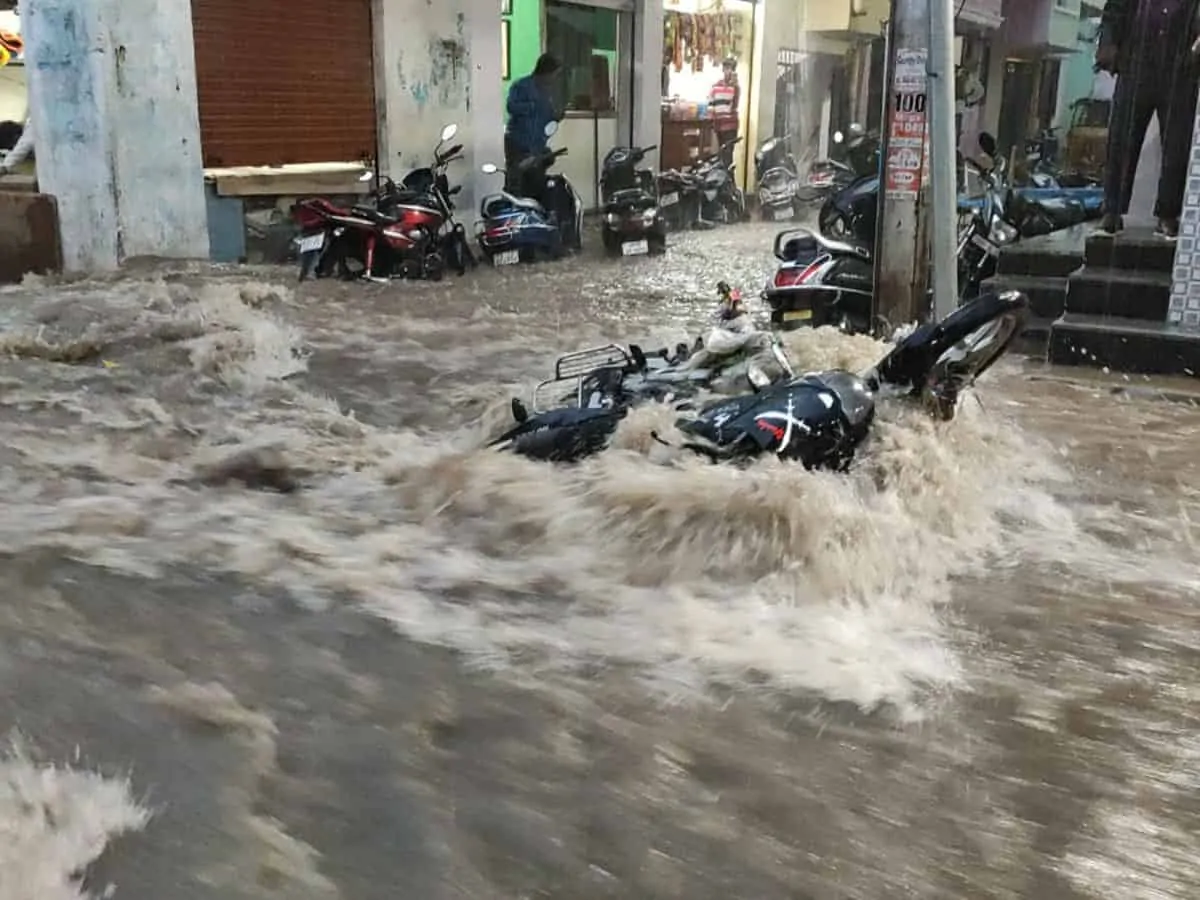
Hyderabad’s civic agencies have begun coordinated intervention in Begum Bazar and adjoining Old City neighbourhoods after recurring sewer overflows disrupted daily life and raised public health concerns. The move signals a shift from temporary fixes to a system-level correction of ageing underground infrastructure in one of the city’s most densely built commercial zones, with implications for climate resilience, street safety and local economic activity.
Following site assessments across Osman Gunj, Feelkhana and Begum Bazar, senior officials from the city’s water and sewerage utility reviewed multiple failure points in the sewer network that have led to persistent backflows onto arterial roads. At the centre of the problem is a collapsed deep sewer manhole connected to an old reinforced concrete trunk line, which has effectively cut off the outlet for wastewater in a high-footfall trading area.
Engineering teams are currently reconstructing the damaged structure to stabilise flows in the short term. However, officials involved in the inspection acknowledged that piecemeal repairs alone cannot address decades of unplanned network modifications layered beneath the Old City’s roads. Large sections of sewer lines have been damaged or diverted during road widening and stormwater drain covering works, leading to the mixing of sewage and rainwater systems.
Urban infrastructure planners note that such cross-connections are particularly risky in monsoon-prone cities. When stormwater drains silt up during heavy rainfall, sewer lines connected to them experience reverse pressure, forcing untreated wastewater onto streets and into commercial premises. Beyond hygiene risks, this disrupts informal trade, increases road maintenance costs and contributes to groundwater contamination.
To prevent repeat failures, officials have directed teams to map buried and inaccessible manholes, remove accumulated silt and restore damaged sewer assets. Temporary diversions are being used to manage current overflows, but a longer-term proposal involves creating a new dedicated sewer link connecting the affected neighbourhoods directly to a downstream trunk line beyond the Osman Gunj bridge. This would bypass compromised stretches and reduce dependence on stormwater infrastructure.
Coordination between the water utility and the municipal corporation has emerged as a key focus. Integrated planning is being pushed to ensure that future road, drainage and sewer works are designed together rather than in isolation. Industry experts say this approach is essential in heritage commercial districts, where underground space is limited and retrofitting errors are costly.
The intervention also reflects a broader urban challenge: upgrading invisible but essential infrastructure in older city cores while keeping businesses operational. For residents and traders in Begum Bazar, reliable sewerage is not just a sanitation issue but a prerequisite for economic continuity and safer streets.
As detailed network separation plans are prepared, officials say enforcement against illegal sewer-stormwater connections will be tightened. The effectiveness of these measures will depend on sustained inter-agency coordination and timely execution, offering a test case for how Indian cities can retrofit legacy infrastructure for a climate-resilient future.
Also Read:Ahmedabad Infrastructure Tender Draws Limited Interest
Hyderabad Sewer Repairs Target Old City Flooding
