


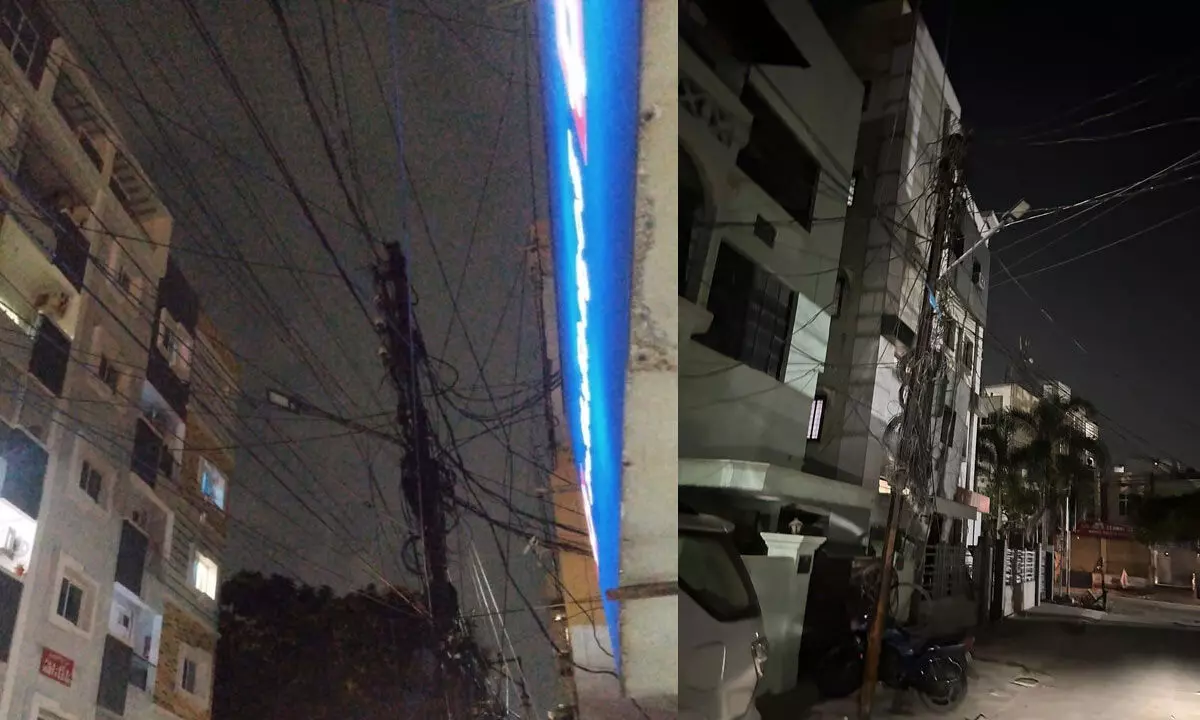
In multiple neighbourhoods across Hyderabad, residents are raising their voices over widespread streetlight failures and alleged bribery demands by civic maintenance personnel. From upscale Jubilee Hills to the densely populated lanes of Jeedimetla and Miyapur, complaints continue to pour in about streetlights that either don’t work at all or remain on during the day, contributing to unsafe roads and wasted energy.
In the Shaikpet area’s Suryanagar Colony, citizens claim that over 1,000 streetlights have remained dysfunctional for more than six months. A local residents’ forum alleges that streetlight maintenance is now dictated by corruption, with bribes reportedly demanded before any public light repairs are addressed. These complaints suggest that routine civic services are no longer equally available to all, particularly in residential pockets not seen as politically significant. The Greater Hyderabad Municipal Corporation (GHMC) attributes the lapses to the expiry of its contract with Energy Efficiency Services Limited on April 30. In the absence of a new agreement, the corporation claims to have engaged 17 vendors across the city, with all ongoing maintenance now being routed through zonal offices. Despite GHMC’s assurance that 90 percent of streetlight complaints are being resolved, on-ground reports from several neighbourhoods say otherwise.
In Jeedimetla, residents report that not only are existing lights defunct, but some lanes never had poles installed in the first place. In Miyapur, commuters describe entire stretches cloaked in darkness as early as 7 pm, creating serious concerns about public safety. Multiple thefts and street crimes have been reported in such areas, further exacerbating fear among vulnerable groups, especially women and children returning home after dark. Adding to citizen frustration, a number of streetlights continue to glow through the daytime, reportedly due to timer-related faults. These operational inefficiencies, residents argue, are clear signs of poor contractor accountability and weak civic oversight. Several households have been compelled to hire private electricians at their own expense, in what they call a desperate bid to reclaim public services.
Some activists suggest the problem intensified during the election season, when civic focus shifted toward administrative compliance and away from service delivery. Post-election, the lack of a newly enforced maintenance contract and minimal progress toward new tender finalisation have left residents feeling abandoned. A full year after the new state government assumed office, there appears to be little momentum to resolve the crisis. This failure to maintain something as essential as public lighting reflects broader systemic issues within the civic management framework. According to residents, the lack of proactive audits, delayed contractor replacements, and an absence of community grievance redressal mechanisms has resulted in eroded public trust. Voices from several residential colonies now demand an independent vigilance probe into the alleged bribery nexus within streetlight maintenance.
Beyond functional lighting, the issue touches on Hyderabad’s ambition to become a smart, inclusive, and sustainable urban centre. Streetlights are not just infrastructural conveniences but are central to public safety, gender inclusivity, and equitable city planning. Dark lanes discourage outdoor activity, compromise pedestrian access, and deepen fears of crime, especially for those who rely on walking or public transport late into the evening. Civic experts argue that the city has missed an opportunity to turn its lighting crisis into a catalyst for reform. Hyderabad’s streetlight system, if upgraded to an LED and smart grid network, could reduce energy consumption drastically while enabling remote diagnostics, preventive maintenance, and environmental sensors for pollution and traffic. But such a vision is far from reality without transparent contractor selection, efficient tendering, and public involvement in oversight.
To regain citizen trust and urban confidence, GHMC needs to urgently expedite the appointment of a long-term maintenance vendor through a transparent bidding process. In the interim, temporary public-private partnerships or municipal engineering taskforces could be mobilised to carry out emergency repairs, especially in high-risk and accident-prone areas. Equally critical is the need to establish a civic complaint system with real-time updates, grievance tracking, and escalation levels that allow residents to see accountability in action. Activists also propose that neighbourhood-based lighting review panels be formed, with elected representatives and citizen groups participating in monthly audits.
In Hyderabad’s vision to become a resilient and equitable metropolis, public lighting cannot remain a casualty of bureaucratic delay and corruption. Urban safety is a shared responsibility, and without timely repair of basic infrastructure, the social contract between citizens and civic bodies begins to collapse. While GHMC cites procedural timelines and legacy contracts as constraints, the people of Hyderabad are demanding more than explanations. They are asking for a city that works after sundown—a city where light represents safety, equality, and respect for every taxpayer’s right to public service.
Also Read : IRCTC to Launch Fifth Shri Ramayana Yatra on July 25 Covering 30 Pilgrimage Sites Across India and Nepal
