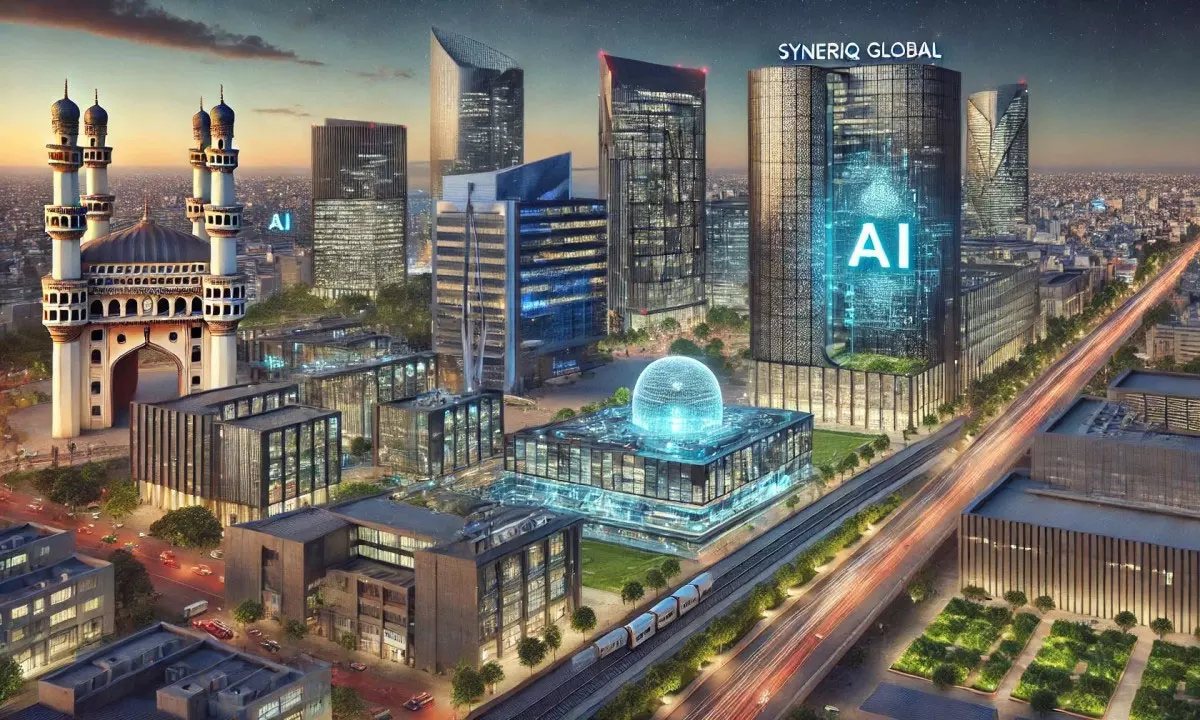
Hyderabad Real Estate Integrates AI For Smarter Development
Hyderabad is witnessing a technological shift in real estate as companies integrate artificial intelligence to enhance construction, sales, and residential management. At a recent national developer conference in the city, industry leaders highlighted how digital tools and AI are reshaping the sector, aiming to improve efficiency, accountability, and citizen experience in urban housing.
Urban planners and real estate analysts note that construction projects often face delays, budget overruns, and quality inconsistencies, which not only inflate costs but also affect residents and local infrastructure planning. Advanced digital systems are emerging as a solution by mapping buildings virtually, assigning and tracking tasks, and verifying completion in real time. These systems create data-driven workflows that allow teams to monitor progress, detect bottlenecks early, and maintain quality standards more effectively.The integration of AI is also changing how properties are marketed and sold. By analysing buyer behaviour and automating outreach, developers are able to identify prospective buyers more accurately and manage financial processes with fewer manual interventions. Experts suggest that this not only speeds up sales cycles but also ensures a smoother experience for consumers, including non-resident buyers who often face logistical hurdles in completing property transactions.
Post-occupancy management has historically remained labour-intensive, especially in gated communities where coordinating residents, service staff, visitors, and amenities can be complex. Digital resident management platforms now allow daily activities, maintenance requests, and facility bookings to be handled centrally, reducing friction for residents and operational inefficiencies for management teams. Analysts argue that these tools could set a precedent for more sustainable and organised community living. The adoption of AI in real estate carries broader implications for urban development. By improving project delivery timelines and reducing errors, digital systems can contribute to lower construction waste, better resource allocation, and a more transparent housing market. Industry observers note that technology-driven accountability can also support regulatory compliance, minimise disputes, and create more inclusive access to urban housing.
While Hyderabad remains a key growth hub for residential and commercial projects, the shift towards digital-first operations signals a wider trend across India’s urban centres. As real estate stakeholders increasingly adopt AI, there is potential not only for faster and cost-effective construction but also for smarter, citizen-centric city planning that aligns with climate resilience and equitable development goals. Urban planners, investors, and local authorities are closely monitoring these developments, as the integration of AI in real estate could redefine operational norms and citizen expectations in rapidly urbanising environments.