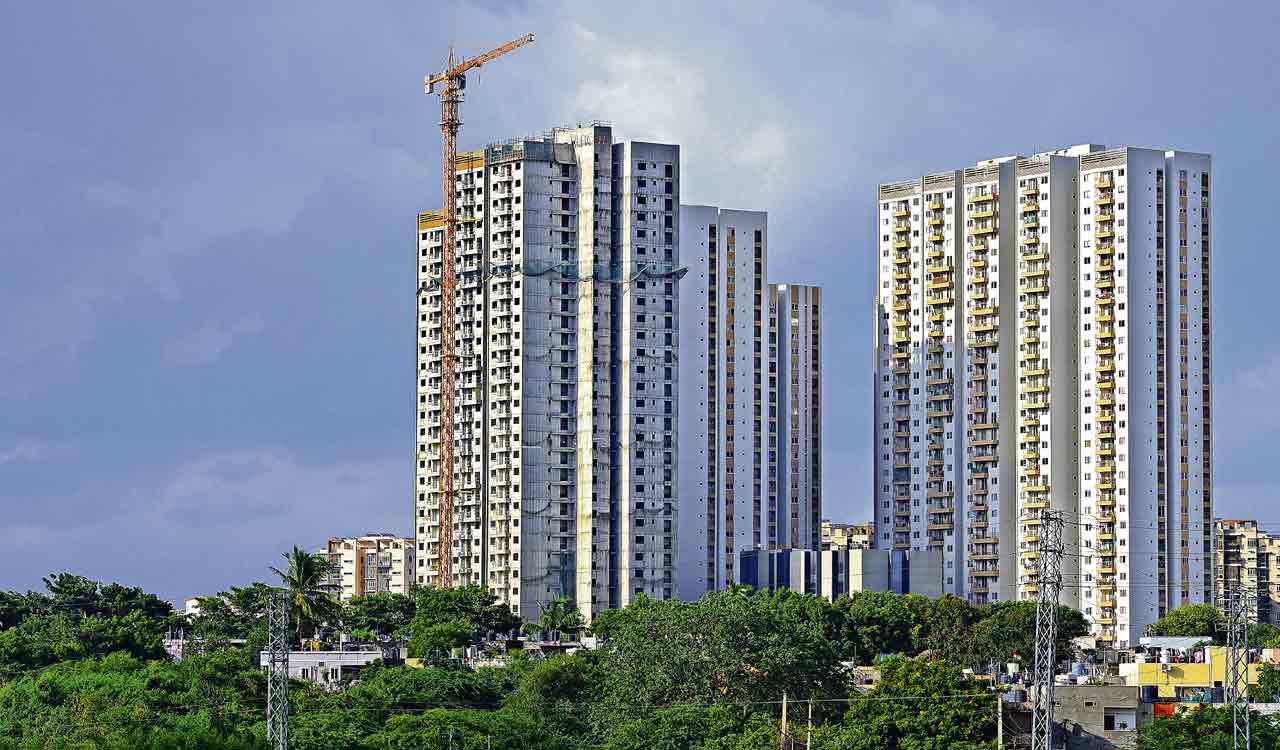
Hyderabad Real Estate Faces Surge In Housing Prices
Hyderabad’s residential market is showing early signs of price escalation as global supply chain disruptions begin to filter into construction costs, raising concerns for both developers and homebuyers. Industry assessments indicate that delays in material shipments and higher logistics expenses could push up the cost of new housing projects, particularly in high-rise segments that dominate the city’s growth corridors.
The disruption stems from geopolitical tensions affecting key maritime routes, forcing cargo vessels to take longer detours. This has extended delivery timelines for essential construction inputs by up to several weeks, while sharply increasing freight costs. Developers say these delays are already affecting project planning cycles, with inventory scheduling and contractor timelines under strain. The impact on Hyderabad housing prices is becoming visible through rising input costs. Steel, a core material for high-rise construction, has recorded significant price increases in recent months. With structural frameworks heavily dependent on steel, even moderate price shifts can translate into a noticeable rise in per-square-foot construction costs. Industry estimates suggest that such increases are beginning to erode developer margins, leaving price revisions as a likely outcome.
Beyond steel, other inputs such as aluminium and marine fuel have also seen upward price movements, adding multiple layers of cost pressure. Higher fuel rates are increasing the operational cost of construction machinery, while insurance and risk premiums tied to global uncertainties are further inflating logistics expenses. Taken together, these factors are reshaping cost structures across the real estate value chain. For a city like Hyderabad, where vertical development has accelerated in response to land constraints and urban expansion, these cost dynamics are particularly significant. High-density residential projects rely on complex supply chains and imported components, making them more vulnerable to global disruptions. Urban planners note that such volatility could slow project execution timelines and influence housing supply in the near term. The effect on buyers is likely to be uneven. While premium housing segments may absorb price increases due to relatively higher purchasing capacity, affordability remains a concern in mid-income and entry-level housing. Rising borrowing costs, combined with elevated property prices, could further strain first-time buyers, potentially dampening demand in this segment.
At a broader level, the situation highlights the vulnerability of rapidly growing urban centres to global supply shocks. Experts suggest that strengthening domestic material supply chains and encouraging resource-efficient construction practices could help reduce exposure to such disruptions. For Hyderabad, maintaining a balance between growth and affordability will be critical as the city navigates these external pressures. In the coming months, market stability will depend on how quickly global logistics conditions normalise and whether developers can adapt through cost optimisation or design innovation. Until then, Hyderabad housing prices are expected to remain under upward pressure, shaping both investment decisions and housing accessibility.