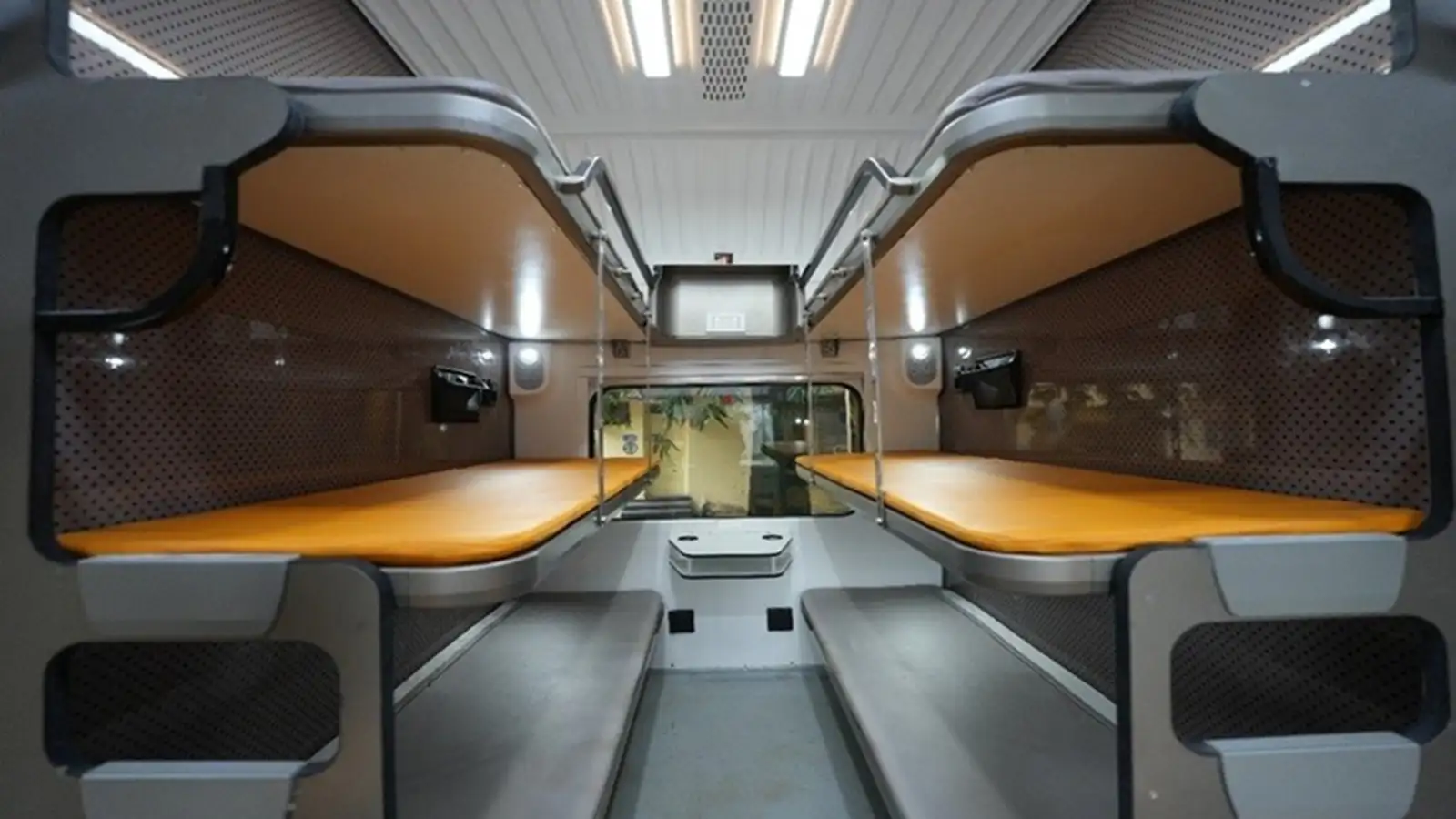
Indian Railways has initiated the rollout of its first long-distance Vande Bharat sleeper service in eastern India, marking a significant shift in overnight rail travel. Yet, Hyderabad one of the country’s fastest-growing metropolitan regions remains outside the initial deployment, renewing questions around network prioritisation and regional connectivity planning.
The inaugural sleeper service is being introduced on an eastern corridor linking two major economic centres, signalling the railways’ intent to extend semi-high-speed technology beyond daytime travel. For Hyderabad, however, the absence of an originating Vande Bharat sleeper has become a point of growing anticipation, particularly given the city’s strong rail demand on northbound routes.
Hyderabad’s rail ecosystem serves a diverse passenger base, including professionals, students, migrant workers, and small business travellers who rely heavily on overnight trains to reach Delhi and other northern hubs. Existing premium services on the corridor already operate at high occupancy, reflecting sustained demand despite long travel durations that stretch close to a full day.
Railway planners familiar with the rollout indicate that sleeper variants are designed to bridge this gap by combining higher operating speeds with improved onboard comfort. Unlike chair-car Vande Bharat services, the sleeper configuration is intended for journeys exceeding 1,000 kilometres, positioning it as a potential alternative to air travel on time-sensitive routes. Urban transport experts argue that introducing the Vande Bharat sleeper on routes serving Hyderabad could have broader economic and environmental implications. Faster overnight rail travel can reduce short-haul aviation dependence, lowering per-passenger emissions while offering more affordable mobility for a wider section of society. For a city expanding rapidly at its periphery, enhanced long-distance rail access also supports labour mobility and business continuity.
From an infrastructure perspective, Hyderabad’s rail terminals are already undergoing capacity augmentation and multimodal integration. Industry observers note that pairing station upgrades with next-generation rolling stock would maximise returns on public investment, while strengthening the city’s position within national economic corridors. The absence of formal confirmation on Hyderabad routes highlights the phased nature of the rollout. Railways officials maintain that corridor selection is influenced by track readiness, signalling upgrades, and maintenance ecosystems required for semi-high-speed operations. Southern routes, while commercially viable, may require additional preparatory work before deployment.
Real estate analysts also see implications beyond transport. Faster rail links to the national capital can influence office location strategies, inter-city talent movement, and even residential demand near major stations. Over time, such connectivity upgrades tend to reshape urban growth patterns, particularly in cities with strong service-sector economies. As Indian Railways expands its sleeper fleet in the coming years, Hyderabad’s case underscores the need for transparent corridor planning aligned with population growth, climate goals, and equitable access. The city’s wait may continue for now, but the direction of travel suggests that long-distance rail modernisation will inevitably reach one of southern India’s most dynamic urban regions.
Hyderabad Rail Network Awaits Vande Bharat Sleeper