


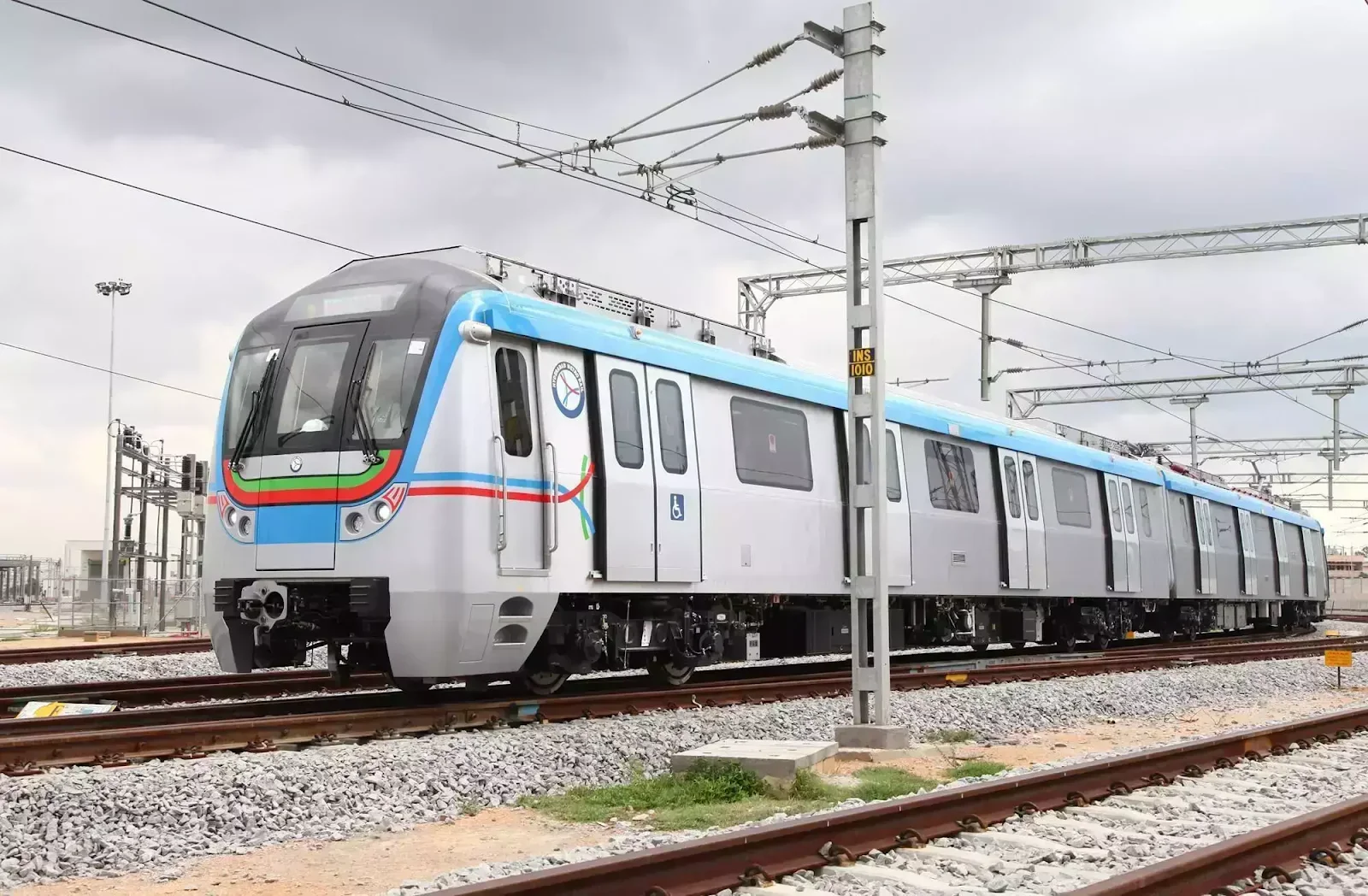
Hyderabad is moving towards a new phase of rail-led urban and regional integration as sustained public investment reshapes the state’s transport backbone, positioning the city as a critical transit anchor for southern and central India. A sharp rise in annual railway allocations has enabled network expansion, full electrification and capacity upgrades that are beginning to alter freight movement, commuter access and industrial location decisions across Telangana.
Railway spending in the state has increased several-fold over the past decade, reflecting a shift in infrastructure priorities towards long-distance mobility and low-carbon transport systems. Urban planners view this as a structural intervention rather than a cyclical boost, particularly as railways remain one of the most energy-efficient modes for both passenger and bulk freight movement. For Hyderabad, the scale of investment strengthens its role beyond a destination city, positioning it as a junction for inter-regional economic flows.Network expansion has been a key focus. New rail links connecting previously under-served districts have reduced travel times and improved access to markets for agricultural producers, small manufacturers and mining-dependent economies. Industry analysts note that such connectivity is critical for decentralising growth, reducing pressure on metropolitan cores while enabling secondary cities to integrate into regional supply chains.
Equally significant is the state’s transition to a fully electrified rail network. Electrification reduces dependence on fossil fuels, lowers operating costs and enables faster, higher-capacity services. From an urban sustainability perspective, it also supports modal shift away from road transport, easing congestion and cutting emissions in fast-growing corridors around Hyderabad and its satellite towns.Capacity creation is not limited to tracks alone. A new railway manufacturing and maintenance facility nearing operational readiness in the state is expected to anchor a specialised industrial cluster. Infrastructure economists point out that such facilities generate long-term employment, promote skill development and reduce logistical dependence on distant production centres. The multiplier effect extends to housing demand, social infrastructure and commercial real estate in surrounding areas.
The cumulative impact of these investments is likely to be most visible in freight movement and intercity travel. Improved line capacity allows faster evacuation of goods, benefiting sectors such as cement, pharmaceuticals, food processing and metals, all of which have a growing presence in Telangana. For passengers, better frequency and reliability can reshape daily commuting patterns and medium-distance travel choices.However, transport experts caution that rail expansion must be coordinated with last-mile connectivity, station-area planning and urban transit systems to fully realise its benefits. Without integrated land-use planning, the opportunity to build compact, transit-oriented development around rail corridors could be lost.
As Hyderabad continues to expand outward, rail infrastructure is emerging as a stabilising force—linking economic zones, reducing environmental stress and supporting more balanced regional growth. The next phase will test how effectively these assets are integrated into the broader urban mobility and development framework.
Also Read:Hyderabad West Corridor Roads Enter Planning Stage
Hyderabad Rail Investment Push Reshapes Regional Connectivity
