


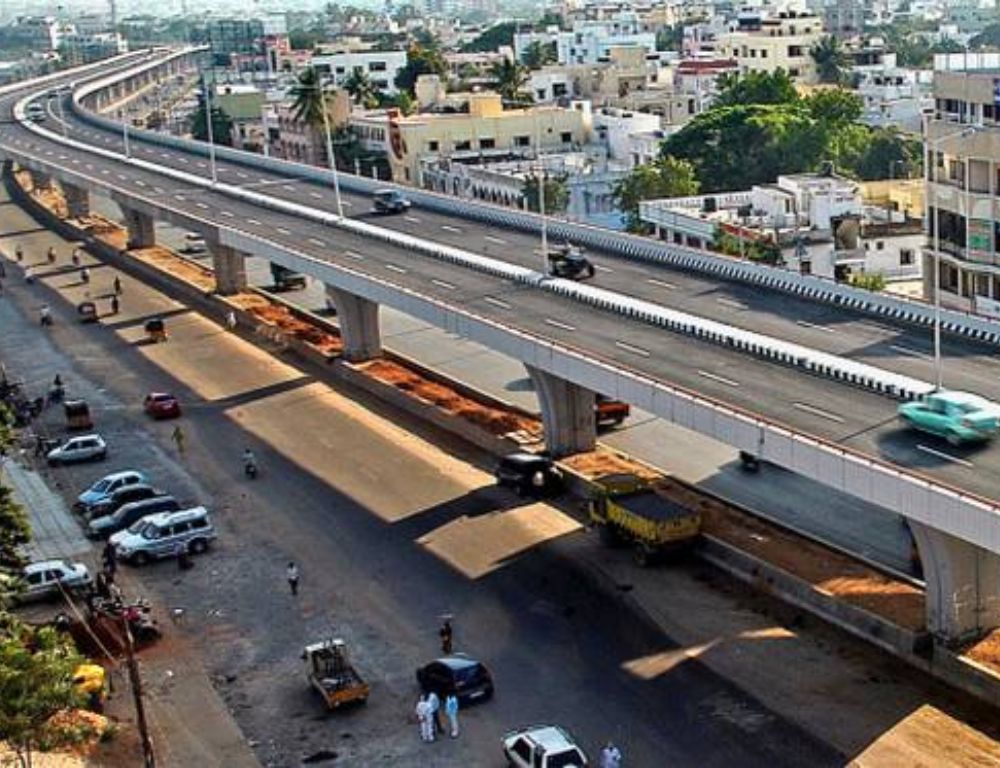
Hyderabad is preparing to deploy artificial intelligence-driven traffic enforcement on one of its most critical elevated corridors, signalling a shift towards data-led road safety management in fast-growing Indian cities. Authorities have proposed installing advanced AI-enabled cameras along the PVNR Expressway, a key 11-km link connecting the western and southern parts of the city, as part of a pilot aimed at reducing accidents and risky driving behaviour.
Urban transport officials say the initiative responds to persistent safety concerns on the elevated road, where high speeds, unauthorised stopping and distracted driving have contributed to repeated crashes. Unlike conventional surveillance, the proposed system will automatically identify violations such as mobile phone use while driving, failure to wear seat belts and over-speeding, allowing enforcement actions without physical interception of vehicles.The PVNR Expressway plays a strategic role in Hyderabad’s mobility network, carrying a large share of airport-bound traffic as well as daily commuters. Its design encourages uninterrupted movement, but the absence of frequent junctions has also made enforcement challenging. Traffic management experts note that elevated corridors often become high-risk zones when driver behaviour is not closely monitored, making automated systems more effective than manual policing.
Officials associated with the proposal indicate that the metropolitan planning authority has been approached to facilitate the installation of multi-directional cameras capable of covering the full length of the corridor. These systems are expected to function across lighting and weather conditions, creating continuous surveillance rather than isolated monitoring points. If successful, the model could be extended to other high-speed urban roads and expressways across the city.Beyond enforcement, the move reflects a broader transition in urban governance towards smart infrastructure. AI-based traffic systems generate large volumes of data that can inform road design, speed management and future transport planning. Urban planners point out that such data can help cities identify accident-prone stretches, optimise signage placement and evaluate whether speed limits align with actual driving patterns.
However, experts also caution that technology alone cannot solve road safety challenges. Clear communication with motorists, transparent penalty systems and safeguards around data privacy will be essential to ensure public trust. Equally important is integrating enforcement with safer street design, public transport expansion and measures that discourage unnecessary private vehicle use, aligning with long-term climate and congestion goals.For residents and commuters, the immediate outcome is expected to be stricter compliance on a corridor that has long been perceived as unsafe despite its modern design. In the longer term, the pilot will test whether AI-led enforcement can deliver safer, more predictable travel without increasing friction between citizens and authorities. As Hyderabad continues to expand its road network, the results from the PVNR Expressway could shape how Indian cities balance speed, safety and sustainability on elevated urban infrastructure.
Also Read:India Energy Shift Reshapes Infrastructure Investment
Hyderabad PVNR Expressway Moves To AI Enforcement
