


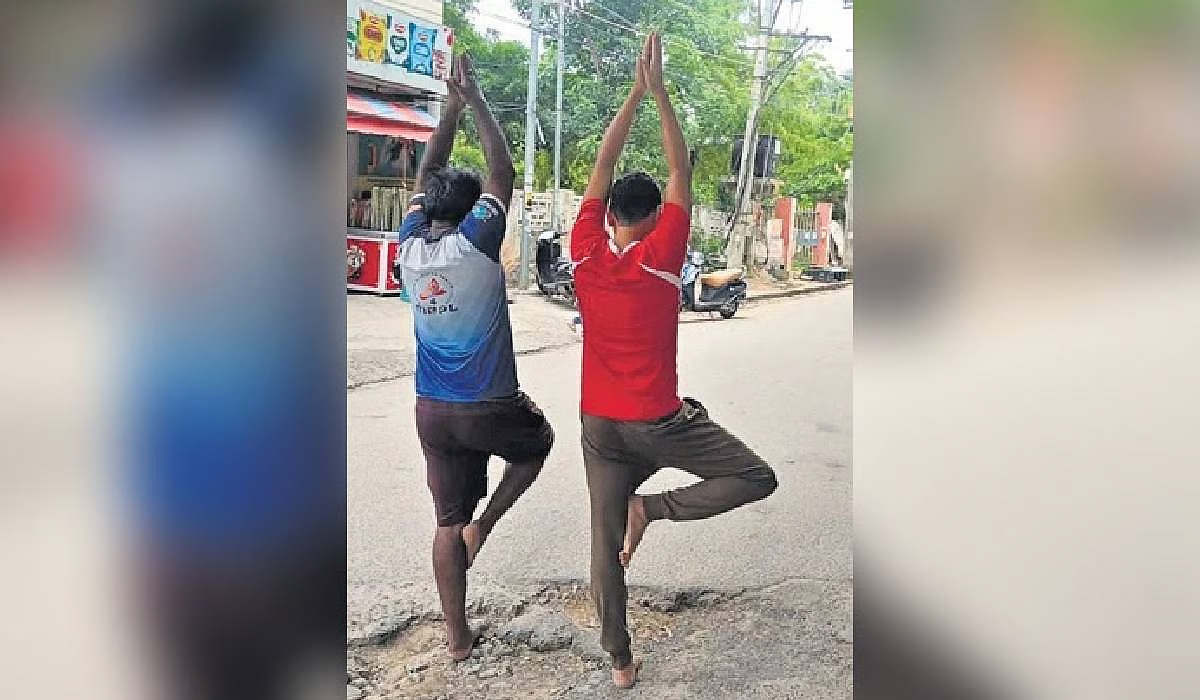
A creative protest on a potholed street in Hyderabad has thrown the spotlight back on the city’s long-standing civic neglect and poor road maintenance, compelling municipal authorities into action within hours. In a move that blended satire with social commentary, two citizens performed yoga poses—specifically the ‘tree pose’—in a waterlogged pothole in Hafeezpet, grabbing public attention and triggering the Greater Hyderabad Municipal Corporation (GHMC) to finally fix the crater that had been left unattended for over six months.
The protest, dubbed “Pothole Asana” on social media, was not merely an act of performance art but a strategic call for accountability. By the end of the day, the road was repaired, signalling an unusually swift response from the civic body, albeit reactive rather than proactive. According to civic officials, road maintenance in the Hafeezpet locality was pending due to resource allocation being prioritised toward arterial roads. However, the virality of the protest—amplified by memes, shares, and sharp public criticism—forced an immediate shift in focus.
An official from GHMC confirmed that teams have now been directed to address similar complaints in other high-density areas, including Madhapur, Jubilee Hills, and Miyapur. The GHMC acknowledged that community-led alerts often play a role in identifying and expediting problem areas, but officials insisted long-term plans are in place to tackle recurring issues. Hyderabad has witnessed a spate of symbolic civic protests in recent years. From planting saplings in potholes to sailing paper boats in flooded streets, residents have continuously found innovative ways to expose urban lapses. Experts believe such demonstrations, though often humorous, serve as critical civic interventions, especially in the absence of robust feedback mechanisms within public infrastructure systems.
Urban planners point out that Hyderabad’s rapid urban expansion, coupled with inconsistent road audits, has created a lag between public grievance and administrative response. They note that while GHMC has deployed digital grievance platforms, actual turnaround times for basic road repairs remain unpredictable. Despite the fix in Hafeezpet, local residents expressed cautious optimism. “It should not take a viral photo or a protest to fix a road hazard,” said a member of a civic advocacy group based in the area. “These short-term fixes are welcome, but structural planning and annual road health audits are what we really need.”
Meanwhile, civic engineers have reiterated that monsoon seasons present challenges to asphalt laying and durable road repair, but added that rapid response protocols are being refined. As Hyderabad eyes a transition to a more sustainable, commuter-friendly cityscape, civic experts underline that citizen engagement, coupled with municipal accountability, is essential. The pothole protest may have served as a spark—but long-term resilience in public infrastructure will depend on consistency, transparency, and a willingness to act before the next viral video.
Also Read : Hyderabad Plans Ropeway to Connect Golconda Fort and Tombs
