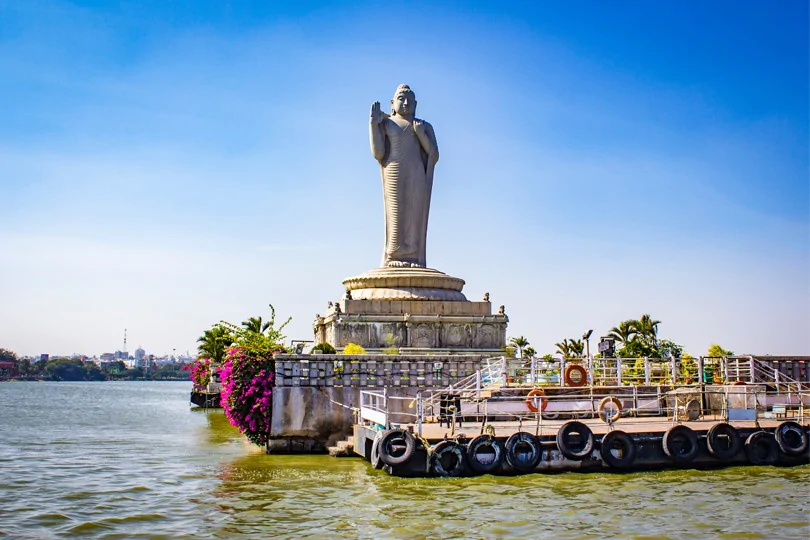
Hyderabad Plans New Urban Tourism Landmarks
Hyderabad is preparing to recalibrate its urban tourism economy with a series of large-scale leisure and cultural projects, including an artificial inland beach at Kotwalguda, as the state government seeks to broaden the city’s appeal beyond technology and heritage. The proposed investments underline a strategic push to attract longer stays, diversify employment and integrate tourism into Hyderabad’s evolving urban development model.
At the centre of the plan is a ₹235 crore artificial beach facility on the city’s outskirts, envisioned as a controlled recreational waterfront offering boating, leisure activities and public open spaces. Officials say the project is intended to provide a climate-resilient alternative to coastal tourism while reducing travel-related emissions associated with long-distance leisure trips. Industry experts note that such destinations, if carefully managed, can help cities retain tourism spending locally rather than losing it to other states. The project is being developed in collaboration with international consultants, a move authorities argue will help ensure safety, water management and long-term operational viability. A senior tourism official said the design is being evaluated for environmental impact, including water recycling systems, energy efficiency and crowd management, to avoid the ecological stress often linked to artificial attractions.
Beyond Kotwalguda, the government has outlined additional tourism infrastructure aimed at different visitor segments. A tunnel aquarium, comparable in scale to facilities in global leisure hubs, is under consideration, alongside a flying theatre and caravan park in Vikarabad. Together, these projects reflect a shift towards experience-led tourism, increasingly seen as a growth driver for urban economies competing for domestic and international visitors. Another significant proposal is a 100-acre international cultural centre planned at Future City. Urban planners say such a facility could play a dual role: supporting cultural exchange while acting as a convention and exhibition anchor that complements Hyderabad’s existing business travel market. If integrated with public transport and inclusive access policies, the centre could strengthen the city’s position in the meetings and events sector without exacerbating congestion or land-use inequality.
Recognising the workforce demands of an expanding tourism ecosystem, the state also plans to establish a tourism entrepreneurship school, STEP, focused on skill development for local youth. According to policy analysts, linking tourism growth with structured training is critical to ensuring that new jobs are accessible, gender-neutral and aligned with long-term urban livelihoods rather than seasonal employment. Taken together, the Hyderabad tourism development strategy reflects an attempt to balance economic diversification with sustainable city-building. While the success of these projects will depend on execution and environmental safeguards, they signal a broader effort to embed leisure infrastructure within an inclusive, low-impact urban framework one that treats tourism not as an isolated sector, but as part of the city’s social and spatial future.
Hyderabad Plans New Urban Tourism Landmarks