


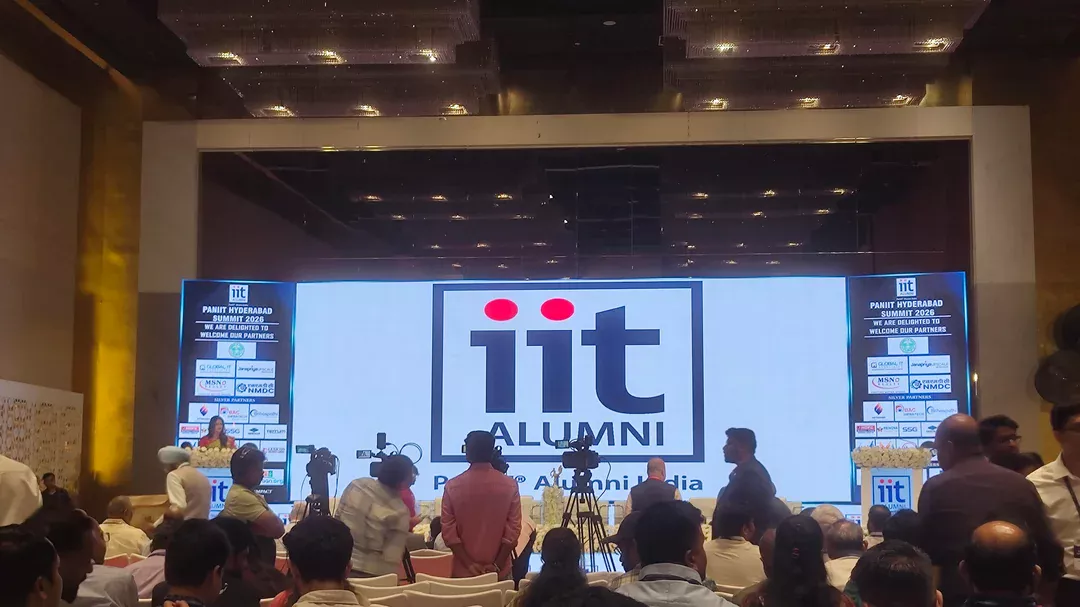
More than 500 participants from government, academia and industry gathered in Hyderabad for the PanIIT Hyderabad Summit 2026, a forum that explored how technology, digital governance and infrastructure are reshaping India’s economic and innovation landscape. The day-long event was hosted at The Westin Hyderabad Mindspace and brought together members of the global alumni network of the Indian Institutes of Technology.
The summit served as a platform for policymakers, researchers and technology leaders to discuss emerging opportunities across artificial intelligence, digital public infrastructure, healthcare transformation and sustainable energy systems. Participants also examined how India’s innovation ecosystem is evolving as cities such as Hyderabad position themselves as global technology hubs.Speakers highlighted the role of digital public infrastructure in transforming service delivery across sectors. Officials involved in national digital health programmes said India is moving toward integrated health systems supported by interoperable digital platforms. These systems are designed to reduce fragmentation in healthcare records and improve access to services while allowing data exchange with user consent.
The PanIIT Hyderabad Summit 2026 also examined the growing importance of energy infrastructure in supporting industrial expansion. Policy experts noted that renewable energy capacity in India has crossed key milestones in recent years, reflecting the country’s transition toward cleaner power sources while maintaining industrial growth.Another discussion focused on the rapid rise of artificial intelligence and autonomous digital tools. Technology analysts noted that advanced AI systems are beginning to automate complex enterprise tasks, opening new possibilities for small teams and individual innovators to build globally scalable technology platforms.Hyderabad’s emergence as a major destination for global technology investment also featured prominently in the conversations. Officials pointed to the city’s expanding base of global capability centres, pharmaceutical research institutions and aerospace companies as evidence of its growing influence in the national innovation ecosystem.
Panel discussions also explored the evolution of India’s engineering education system and the role of research institutions in supporting technological progress. Academic leaders emphasised that engineering institutes are increasingly focusing on applied research, innovation and startup incubation rather than traditional classroom education alone.Participants discussed examples of international best practices in areas such as water management, urban sustainability and resource efficiency. Experts noted that cities around the world are investing heavily in circular water systems, wastewater recycling and climate-resilient infrastructure to manage growing urban populations.
The summit also included dedicated sessions for startup founders to present business ideas to investors and industry mentors. The programme was organised in collaboration with T Hub and T Works, two institutions that support technology entrepreneurship in Telangana.Observers say gatherings like the PanIIT Hyderabad Summit 2026 reflect the increasing importance of collaboration between government, academia and industry in shaping India’s next phase of economic growth. As digital technologies and infrastructure systems converge, such forums help build partnerships that can accelerate innovation while addressing complex national challenges.With Hyderabad continuing to attract technology investment and research institutions, the city is likely to remain a key venue for discussions shaping the future of India’s knowledge economy.
Hyderabad PanIIT Summit Highlights Tech Governance Future
