


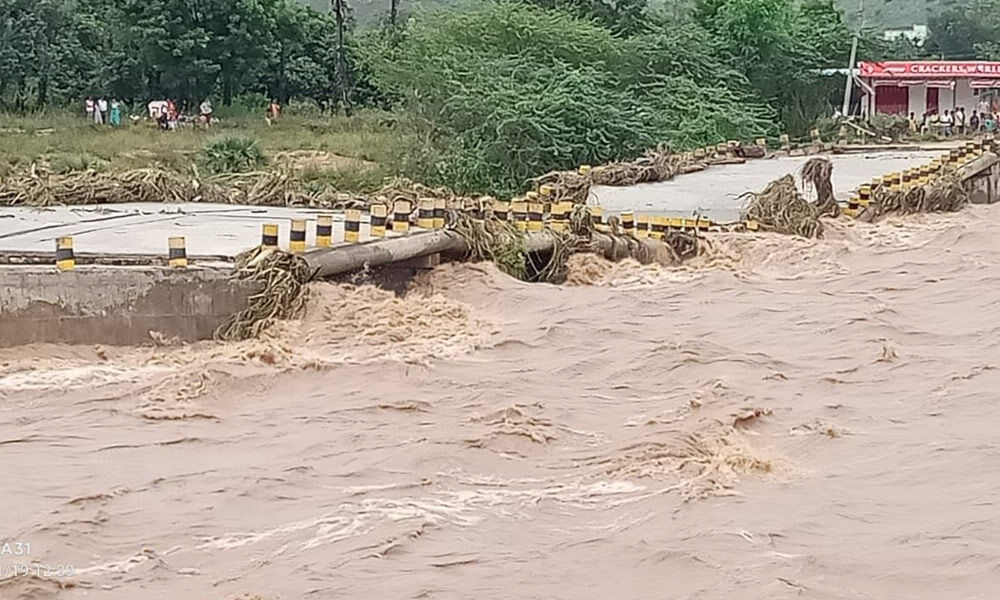
Train operations between Hyderabad and Nizamabad continued to remain severely disrupted on Friday for the third consecutive day after relentless monsoon rains and floods damaged railway tracks across multiple sections. The South Central Railway (SCR) has cancelled, partially cancelled, or diverted several services, impacting thousands of passengers and raising concerns about infrastructure resilience in the face of climate-induced extreme weather.
Officials confirmed that train movement was halted in the Bhiknur–Talmadla and Akanpet–Medak sections after floodwaters overflowed onto tracks, washing away soil and gravel under bridges. Engineers rushed to assess the structural damage, launching emergency track restoration works in an effort to prevent derailments and further accidents. Authorities emphasised that halting services was necessary to safeguard passengers after floodwaters were reported flowing under the Shamnapur railway bridge in Medak district.While safety was ensured, inconvenience grew as SCR announced a long list of train cancellations, including services on the Kacheguda–Narkhed, Kacheguda–Purna, Medak–Kacheguda, and Bodhan–Kacheguda routes.
Also Watch: An Exclusive Interview with Sanjeev Jaiswal (IAS), CEO MHADA
Several intercity services were also impacted, with diversions routed through alternative lines bypassing Nizamabad and Karimnagar. Long-distance trains connecting Mumbai, Kacheguda, and Balharshah were diverted, skipping multiple stoppages, adding hours of delay to journeys.Senior railway officials admitted that the situation underscores the urgent need for climate-adaptive rail infrastructure. Heavy downpours and flash floods, increasingly frequent in southern India, are disrupting transport corridors, raising concerns about economic and environmental sustainability. Transport experts highlight that the crisis also reflects the pressing requirement to integrate green urban planning and water management into railway development.
The cascading impact of the disruption has been felt beyond passengers. Goods trains carrying essential commodities, food supplies, and industrial raw materials were also slowed, delaying supply chains in the region. Local businesses, especially in Telangana’s smaller towns, reported higher logistical costs due to freight diversions.Even as restoration work is being expedited, environmental experts argue that resilient railway design, with stronger drainage systems and elevated tracks in flood-prone belts, must become a long-term policy priority. The incident also reignites the debate over how urban expansion and poor water conservation practices amplify flooding risks, leaving essential infrastructure exposed.For now, railways have advised passengers to check service updates before planning travel. With meteorological agencies warning of continued heavy rainfall, officials are on high alert to prevent further disruption. The episode adds to a growing list of extreme weather-related transport breakdowns across Indian cities, strengthening the call for sustainable, eco-friendly, and climate-resilient infrastructure.
Also Read : Hyderabad Nagpur Highway Traffic Diverted After Heavy Rain Causes Major Damage
Hyderabad Nizamabad train services disrupted as floods damage multiple tracks
