


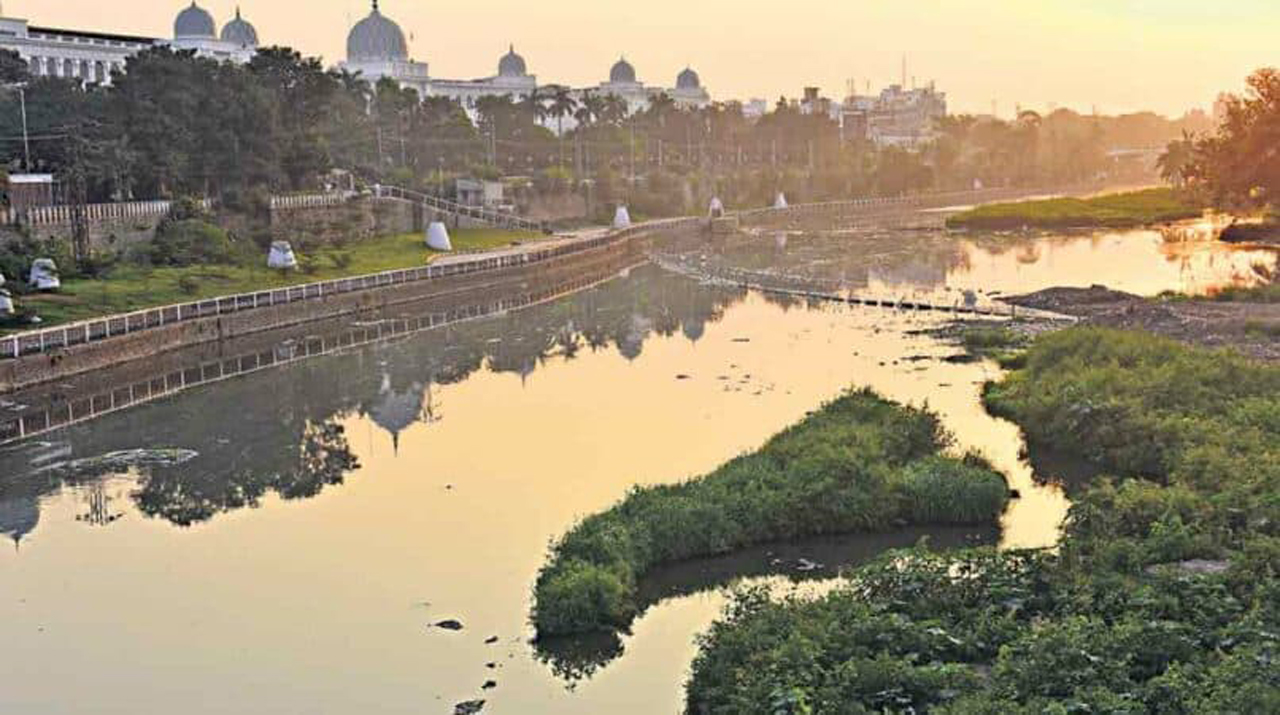
Hyderabad’s ambitious river renewal blueprint has encountered organised resistance from residents living along the Musi, with several housing colonies rejecting a proposed land surrender mechanism linked to the Musi Riverfront Project. The pushback raises wider questions about how large-scale urban regeneration is balanced against housing security, transparency and inclusive growth in rapidly expanding Indian cities.
The Musi Riverfront Project, anchored by a state-backed development corporation, is designed to restore the heavily polluted river through sewage interception, river cleaning, embankment strengthening and creation of public infrastructure. Officials have positioned it as a long-term ecological and mobility intervention intended to reshape Hyderabad’s environmental resilience and unlock river-adjacent land for public use.However, residents from multiple neighbourhoods along the river corridor have opposed a recent government notification that initiates land surrender in exchange for Transferable Development Rights (TDRs). TDRs allow landowners to receive development rights elsewhere in lieu of physical land acquisition, a mechanism often used in infrastructure expansion. Local residents argue that the proposal lacks clarity on boundary demarcation, compensation frameworks and rehabilitation safeguards.
Community representatives contend that authenticated river boundary maps and buffer zone details have not been placed fully in the public domain. Without these disclosures, they say households are unable to assess whether their properties fall within legally defined floodplains or proposed public zones. Many families in these colonies are still servicing housing loans, raising concerns about financial vulnerability if relocation or land pooling proceeds without structured consultation.Urban planning experts note that riverfront regeneration projects globally — from Seoul to Ahmedabad — succeed when ecological restoration is integrated with participatory planning. In Hyderabad, the Musi Riverfront Project has the potential to reduce flood risks, improve water quality and create inclusive public spaces. Yet, planners caution that bypassing structured Social Impact Assessments can generate prolonged litigation and delay execution timelines.
Some residents have also flagged procedural exemptions invoked under land acquisition rules, arguing that these dilute statutory requirements for consultation and impact analysis. Legal analysts suggest that clarity around environmental buffers, flood modelling and rehabilitation entitlements will be critical to maintaining investor confidence and preventing project slowdowns.From a real estate standpoint, the Musi Riverfront Project could significantly alter land valuations across central and eastern Hyderabad. River-adjacent precincts, if redesigned with climate-resilient infrastructure and accessible mobility corridors, may emerge as new mixed-use growth nodes. But uncertainty over land ownership patterns and compensation mechanisms risks dampening market stability in the interim.
A senior urban development official indicated that stakeholder engagement mechanisms are being reviewed to ensure smoother implementation. For Hyderabad, the outcome will test whether large-scale ecological regeneration can proceed without eroding housing security. As climate pressures intensify, the city’s approach to the Musi Riverfront Project may set a precedent for how Indian metros reconcile environmental renewal with equitable urban expansion.
Also Read:Pune Urban Connectivity Boost With Metro Extension
Hyderabad Musi Riverfront Project Faces Resident Pushback
