


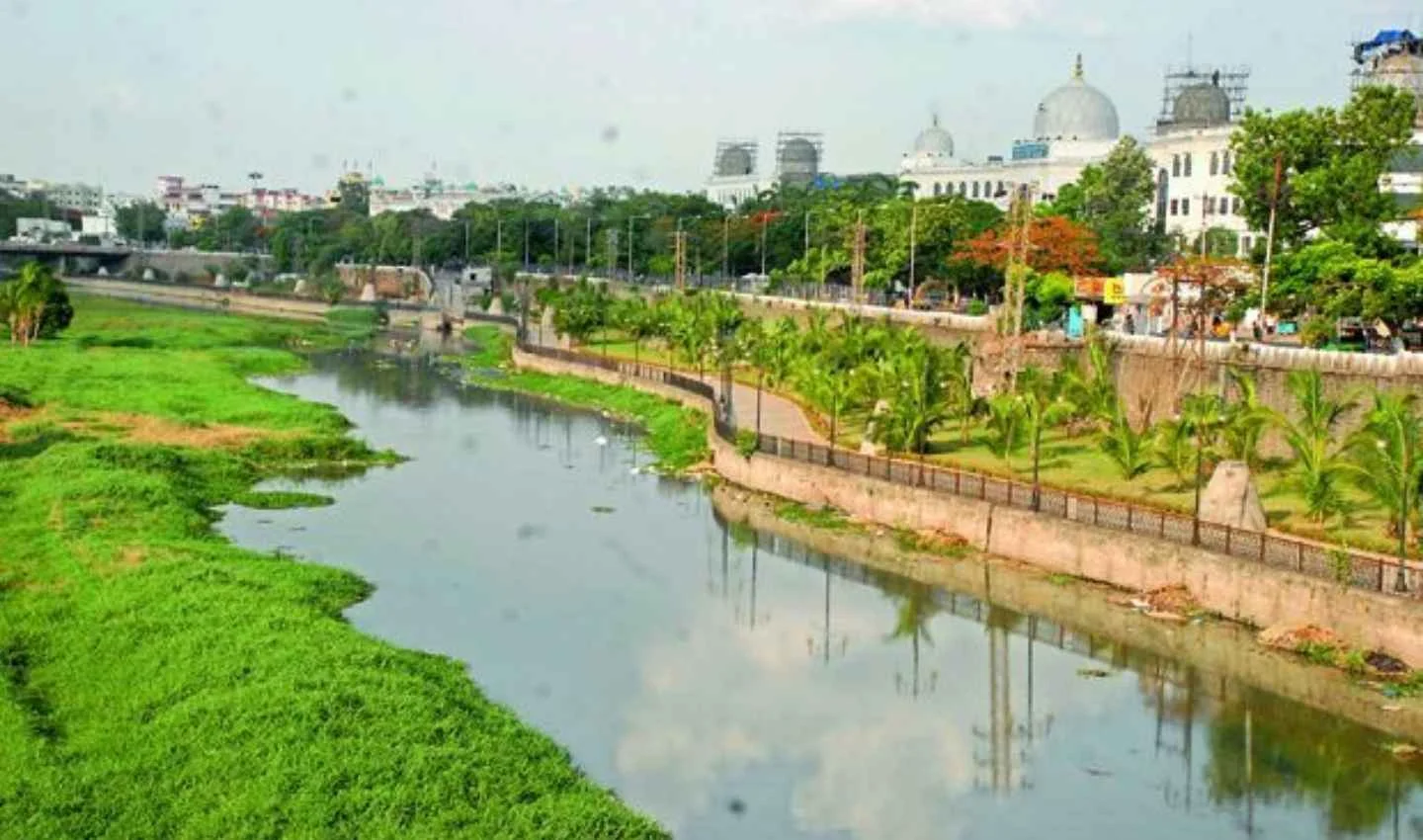
Hyderabad’s long-strained Musi River has re-entered public conversation, not through policy announcements or court directives, but via a series of cultural interventions staged along its polluted banks. Community-led folk performances tracing the river’s decline have emerged as a quiet yet consequential response to decades of environmental neglect, drawing attention to how urban growth has severed the river’s ecological and economic role.
Flowing from the forested highlands into the city’s dense core, the Musi once supported agriculture, drinking water needs and local livelihoods. Rapid urbanisation, coupled with fragmented infrastructure planning, has transformed large sections of the river into a carrier of untreated sewage, industrial discharge and solid waste. Downstream farming communities continue to rely on this compromised water source, embedding environmental degradation directly into food systems and rural incomes.Urban planners note that the Musi’s condition reflects a broader governance challenge common to expanding Indian cities. As Hyderabad’s built footprint widened, wastewater treatment capacity failed to scale at the same pace. Encroachments along floodplains, inadequate sewer networks and weak enforcement have compounded the problem, turning the river into a health and climate vulnerability rather than a resilient urban asset.
Against this backdrop, youth groups from settlements along the river corridor have turned to traditional storytelling, music and performance to document lived realities. Folk art forms native to the region have been used to narrate the Musi’s journey from its cleaner upstream origins to its heavily polluted urban stretches. These performances have taken place in open spaces along farmlands, under bridges and beside drains, bringing the issue into everyday public view rather than confined cultural venues.Cultural historians and environmental researchers observe that such initiatives serve a dual function. They preserve intangible heritage while also translating complex environmental failures into accessible narratives. Unlike technical reports, folk storytelling resonates across age groups and literacy levels, creating shared memory around ecological loss. This approach underscores how environmental awareness can emerge from community knowledge rather than formal campaigns.
From an economic perspective, the Musi’s decline carries hidden costs. Polluted irrigation water affects crop quality and farmer health, while degraded riverbanks reduce land value and increase flood risk during intense rainfall. Climate experts warn that as rainfall patterns grow more erratic, neglected urban rivers amplify disaster exposure, particularly for informal settlements clustered along their edges.While multiple revival plans for the Musi have been announced over the years, progress has remained uneven. Experts argue that any meaningful turnaround will require integrating sewage treatment upgrades, riverfront land-use controls and community participation into a single governance framework. Cultural engagement, they say, can complement infrastructure investment by sustaining public pressure and accountability.
As Hyderabad debates its future as a climate-resilient city, the Musi River remains a test case. The recent cultural mobilisation signals that citizens are no longer viewing the river as a lost cause, but as a shared responsibility whose revival is inseparable from equitable urban development and long-term environmental security.
Also Read:Hyderabad IT Corridor Flyovers Advance Construction
Hyderabad Musi River Crisis Draws Cultural Response
