


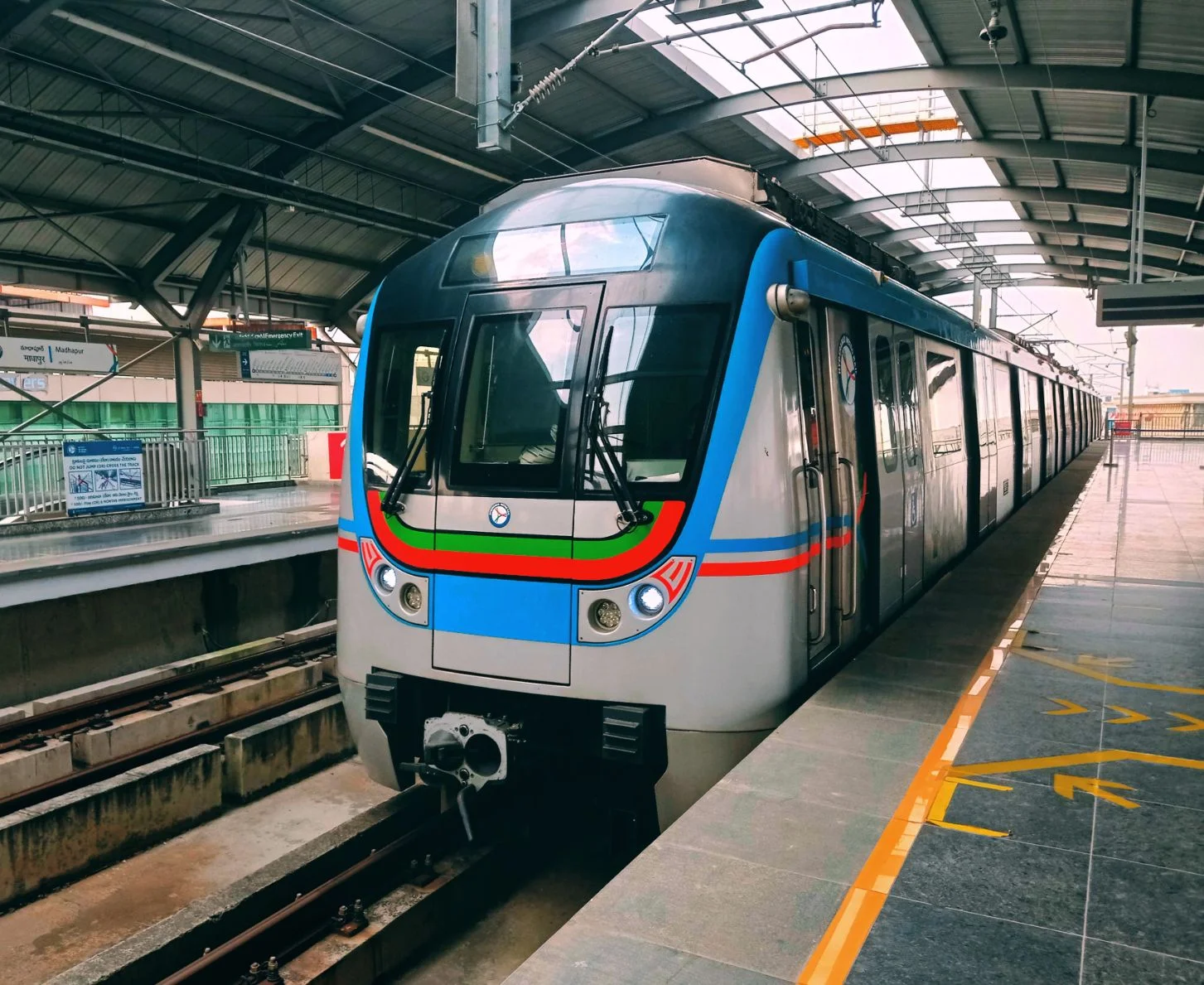
Hyderabad has formally submitted the Detailed Project Report (DPR) for Metro Phase 2B—comprising three corridors spanning 86.1 km and costing Rs 19,579 crore—to the Union government, as confirmed by Hyderabad Metro Rail Limited officials. This marks a strategic step forward in expanding the city’s orbital connectivity, aiming to integrate airport access, suburban centres and emerging residential hubs into a low‑carbon, equitable mass‑transit system.
Coming shortly after Telangana’s chief minister held discussions in Delhi with the Union Urban Affairs Ministry, the DPR covers routes from Rajiv Gandhi International Airport to Bharat Future City, Jubilee Bus Station to Medchal, and JBS to Shamirpet. The comprehensive package also includes project funding plans in line with central joint‑venture norms. Telangana’s state cabinet approved the project last month, signalling a unified political backing for Hyderabad’s second‑phase expansion. With the DPR now on the Union Minister’s desk, attention turns to securing full financial clearance and commencing execution under the Centre‑State partnership framework.
Under the Phase 2B proposal, Corridor IX (RGIA–Future City) will extend 39.6 km at an estimated Rs 7,168 crore. Corridor X (JBS–Medchal) adds 24.5 km for Rs 6,946 crore, while Corridor XI (JBS–Shamirpet) spans 22 km and Rs 5,465 crore. Together, these routes aim to link strategic economic and educational zones with residential areas, thereby reducing carbon emissions through transit modal shift. Financing follows a Centre‑State JV model: 30 per cent contribution from Telangana (Rs 5,874 crore), 18 per cent from the Centre (Rs 3,524 crore), 48 per cent from international financial institutions, and 4 per cent through private‑sector participation. Hyderabad Metro Rail Ltd’s MD highlighted that this mix adheres to urban rail financing norms, balancing public control with efficient capital deployment.
Infrastructure financing experts note that including multilateral funding via JICA or ADB allows for longer‑term repayment profiles and supports global best practices in sustainable transit infrastructure Civic planners affirm that equipping Hyderabad’s mass‑transit network with borrowings instead of higher fares helps preserve affordability and ridership. Analysts said that the airport corridor, linking RGIA to the proposed Skills University and Future City zone, could significantly reshape the low‑carbon mobility ecosystem. By facilitating seamless transfers between air, metro, and intercity transit, the corridor aligns with the city’s net‑zero ambition by reducing air‑polluting taxis and buses.
The DPR also places emphasis on equitable access. Corridor IX boosts connectivity to newer residential precincts north of the Outer Ring Road, while Corridor X and XI support transit‑oriented development near industrial and biotech clusters. Experts suggest these corridors reflect a socially inclusive urban transit strategy that transcends traditional radial urbanism, promoting gender‑neutral, affordable mobility across income levels. However, transport economists caution that sustaining the capital‑intensive build‑out requires more than physical infrastructure—it demands operational cost control and fare subsidies that do not burden commuters. A national‑level urban transport specialist commented, “If fares spike post‑launch, Hyderabad risks undermining its own climate and equity goals.”
The DPR’s timeline indicates that, pending Union approval, tenders for civil works will begin in late 2025, with construction to follow in 2026. In combination with the Phase 2A corridors—already under central review—the city is on track for a 162.5 km metro network encompassing eight lines and nearly Rs 43,848 crore in investment. From a systemic vantage, observers highlight that Hyderabad has avoided the pitfalls of its Phase I public‑private partnership by opting for Centre‑State collaboration in Phase II. This shift may insulate future operations from private sector lapses and centre‑funded revenue shortfalls.
Yet real‑world issues await: integration with feeder bus lanes, last‑mile pedestrian access, and smart payment systems will determine how Phase 2B adds value to commuters rather than merely extending track‑kilometres. Urban resilience experts welcome Phase 2B’s eco‑design provisions, such as solar‑powered stations, rain‑water harvesting, energy‑efficient train systems and regenerative braking. These are deemed essential to delivering a truly low‑carbon transit infrastructure.
Policy watchers say Hyderabad must now pursue systematic implementation discipline: synchronised utility relocation, minimal disruption during construction, green‑belt preservation near corridors and participatory engagement with affected neighbourhoods. As the state awaits formal sanction, Telangana officials are reinforcing Phase 2B as a transformative investment. In last week’s engagement, the chief minister pressed the Union Minister to expedite both Phase 2A and 2B approvals, underscoring the time‑sensitive nature of sustainable urban mobility expansion .
Whether city leaders can translate DPR ambitions into on‑time delivery—with cost control, environmental safeguards and commuter‑friendly features—will determine Phase IIB’s legacy. For now, DPR submission marks validation of Hyderabad’s strategic pivot toward equitable, zero‑carbon transit infrastructure.
Also Read : Chalakudy Rooftops Bloom With Fresh Vegetables
