


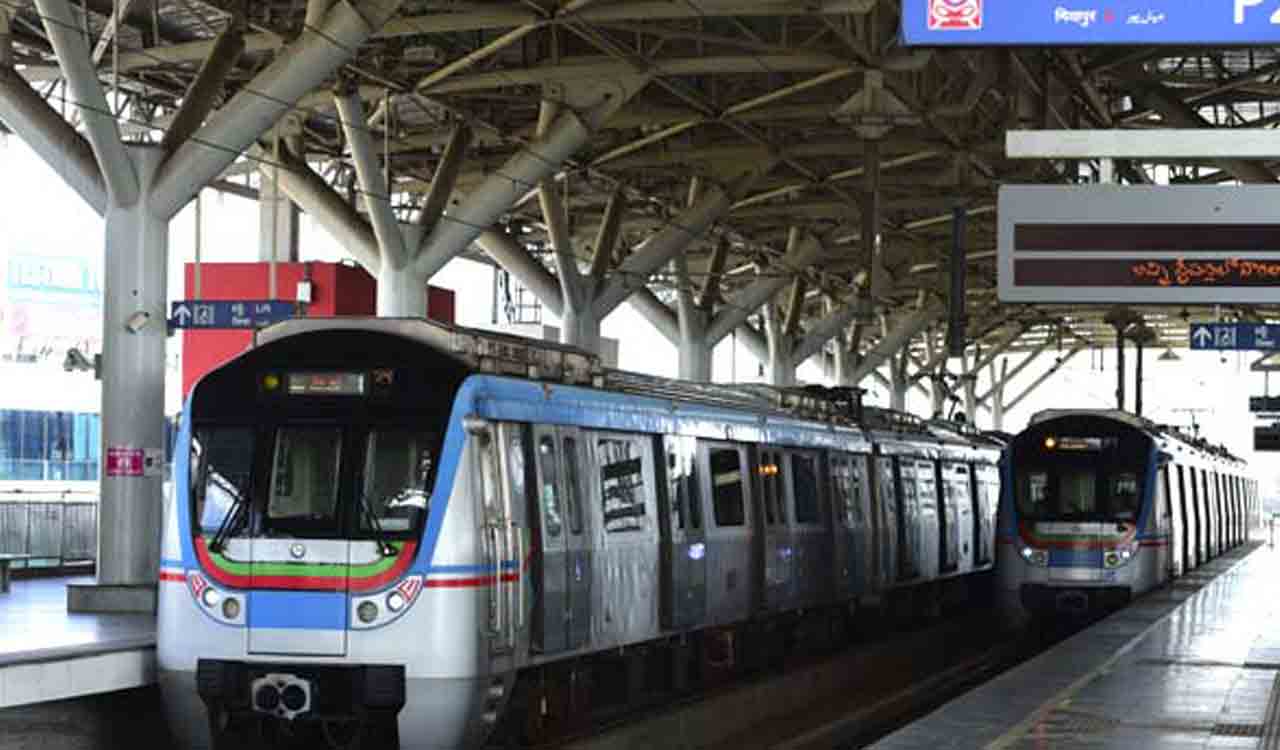
Hyderabad Metro commuters continue to face severe overcrowding as the rail network operates without adding additional coaches for the past eight years, raising questions about service adequacy and operational planning. Despite increasing daily ridership nearing five lakh passengers, peak-hour travel remains uncomfortable, particularly for women and senior citizens, who frequently experience extreme crowding and limited personal space.
Officials in the state transport department indicated that the recent takeover of metro operations from the previous private operator has renewed hopes for improvement. However, experts note that structural limitations, operational inefficiencies, and a lack of proactive infrastructure expansion have exacerbated commuter frustrations. “Platforms are capable of accommodating longer trains, yet no additional coaches have been deployed to match the growing demand,” said a senior urban mobility analyst. Daily commuters highlight overcrowding on key routes such as Raidurg to Ameerpet, with peak travel described as unsafe and physically taxing. Safety advocates argue that insufficient capacity not only affects commuter comfort but also increases risks during emergencies. The current three-coach trains are among the shortest in the country, amplifying congestion during peak hours and intensifying heat and ventilation concerns.
Beyond train capacity, the metro system has faced criticism for poor amenities. Public transport experts have observed that unmaintained washrooms at stations, often charging additional fees, reflect a gap between service branding and operational reality. Metro infrastructure such as pillars and ducts are reportedly neglected, with authorities focusing on advertising revenue rather than maintenance. Parking facilities at stations remain another point of contention. Commuters report that despite paying for parking, vehicles are exposed to weather extremes due to the lack of sheltered infrastructure, highlighting gaps in the overall commuter experience. Urban planning specialists argue that holistic integration of amenities and safety measures is essential for the metro to function as a truly sustainable, equitable, and gender-inclusive transport system.
The state government’s plans to improve metro operations post-operator exit are being closely watched. Officials suggest that addressing critical issues—such as adding coaches, enhancing facilities, and ensuring consistent service standards—will be pivotal in restoring commuter trust and improving overall ridership experience. Experts emphasise that without structural and operational reforms, the metro risks undermining its mandate as a zero-emission, sustainable urban mobility solution. Ultimately, while the change in management presents opportunities, it also exposes long-standing systemic shortcomings. Enhancing service capacity, improving commuter safety, and maintaining eco-friendly operations are key to transforming Hyderabad Metro into a model of efficient urban public transport.
Also Read: Bengaluru Metro Fare Hike Sparks Confusion Over Formula Errors And Commuter Impact
