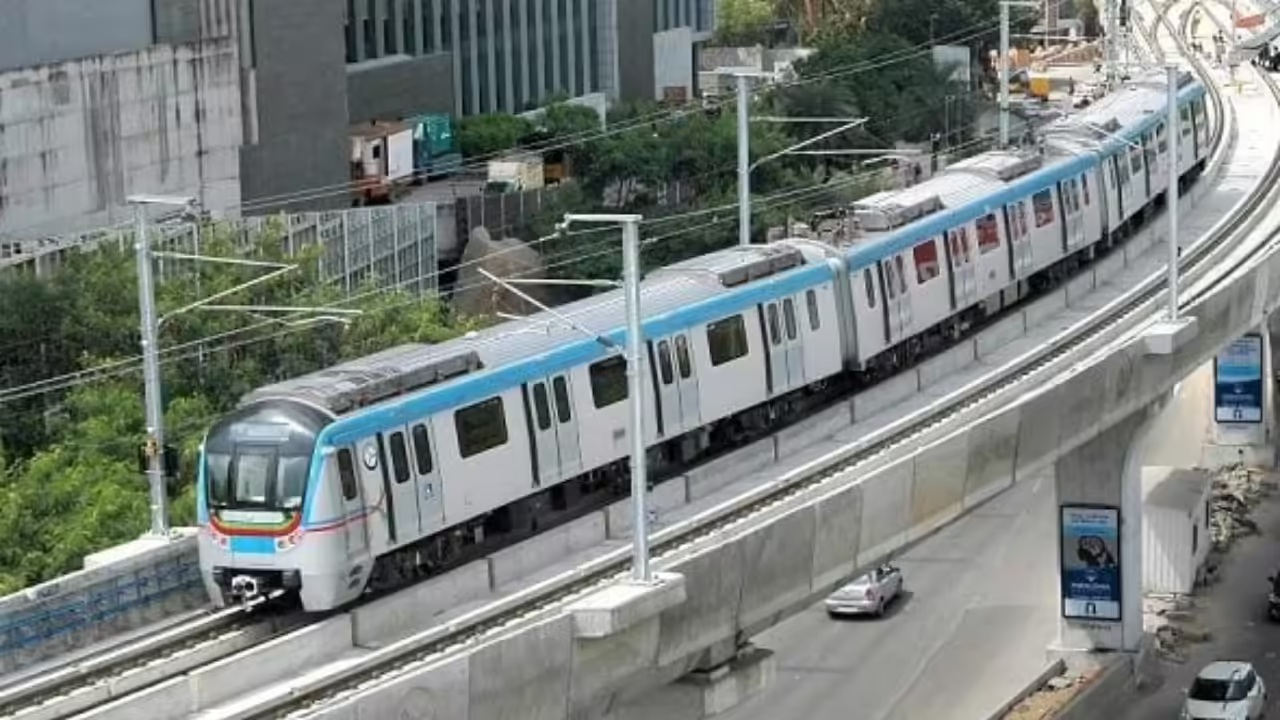
Hyderabad Metro takeover reshapes public transport economics
The Telangana government has moved decisively to assume full control of Hyderabad’s Metro Rail network, signalling a shift toward state-led urban transport management at a time when ridership is rising and long-term sustainability concerns are becoming unavoidable. The takeover of the city’s operational metro system is expected to be completed before the end of the current financial year, alongside preparatory steps for capacity expansion and new corridors.
Urban transport officials say the Hyderabad Metro takeover is aimed at stabilising operations after years of financial stress under a public-private partnership model that struggled with lower-than-projected revenues and pandemic-related disruptions. By absorbing outstanding liabilities estimated at about ₹13,000 crore and settling the private operator’s equity exposure through a one-time payment, the state is positioning the Metro as a public utility rather than a commercial concession. For a city where nearly five lakh commuters rely on Metro services daily, the move carries wider implications. Urban planners note that predictable funding and public oversight are critical for mass transit systems to support compact growth, reduce road congestion and limit transport emissions. “Metro systems only deliver climate and productivity benefits when they are scaled and integrated, not constrained by balance sheets,” said an infrastructure policy expert familiar with urban rail projects.
The Cabinet has also cleared land acquisition funding of close to ₹2,800 crore for Phase II of the Metro, covering multiple planned corridors. Early land readiness is expected to reduce execution delays once statutory approvals are secured, a bottleneck that has slowed metro expansions in several Indian cities. Transport economists say this groundwork is essential if Hyderabad is to align future growth with transit-oriented development rather than car-dependent sprawl. In parallel, the state has approved the induction of longer train sets to ease crowding on existing routes. The proposed procurement of ten new trains with six coaches each would double per-trip capacity on select corridors. Platforms across the network were originally designed to accommodate longer rakes, allowing upgrades without major civil modifications. Once operational clearances are granted, tenders are expected to be issued at an estimated cost of ₹650–700 crore.
Officials have also indicated that an additional metro corridor is on track to commence services from February, expanding connectivity toward emerging residential and employment zones. While initial operations may be limited, transport analysts view this as a test of whether public ownership can accelerate service rollouts and operational reliability. As Hyderabad continues to add population and commercial density, the success of the Hyderabad Metro takeover will be measured not only by financial recovery but by its ability to anchor low-carbon mobility, support equitable access to jobs, and guide responsible real estate development around stations. The coming months will reveal whether the transition can translate administrative control into tangible urban outcomes.