


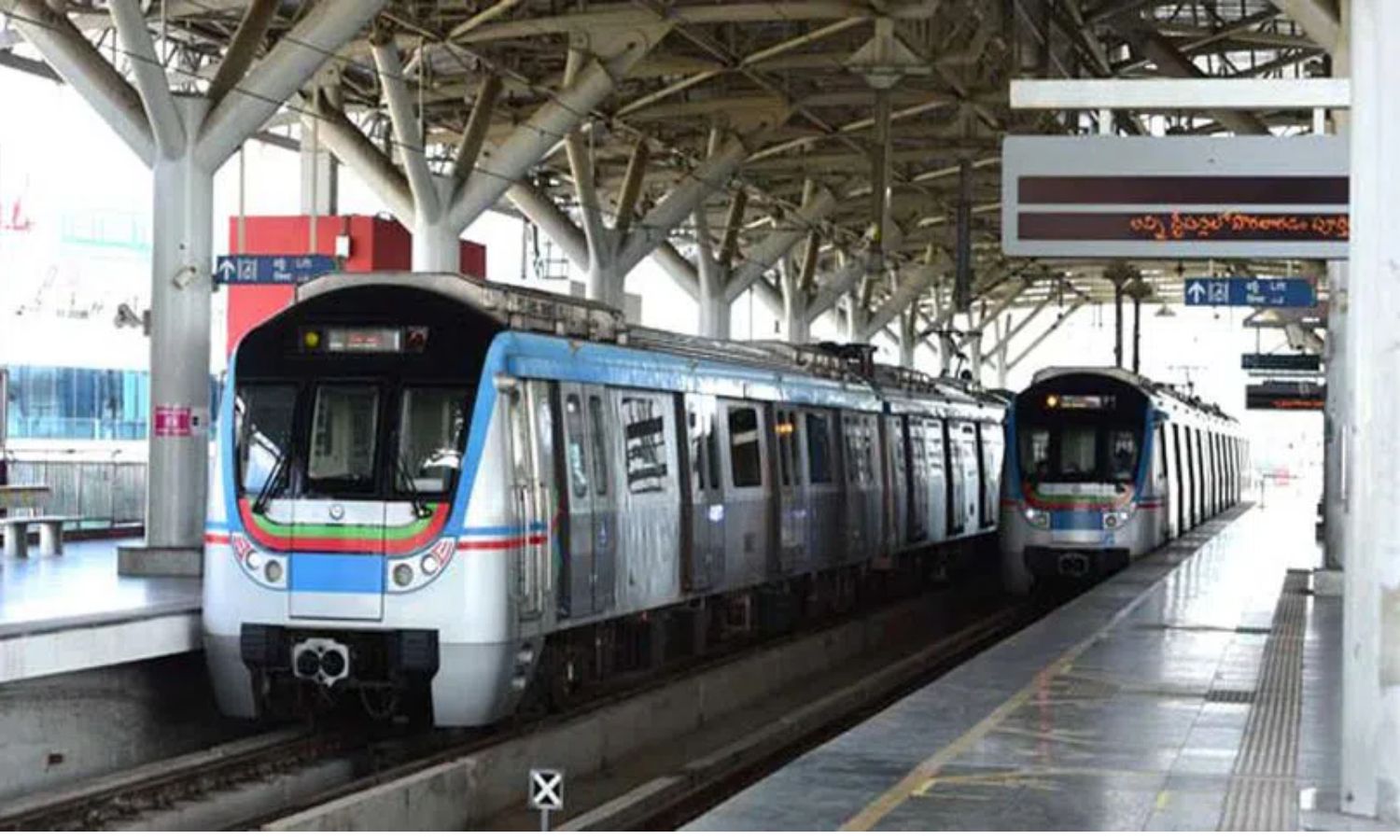
The Telangana government has approved Phase II-B of the Hyderabad Metro Rail (HMR) project. This expansion, covering 86.1 km across three corridors, is set to transform the city’s public transport landscape. The approved corridors include the Rajiv Gandhi International Airport (RGIA) to Future City (Skills University), Jubilee Bus Station (JBS) to Medchal, and JBS to Shamirpet.
The RGIA to Future City corridor spans 39.6 km, featuring 1.5 km underground, 21 km elevated, and 17 km at-grade sections. It will connect the airport to the emerging educational hub, facilitating easy access for students and professionals. The JBS to Medchal corridor covers 24.5 km with 18 stations, aiming to improve connectivity to the northern suburbs, easing traffic congestion, and providing a reliable alternative to road transport. The JBS to Shamirpet corridor extends 22 km, with 14 stations, linking the central city to educational and research institutions in Shamirpet, promoting balanced regional development. The project is estimated to cost ₹19,579 crore and will be executed by Hyderabad Airport Metro Limited (HAML), a joint venture between the state and central governments.
The funding model includes contributions from both governments, international financial institutions, and public-private partnerships, ensuring a sustainable financial structure for the project’s execution. The expansion aligns with the state’s vision of creating a sustainable, eco-friendly, and equitable urban transport system. By reducing traffic congestion and promoting the use of public transport, the project aims to lower carbon emissions, contributing to the state’s zero-net carbon goals. Furthermore, the development of these corridors is expected to stimulate economic growth in the regions they serve, providing better access to education, employment, and healthcare facilities. The integration of metro services with existing transport networks will offer seamless connectivity, enhancing the overall quality of life for residents.
The Telangana government’s commitment to sustainable infrastructure development is evident in this project. By prioritizing public transport and reducing dependence on private vehicles, the metro expansion supports the creation of gender-neutral and inclusive urban spaces, catering to the diverse needs of the city’s population. As the project progresses, it is anticipated to set new benchmarks in urban mobility, serving as a model for other cities aiming to develop sustainable and efficient public transport systems.
Also Read :Navi Mumbai Metro Launches QR Ticket System for Commuters
