


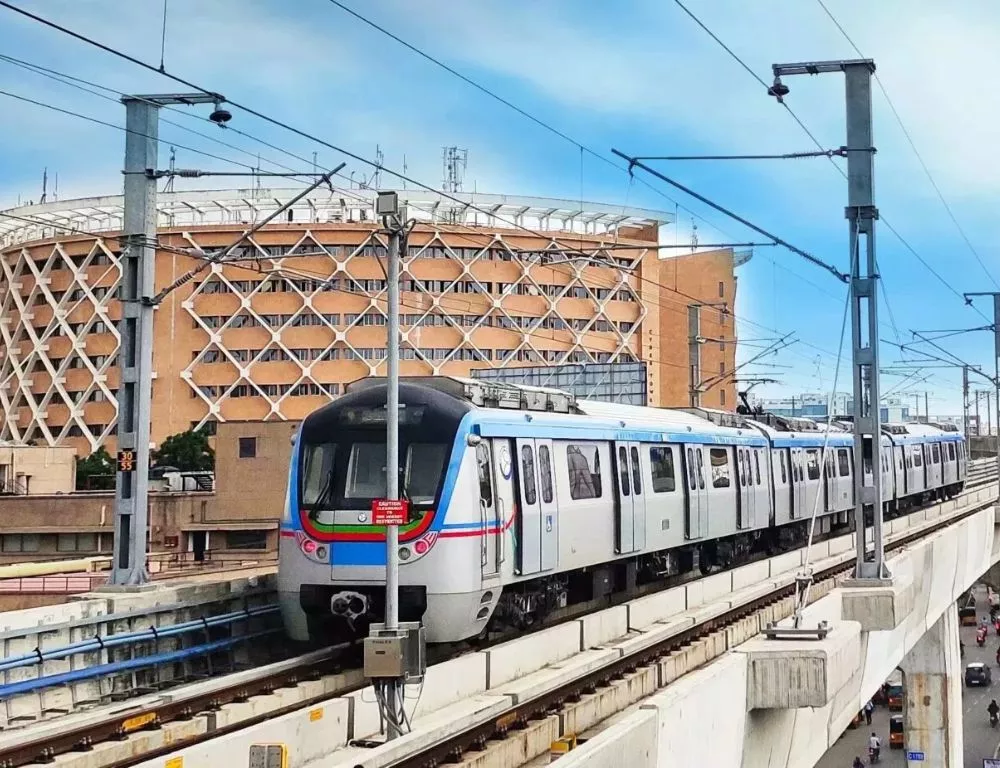
Hyderabad’s urban transport expansion has moved a step closer to execution after long-pending land constraints along key metro corridors were resolved, unlocking construction momentum for critical stretches of the city’s rail network. The clearance of multiple disputed land parcels removes a significant bottleneck that had slowed progress on metro alignment work, with implications for mobility, urban equity and climate-responsive transport planning.
City officials confirmed that several properties under institutional management along proposed metro routes have now been cleared for infrastructure use following coordinated negotiations and administrative approvals. The resolution is expected to accelerate work on elevated corridors and stations that are central to improving east–west and north south connectivity in one of India’s fastest-growing metropolitan regions. Urban transport planners note that Hyderabad’s rapid outward growth has intensified pressure on road networks, increasing commute times and vehicular emissions. Metro rail expansion is viewed as a critical intervention to shift daily travel away from private vehicles towards mass transit, particularly for working-class commuters and students travelling across longer distances. Delays caused by unresolved land ownership had earlier raised concerns about cost escalation and missed ridership targets. The cleared parcels fall along densely built sections where land acquisition has historically been complex due to overlapping institutional, civic and community interests. Industry experts say the breakthrough demonstrates the importance of negotiated settlements over prolonged legal disputes, especially in cities where infrastructure projects intersect with heritage, religious or community-owned land. Beyond construction timelines, the development has broader urban implications. Metro connectivity tends to reshape neighbourhood economies by improving access to jobs, education and healthcare while reducing dependence on carbon-intensive transport. Urban economists point out that transit-led development also influences housing demand, retail clustering and land values, making timely execution essential for balanced city growth.
Environmental planners highlight that Hyderabad’s metro expansion aligns with the city’s climate resilience goals. Public transport systems powered increasingly by cleaner energy sources can significantly cut per-capita emissions. However, experts caution that sustainability gains depend on last-mile connectivity, pedestrian infrastructure and integration with bus networks areas that require parallel investment. The clearance is also expected to restore confidence among contractors and financiers involved in the metro programme, many of whom had flagged uncertainties linked to stalled sections. With work resuming, authorities aim to synchronise construction schedules to minimise disruption to traffic and local businesses, a recurring challenge in dense urban corridors. For residents living along the affected routes, the resolution brings mixed emotions relief at the prospect of improved connectivity, but also concerns around construction impacts, access and compensation transparency. Urban policy specialists stress the need for continuous community engagement as work progresses, ensuring that infrastructure delivery remains people-centric and inclusive.
As Hyderabad positions itself as a technology and services hub, efficient public transport is no longer optional but foundational to its economic competitiveness and liveability. The latest land clearance marks a pragmatic step forward. The focus now shifts to execution ensuring that the metro expansion delivers on its promise of cleaner mobility, equitable access and a more resilient urban future.
Also Read: Marubeni Expands India Housing Bet In Pune
Hyderabad Metro Expansion Clears Key Land Bottleneck
