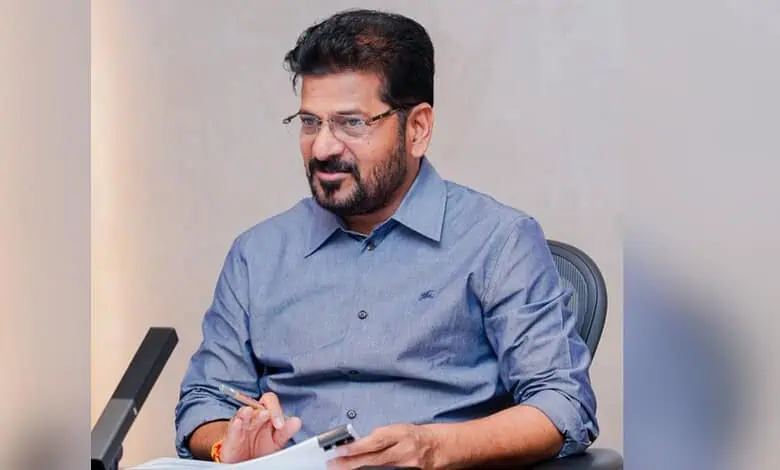
Telangana’s Congress government completed 1,000 days in office on September 1, highlighting welfare expansion, investment commitments, job creation and major infrastructure plans in its latest performance review. The government has also set ambitious economic targets for the State, including a $1 trillion economy by 2034 and $3 trillion by 2047. The figures offer a snapshot of the administration’s priorities as Telangana plans its next phase of urban and economic growth.
The government’s report points to several large-scale welfare measures introduced or expanded during its tenure. It said more than 25 lakh farming families benefited from crop-loan waivers of up to ₹2 lakh, while more than ₹36,000 crore was distributed through the Rythu Bharosa scheme. The administration also highlighted free bus travel for women under the Mahalakshmi scheme. According to the government, the initiative has recorded more than 335 crore passenger trips. Other measures include free electricity for more than 53 lakh households under Gruha Jyothi and subsidised domestic LPG cylinders for around 43 lakh families.
Housing has also emerged as a significant component of the welfare programme. The government said 4.5 lakh Indiramma houses were completed during the first phase, with eligible families receiving ₹5 lakh in financial assistance. Employment and private investment form another part of the government’s assessment. It reported more than 72,000 government appointments over the 1,000-day period, including 10,006 teacher recruitments. The State also cited investment commitments of ₹1.29 lakh crore through its industrial approval system. Agreements worth another ₹5.75 lakh crore were signed during the Telangana Rising Global Summit in 2025. Such commitments could support industrial expansion and employment if they translate into actual projects and sustained capital deployment. The implementation rate, rather than announced investment alone, will remain an important measure of economic impact. Several major infrastructure programmes are also central to Telangana’s development strategy. Work is progressing on the approximately 360-km Regional Ring Road around Hyderabad, while the proposed second phase of the Hyderabad Metro covers about 122.9 km.
The Musi River rejuvenation programme is another major urban intervention. Together, these projects could influence future development patterns around Hyderabad by improving mobility and reshaping access to emerging growth corridors. However, large infrastructure programmes will require careful land management, environmental planning and coordination between transport and urban development. Their long-term value will depend on whether new connectivity supports balanced growth rather than simply encouraging outward expansion. The government has positioned Bharat Future City as part of its long-term economic strategy, with the proposed development planned as a net-zero smart city. The wider objective is to make Telangana a $1 trillion economy by 2034 and a $3 trillion economy by 2047. Achieving those targets will depend on sustained investment, productive employment, infrastructure delivery and efficient use of public resources. As the administration enters its next phase, the focus will increasingly shift from announcing programmes to measuring outcomes. Welfare coverage, completed infrastructure, realised investments and employment creation will provide clearer indicators of whether Telangana’s growth strategy is delivering inclusive and resilient development.