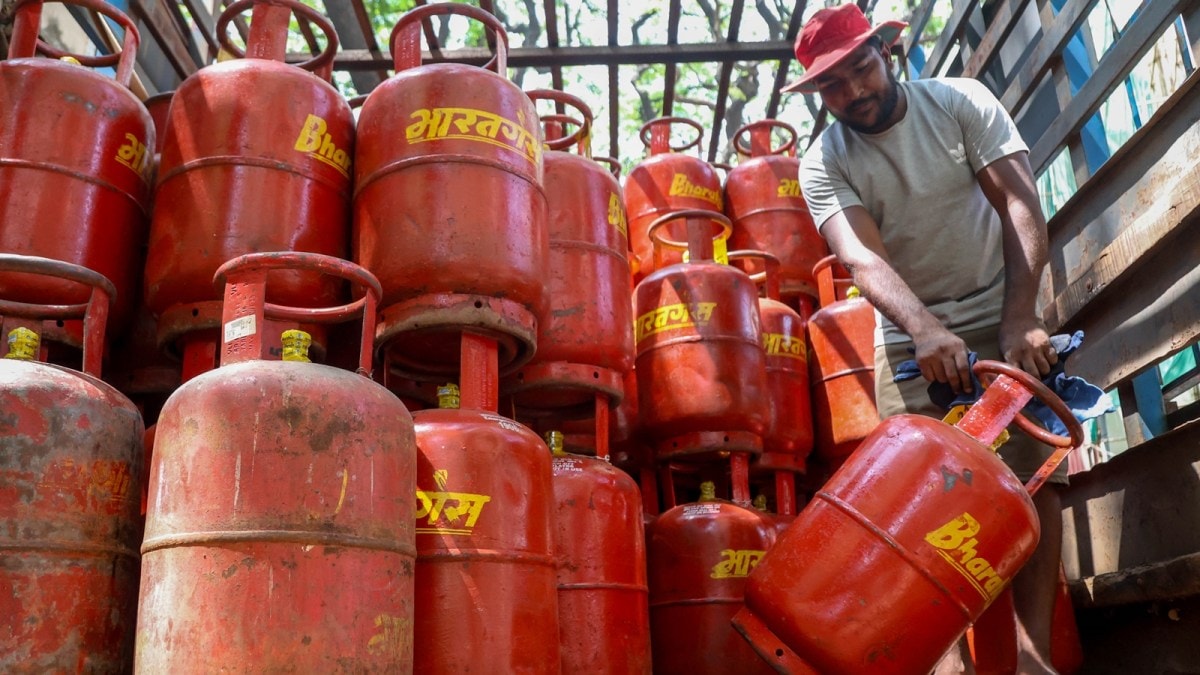
Hyderabad’s informal fuel economy has come under sharp scrutiny after authorities uncovered an illegal LPG distribution network operating from a graveyard in the city’s upscale Banjara Hills area, exposing gaps in urban supply monitoring and safety enforcement.In a coordinated raid, police arrested 10 individuals and seized over 400 LPG cylinders of varying capacities, along with transport vehicles used in the operation. The stockpile, valued at more than ₹21 lakh, was allegedly being diverted and sold at prices significantly higher than regulated rates, indicating a well-organised black-market supply chain.
Investigations suggest that the operation involved siphoning cylinders from authorised distribution channels and storing them in an open area near a graveyard to avoid detection. From there, the cylinders were reportedly supplied across different parts of the city, capitalising on urgent demand and price volatility in the market. The Hyderabad LPG racket case highlights deeper structural challenges within urban energy distribution systems. LPG, classified as an essential commodity, is subject to strict regulation due to both safety risks and its role in household energy access. Illegal storage and resale not only distort pricing but also create serious hazards, particularly in densely populated areas.Urban safety experts warn that unauthorised LPG handling can lead to catastrophic accidents, including fires and explosions. The use of unsecured, non-compliant storage locations—such as open land parcels—raises concerns about the adequacy of monitoring mechanisms in rapidly growing cities.
The crackdown comes against a backdrop of fluctuating demand and supply dynamics. While officials have maintained that domestic LPG availability remains stable, sporadic shortages and panic buying in recent weeks have created conditions for illegal diversion and profiteering. From an urban governance perspective, the incident underscores the need for stronger enforcement and digital tracking across fuel supply chains. Experts point out that while India has made progress in expanding LPG access, particularly through welfare schemes, the last-mile distribution network remains vulnerable to leakages and misuse.The case also reflects a broader trend observed in multiple cities, where illegal LPG refilling and storage rackets have been uncovered amid rising demand. These operations often exploit gaps in oversight, including weak coordination between distributors, transporters, and enforcement agencies.For Hyderabad, a city experiencing rapid urban expansion, the challenge lies in aligning infrastructure growth with regulatory capacity. As residential and commercial demand for energy increases, ensuring safe and transparent distribution becomes critical to maintaining public trust and preventing systemic risks.
Authorities have indicated that further investigations are underway to identify additional links in the network and assess the extent of illegal diversion. Legal action is expected under provisions governing essential commodities and public safety.Looking ahead, the Hyderabad LPG racket case may prompt tighter monitoring frameworks, including improved inventory tracking, stricter licensing enforcement, and enhanced coordination between civic and law enforcement agencies. As cities grow more complex, safeguarding essential supply chains will remain central to building resilient and secure urban systems.