


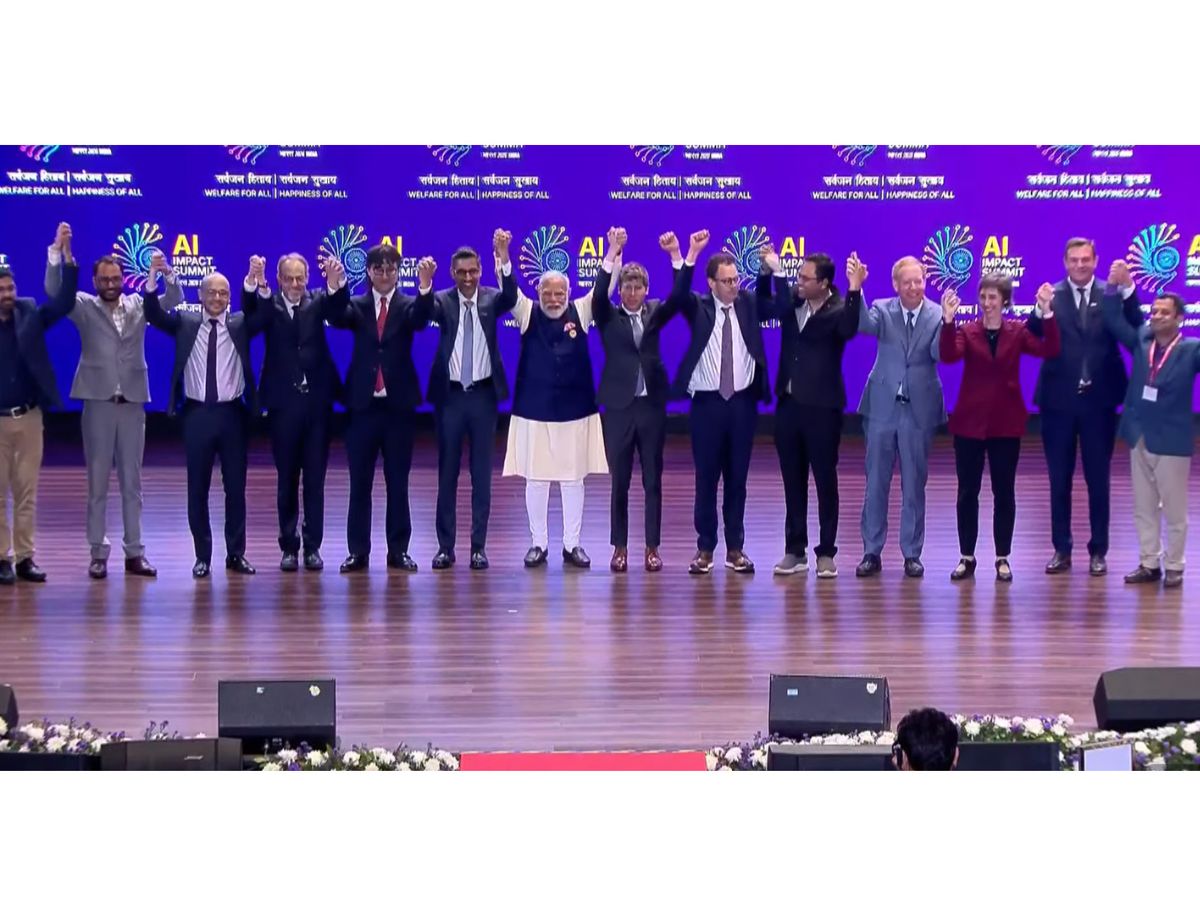
Senior leaders from Telangana’s ruling party on Saturday raised concerns over participation protocols at the recent AI Impact Summit held in New Delhi, arguing that events of national and international significance should reflect broader political representation. The remarks have added a political layer to discussions around India’s digital infrastructure ambitions and cooperative federalism.
The AI Impact Summit, positioned as a platform to deliberate on artificial intelligence governance, innovation ecosystems and economic transformation, has been framed by policymakers as central to India’s technology-led growth strategy. However, Telangana ministers and a Member of Parliament from the state contended that opposition representatives should have been formally included, given the summit’s national character.Speaking in Hyderabad, the state’s welfare minister and the parliamentarian maintained that their party does not oppose the objectives of the AI Impact Summit. Instead, they emphasised that events organised under the aegis of the Union government must project political inclusivity, especially when showcased before global stakeholders.
The issue has implications beyond partisan positioning. Artificial intelligence policy intersects with urban planning, employment transitions and digital public infrastructure. Cities such as Hyderabad — already established as technology and data centre hubs — stand to gain from coordinated AI investments spanning skilling, energy management and civic services.Political analysts note that summit optics can influence intergovernmental cooperation, particularly when state governments are expected to align regulatory frameworks, land allocations and power supply policies to support AI clusters. Telangana has previously hosted high-level economic forums, inviting leaders across party lines, a precedent state representatives cited while making their case for inclusive engagement.
The debate also unfolded against the backdrop of youth wing protests, which state leaders described as expressions of concern over the socioeconomic impact of central policies on farmers and lower-income communities. Artificial intelligence adoption, while promising productivity gains, has triggered wider conversations about workforce displacement and equitable access to digital opportunities.Urban economists argue that inclusive dialogue around AI deployment is essential for balanced regional development. Infrastructure investments linked to AI — such as renewable-powered data centres, smart mobility systems and urban analytics platforms — require cooperation between Union and state administrations. Transparent communication channels can help reduce policy uncertainty for investors.
Observers say that as India seeks to position itself as a global AI destination, political cohesion could shape perceptions among international partners evaluating long-term commitments. For fast-growing metropolitan regions like Hyderabad, alignment between levels of government is critical to translating summit declarations into concrete urban outcomes.While the immediate controversy centres on representation, the broader challenge lies in ensuring that technology summits translate into inclusive, climate-resilient and economically broad-based urban transformation. Whether future national events incorporate wider stakeholder participation may influence how effectively those ambitions are realised.
Also Read:Amravati University Confers D Litt Degree
