


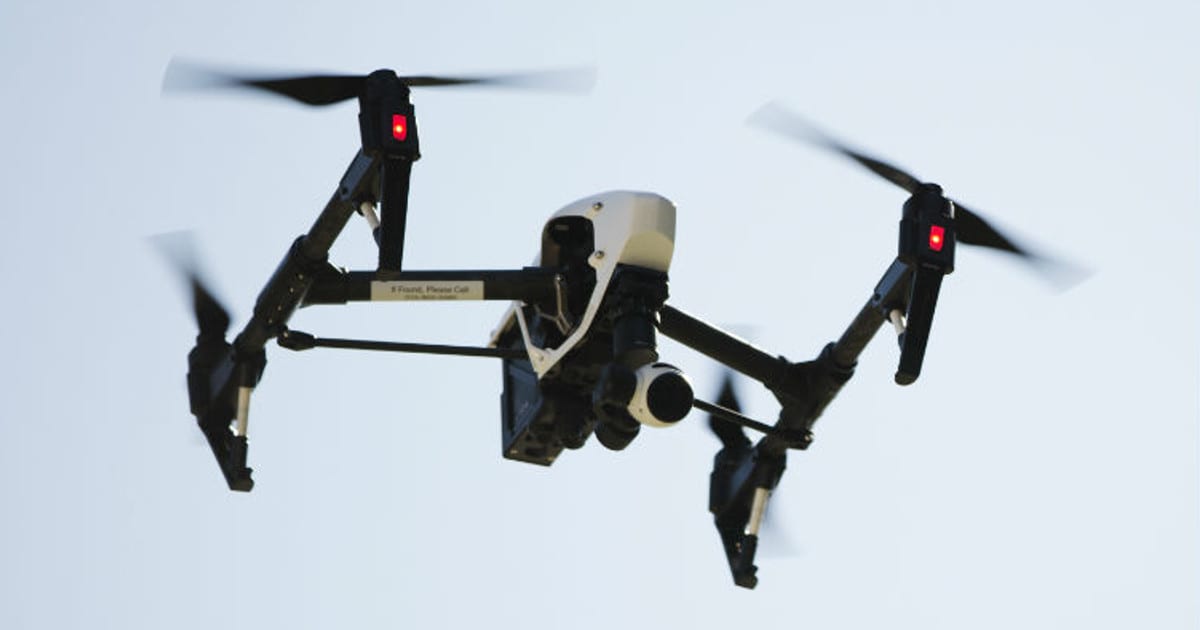
Hyderabad’s push to position itself as a hub for advanced aerial mobility has gained momentum with the commissioning of a NABL-certified drone propulsion testing facility at the Indian Institute of Technology Hyderabad. The accredited laboratory enables start-ups and manufacturers to validate propulsion systems domestically, reducing dependence on overseas testing and informal trials.
The Drone Testing Lab Hyderabad facility has been established under the institute’s Technology Innovation Hub on Autonomous Navigation, a centre focused on next-generation mobility systems. Accreditation from the National Accreditation Board for Testing and Calibration Laboratories confirms compliance with ISO/IEC 17025 standards, ensuring calibrated, traceable and regulator-ready data.For India’s expanding drone and eVTOL ecosystem, certified propulsion testing represents a critical infrastructure gap that is now being addressed. Until recently, several developers relied on fragmented validation processes, which posed challenges for regulatory approvals and product reliability assessments. The availability of thrust and performance data generated in a controlled environment can now support certification pathways and benchmarking exercises.
The Drone Testing Lab Hyderabad supports multiple propulsion configurations, including single and coaxial systems, across a wide thrust range. It is equipped to measure parameters such as thrust, voltage, current, rotational speed and temperature — key indicators of system efficiency and operational stability. These metrics are central to determining whether a drone can operate safely in dense urban settings or logistics corridors.Industry observers note that propulsion reliability is foundational to scaling drone applications in agriculture monitoring, infrastructure inspection, emergency response and urban freight. As cities explore advanced air mobility concepts, including electric vertical take-off and landing aircraft, dependable motor performance and documented safety standards become non-negotiable.
Urban planners emphasise that certified testing facilities strengthen the broader innovation ecosystem. When regulatory-grade data can be generated locally, start-ups benefit from shorter development cycles and lower costs, improving the viability of indigenous manufacturing. This has downstream implications for employment, research commercialisation and industrial clustering around aerospace technologies.A senior official associated with the innovation hub indicated that the laboratory is designed to serve not only private manufacturers but also defence-linked research units and academic teams. The infrastructure supports brushless direct current motors and propeller assemblies commonly used in unmanned aerial vehicles, aligning with both civil and strategic applications.
As Hyderabad continues to attract global capability centres and advanced manufacturing investments, physical testing infrastructure such as the Drone Testing Lab Hyderabad complements digital innovation. The challenge ahead lies in integrating such high-technology assets into sustainable urban frameworks — including reliable power supply, skilled workforce pipelines and environmentally responsible expansion.With accredited propulsion validation now available within the country, India’s drone developers are one step closer to building globally competitive platforms that are safer, more efficient and better aligned with the evolving needs of modern cities.
Also Read:Ahmedabad property transfer dispute returns for review
Hyderabad IIT Drone Testing Lab Accredited
