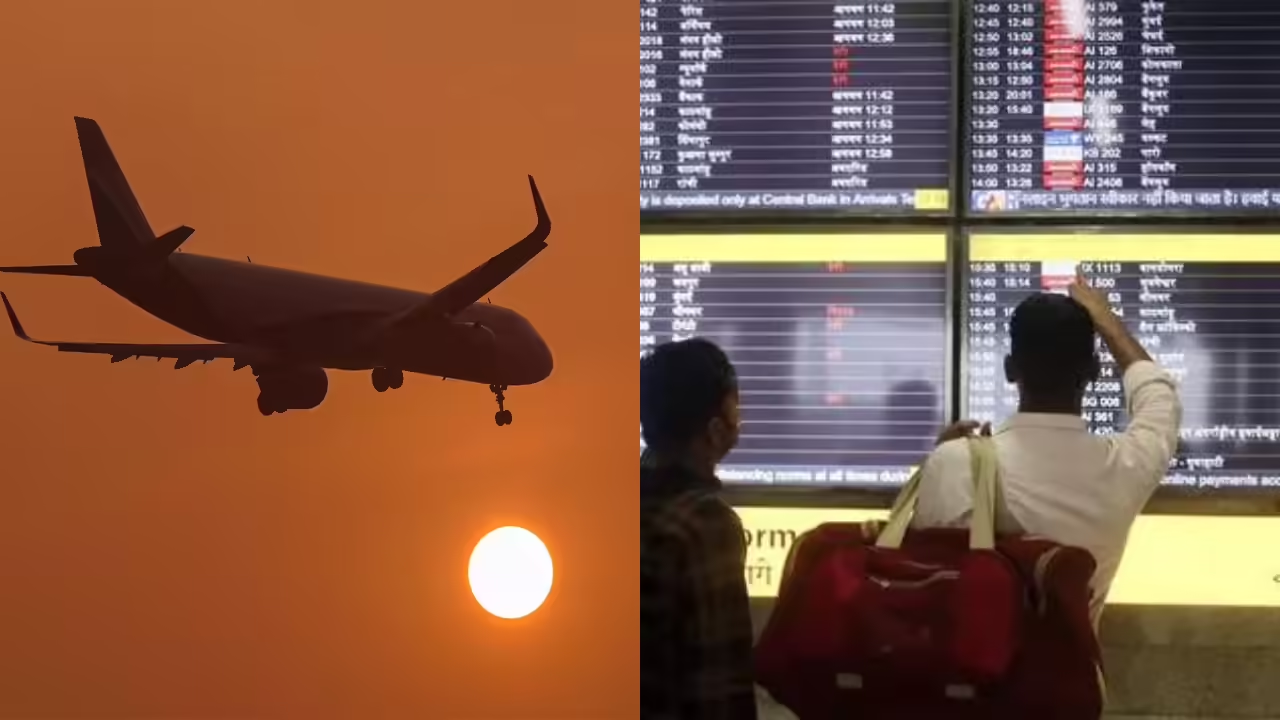
India’s busiest airports faced significant operational strain this week as IndiGo cancelled and delayed dozens of flights across major cities, including Bengaluru, Mumbai, Delhi and Hyderabad, amid an escalating crew shortage linked to new duty-time regulations. The disruptions, which left thousands of passengers navigating crowded terminals and uncertain travel schedules, highlight deeper challenges for aviation resilience in rapidly growing urban regions.
According to industry officials, the airline’s schedules began slipping early in the week, but the situation worsened on Wednesday when more than 70 flights were cancelled nationwide. Multiple airports reported heavy delays as the carrier struggled to deploy adequate cockpit and cabin staff. The airline acknowledged sustained operational “pressures”, citing technology issues, airport congestion and a shortage of available crew due to recent regulatory changes.The immediate trigger appears to be the second phase of India’s updated Flight Duty Time Limitations (FDTL) norms, which mandate longer weekly rest periods, stricter night-duty limits and a cap on night landings for each crew member. Aviation experts said these rules, introduced following court directives to enhance worker safety, have reshaped airlines’ rostering patterns and require a larger workforce to maintain existing schedules. “Operators are still recalibrating their systems. Any imbalance can quickly cascade into network-wide delays,” one expert noted.
IndiGo, which operates more than 2,100 daily flights, is disproportionately affected because of its high share of late-evening operations. Data from the Civil Aviation Ministry showed its on-time performance at key airports falling to 35 per cent on Tuesday, far below other carriers. While the airline has added aircraft steadily, it continues to face pressure from grounded planes awaiting parts or maintenance, adding to fleet-planning constraints.Airports such as Hyderabad’s Rajiv Gandhi International reported that while their infrastructure remained stable, airline-level technology and scheduling issues were hampering departures. Passengers were urged to check directly with IndiGo for real-time updates. Officials emphasised that major metro airports, already managing substantial passenger growth, are particularly vulnerable to airline-specific shocks.
The situation also raises questions around urban mobility resilience. As Indian cities expand and rely increasingly on aviation for economic connectivity, any systemic disruption affects business travel, labour mobility and logistics. Analysts argue that cities need integrated transport ecosystems capable of absorbing shocks from strengthening public transit alternatives to modernising airport infrastructure.For passengers, clearer communication, real-time digital updates and passenger-centric policies remain essential as airlines transition to safer, more sustainable workforce practices. For cities, building reliable, equitable mobility systems is central to ensuring that disruptions in one mode do not disproportionately impact livelihoods.With crew-related adjustments expected to continue through the season, aviation stakeholders are calling for collaborative planning between airlines, regulators and airport operators to keep essential mobility corridors functional, especially for India’s growing urban population.
Hyderabad Hit By IndiGo Crew Crunch As Seventy Flights Cancelled Across Airports