


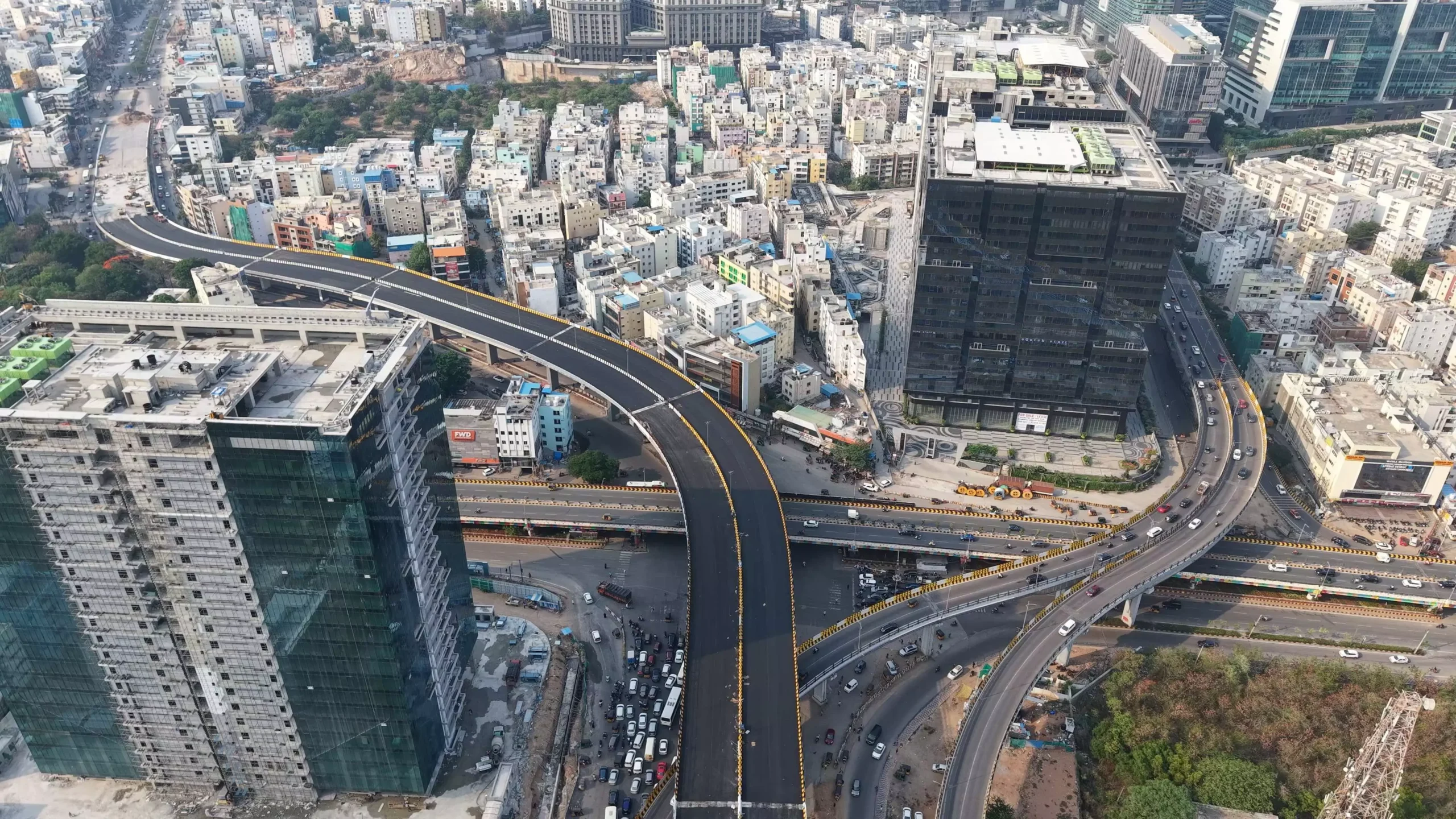
Telangana Chief Minister Revanth Reddy is set to inaugurate the new PJR Flyover today, a significant infrastructural addition poised to reshape urban mobility in Hyderabad. This crucial development not only promises substantial traffic decongestion but also underscores a strategic commitment towards fostering a zero-net carbon, eco-friendly, sustainable, gender-neutral, and equitable city, aligning with the broader vision for modern Indian urban centres to thrive without compromising environmental integrity or social inclusivity.
The completion and opening of the PJR Flyover mark a considerable leap in Hyderabad’s ongoing efforts to modernise its urban landscape and enhance connectivity. For a rapidly expanding metropolis experiencing burgeoning vehicular traffic, such elevated corridors are vital instruments in optimising road networks, thereby reducing travel times and improving the overall commuter experience. Business circles anticipate that improved transit efficiency will also yield economic benefits, facilitating smoother movement of goods and services, which is instrumental in attracting further investment and bolstering regional commerce. This infrastructural advancement symbolises a tangible investment in the city’s economic future.
From an environmental perspective, the new flyover is expected to play a tangible role in reducing the city’s carbon footprint. By ensuring a more consistent flow of traffic and minimising stop-and-go situations, it directly contributes to lower fuel consumption and consequently, reduced vehicular emissions. This aligns seamlessly with the agenda for creating eco-friendly urban environments, where integrated transport solutions work in tandem to combat air pollution and mitigate the effects of climate change. The emphasis on smoother traffic flow is a small yet significant step towards the larger goal of achieving zero-net carbon urban development.
Beyond the immediate benefits of decongestion and environmental improvement, the PJR Flyover embodies principles of sustainable urban planning. By creating multi-layered transport infrastructure, it intelligently utilises existing space, reducing the need for expansive land acquisition that can often displace communities or encroach upon green spaces. Furthermore, such projects inherently promote a more structured approach to urban growth, encouraging the development of adjacent areas in a planned manner. This fosters a resilient urban fabric, capable of accommodating future growth without succumbing to sprawl or compromising quality of life.
The human element remains central to this development. Improved connectivity profoundly impacts the daily lives of citizens, offering a more predictable and less stressful commute. This is particularly beneficial for women and other vulnerable groups, as reduced travel times and enhanced public safety through better illuminated and less congested routes contribute significantly to gender-neutral mobility. An equitable city thrives on accessible infrastructure that serves all its residents equally, and the PJR Flyover stands as a testament to the commitment to enhance quality of life for every Hyderabadi, cementing the city’s position as a hub of progress and sustainable living.
Also Read: Nagpur Samruddhi Link Road Flaws Exposed By Flooding.
