


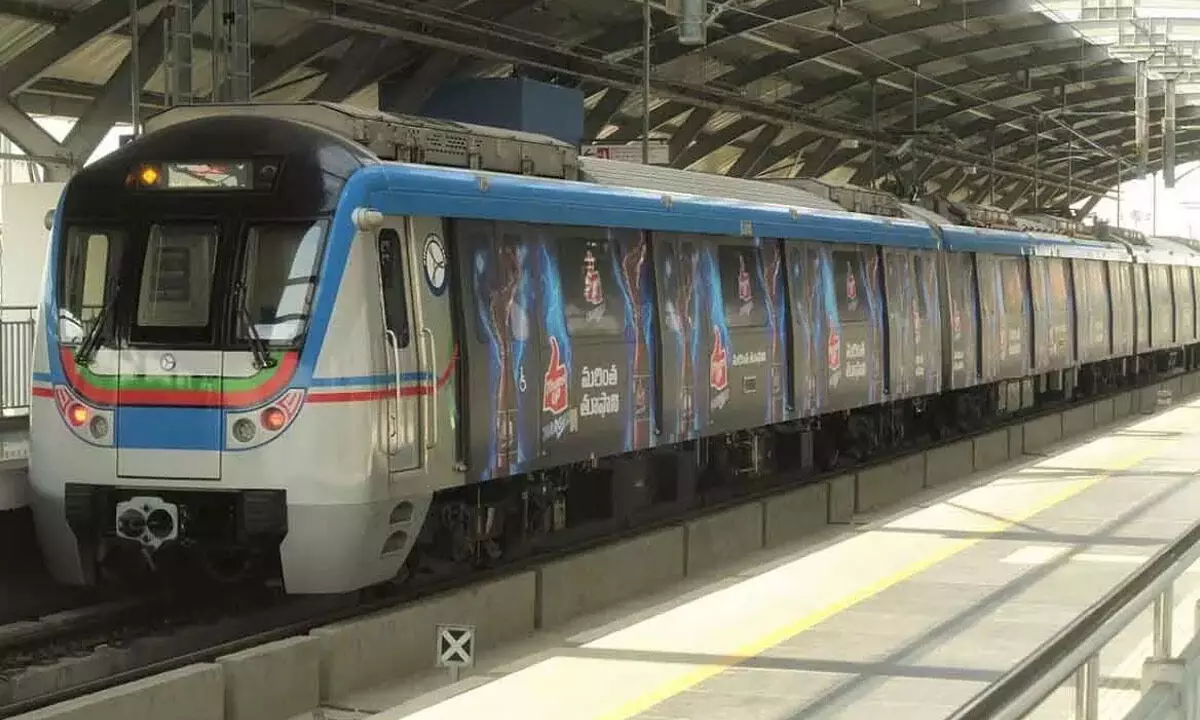
A financial dispute over unpaid civic levies has surfaced ahead of the state’s planned takeover of Hyderabad’s metro rail system, with officials confirming that Hyderabad Metro advertisement dues of nearly ₹100 crore remain outstanding to the city corporation.
According to senior municipal authorities, the arrears relate to commercial advertisements displayed on metro pillars and station premises across the network operated by Larsen & Toubro. Payments were reportedly made until the 2017–18 financial year, after which remittances towards advertisement charges ceased.The dues are payable to the Greater Hyderabad Municipal Corporation, which regulates outdoor advertising within city limits. Officials indicated that repeated notices have been issued seeking clearance of the Hyderabad Metro advertisement dues, but a resolution has yet to be reached.
The metro operator has previously cited operational stress and maintenance expenditure in explaining payment delays, according to officials familiar with the discussions. However, civic administrators argue that advertising revenue generated from high-footfall transit corridors constitutes a significant commercial stream and must be reconciled in accordance with municipal regulations.The issue gains added significance as the Telangana government prepares to assume operational control of the metro network in the coming weeks. The transition, part of a broader restructuring of the public-private partnership framework, has triggered questions about liability settlement and whether Hyderabad Metro advertisement dues will be cleared prior to the transfer of control.
Urban finance specialists note that unresolved receivables can complicate balance sheet adjustments during infrastructure handovers. For municipal bodies such as GHMC, advertisement fees are not peripheral income; they contribute to funding road maintenance, waste management, street lighting and climate adaptation measures. Delays in recovering Hyderabad Metro advertisement dues could therefore have ripple effects on urban service budgets.The dispute also underscores broader governance questions around monetisation of public infrastructure. Metro pillars and elevated corridors have evolved into premium advertising spaces in rapidly urbanising corridors. Experts argue that transparent revenue-sharing arrangements and timely compliance are critical to ensuring that commercial exploitation of public assets translates into equitable urban reinvestment.
As Hyderabad expands and pursues transit-oriented development along metro corridors, integrated financial management becomes central to sustaining infrastructure quality. Advertising contracts, if managed efficiently, can reduce fiscal pressure on fare structures and improve affordability for commuters.Municipal officials are understood to be considering further legal and administrative steps to secure payment before the operational transition is finalised. Whether the outstanding Hyderabad Metro advertisement dues are settled before the state assumes control will likely influence future concession agreements and revenue governance norms in the city.
With Hyderabad positioning itself as a model for sustainable mass transit and compact urban growth, clarity on financial accountability will be essential to maintaining investor confidence and strengthening civic trust.
Also Read:Kolkata Records Winter Rainfall As Storms Loom
Hyderabad Flags Metro Advertisement Dues Dispute
