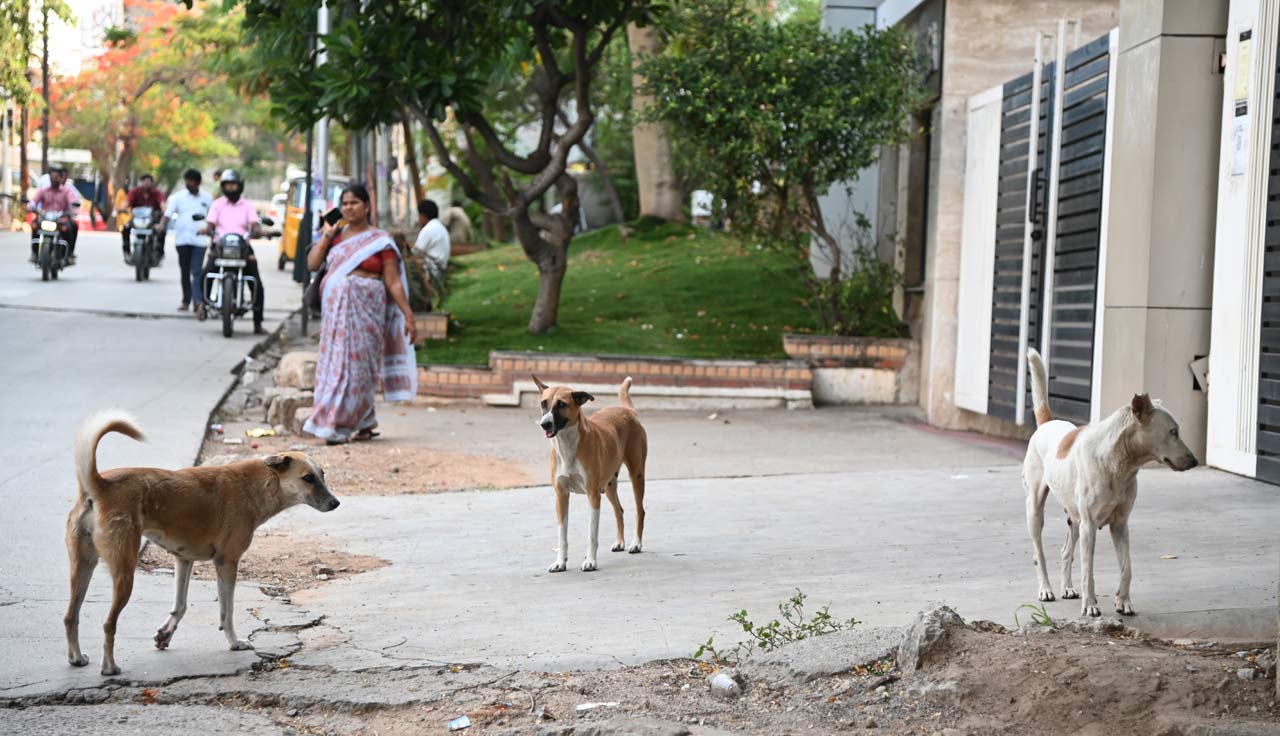
Hyderabad Faces Hurdles Enforcing Stray Dog Rules
Hyderabad is struggling to comply with the Supreme Court’s recent directive to remove stray dogs from sensitive public areas, as municipal authorities admit that the city’s existing animal-care infrastructure is inadequate for the scale of the task. The ruling has created an urgent operational burden for the Greater Hyderabad Municipal Corporation (GHMC), which must relocate strays while ensuring the process remains humane and legally compliant.
A ground assessment across neighbourhoods near schools, hospitals and busy transit points shows that little has changed since the November order. Strays continue to roam freely, particularly around lanes leading to educational institutions and health facilities. Municipal officials acknowledge that capacity constraints at the city’s Animal Care Centres (ACCs) remain the biggest obstacle. Hyderabad currently operates five ACCs with a combined capacity of roughly 3,300 animals most already occupied by dogs undergoing sterilisation under the Animal Birth Control (ABC) programme. A senior official from the GHMC’s veterinary wing said the corporation is “pushing to add more shelters” but that expansion cannot happen overnight. Two new facilities at Katedan and Gopanapally are being planned, along with additional kennels at existing centres. However, the estimated population of unsterilised stray dogs around 50,000 highlights both the scale of the challenge and the long-term gaps in urban animal management.
Animal-welfare advocates argue that what the city labels as shelters are largely ABC units, not permanent facilities equipped for extended housing. A petitioner recently told the Telangana High Court that the lack of genuine shelters has repeatedly undermined the city’s ability to manage strays responsibly. According to an advocate associated with an animal rights group, Hyderabad’s ABC system remains “fragmented and reactive,” often activated only when public safety concerns intensify. As part of its compliance plan, GHMC has deployed over 800 nodal officers across schools, major hospitals and bus stations to monitor dog movement and coordinate with field teams. The corporation has also urged education and health departments to improve boundary walls and fencing to prevent canine intrusion, especially in peripheral campuses with open access.
Officials say that large institutional campuses including universities with multiple entry points — present unique enforcement difficulties. Even when animals are caught inside, others enter easily because the perimeters remain porous. This cycle, they say, makes sustained compliance nearly impossible without a combination of infrastructure upgrades, community awareness and long-term sterilisation coverage. Urban planners note that the issue underscores a broader city-planning gap: the absence of integrated, humane stray-animal management tied to public health, mobility and safety. For Hyderabad, a city aspiring to adopt more inclusive and sustainable planning practices, the challenge lies in balancing citizen safety with ethical treatment of animals while expanding civic infrastructure responsibly. The Supreme Court’s deadline is approaching, and unless shelter capacity and preventive measures improve rapidly, enforcement is likely to remain uneven.
Hyderabad Faces Hurdles Enforcing Stray Dog Rules