


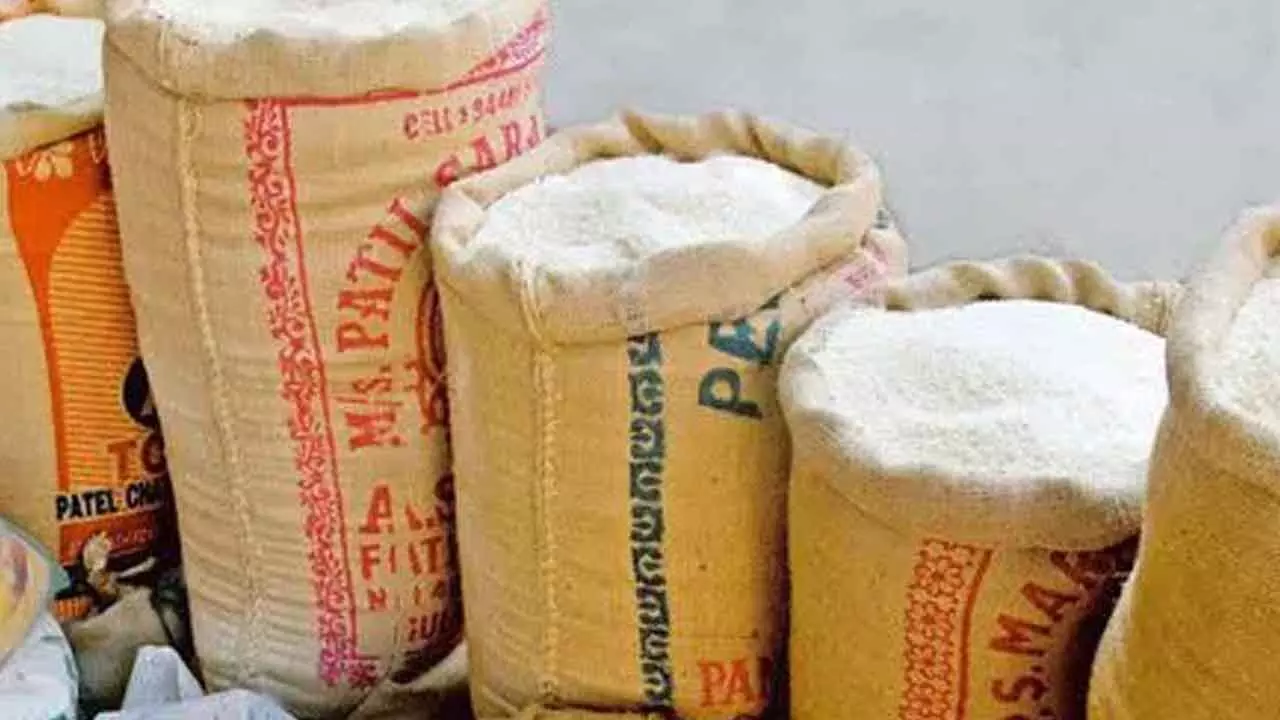
Telangana’s irrigation and civil supplies department has initiated a strategic push to develop a structured rice export strategy after record paddy procurement during the recent Kharif season left state agencies managing unprecedented stock volumes. The move signals a shift from procurement-focused operations to market-led planning, with implications for storage infrastructure, logistics networks and rural incomes.
Senior officials confirmed that over 72 lakh metric tonnes of paddy were procured this season — one of the highest volumes recorded in the state. While the procurement drive ensured income stability for farmers, it has intensified pressure on warehousing, milling capacity and working capital within the civil supplies system. Authorities are now examining how a targeted rice export strategy can ease stock accumulation and unlock better price realisation.A high-level review convened in Hyderabad brought together agricultural scientists and senior administrators to assess crop patterns, varietal demand and export readiness. Officials indicated that technical inputs from the state’s agricultural university will feed into a draft framework aimed at identifying international markets where Telangana’s rice varieties can compete on quality and pricing.
Industry analysts note that the state’s procurement model, while socially protective, requires parallel investments in post-harvest infrastructure. “Export competitiveness is not only about volume. It depends on grading, storage conditions, moisture management and port connectivity,” said a trade logistics consultant tracking South Indian agri-exports.For Hyderabad, which functions as the administrative and commercial hub of Telangana’s food supply chain, the strategy has urban infrastructure implications. Expanded export ambitions could necessitate upgrades to cold-chain facilities, rail freight linkages and container handling systems connected to eastern and western seaports. Improved logistics planning would also reduce wastage and lower embedded carbon emissions in long-distance transport — an increasingly important consideration in global food trade.
Officials are also evaluating varietal diversification. Experts argue that encouraging farmers to cultivate export-oriented varieties with stable overseas demand could improve farmgate prices and reduce the fiscal strain of holding surplus stocks. However, this would require coordinated extension services, quality certification mechanisms and transparent market intelligence.Urban economists suggest that a well-designed rice export strategy could stimulate ancillary sectors such as packaging, warehousing real estate and agri-tech services. It could also create employment in peri-urban clusters where rice milling and processing units are concentrated.
Yet challenges remain. International rice markets are volatile, shaped by geopolitical trade policies, currency movements and climate-linked production shifts in competing countries. Ensuring that export expansion does not compromise domestic food security will remain a policy balancing act.The state is expected to finalise a draft framework in the coming months. If executed with infrastructure alignment and sustainability safeguards, Telangana’s rice export strategy could transform a procurement surplus into a long-term economic opportunity — reshaping both rural production systems and urban supply chains.
Also Read:Hyderabad begins IIIT Junction Flyover works
Hyderabad explores rice export strategy
