


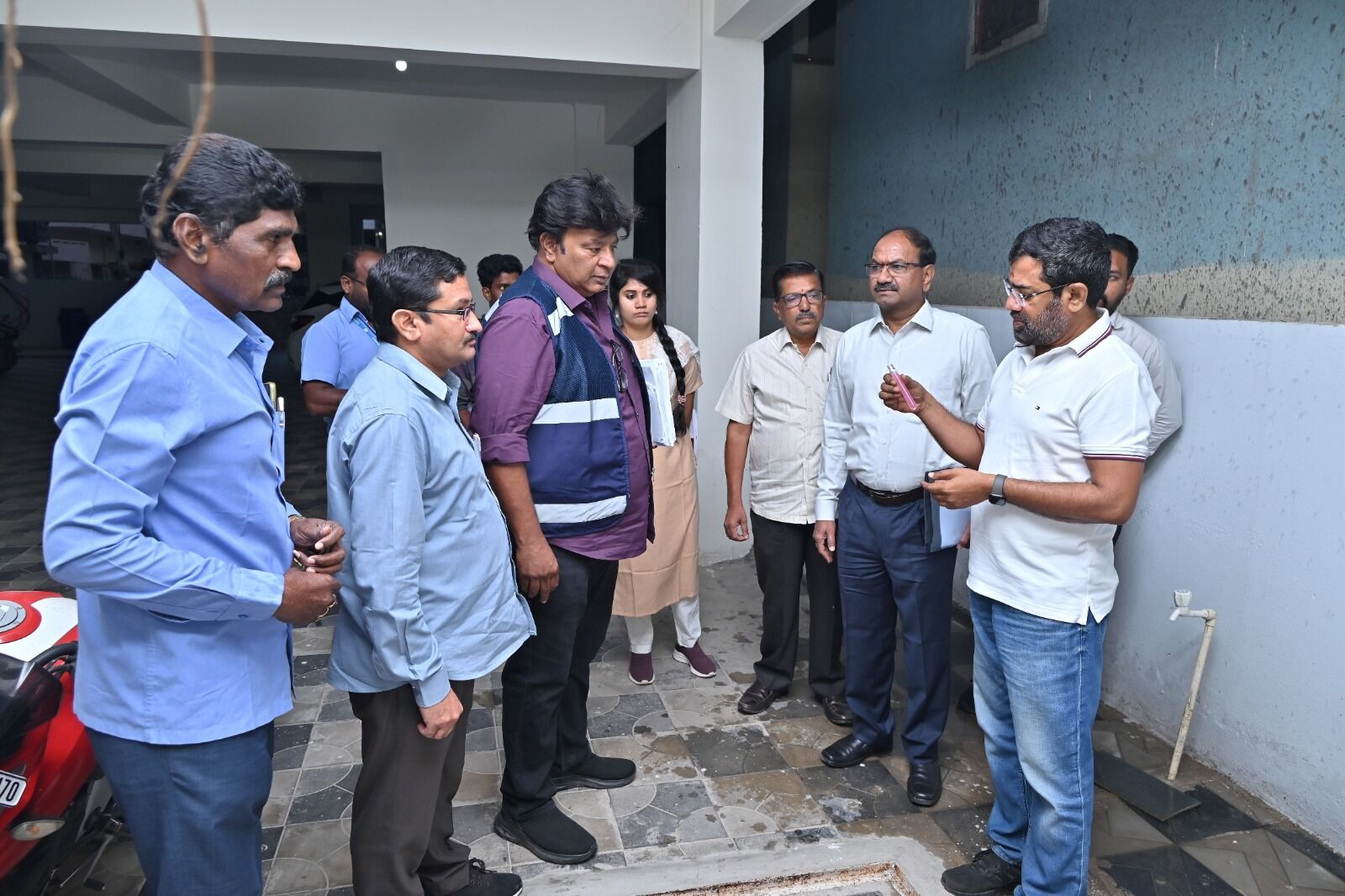
Hyderabad’s water utility has launched an intensive field engagement programme titled Jalamandali Basti Bata, aimed at resolving drinking water and sewerage issues directly within neighbourhoods, as the city grapples with rapid expansion and rising service demands.Under the initiative, senior officials from the Hyderabad Metropolitan Water Supply and Sewerage Board (HMWSSB) have begun early-morning inspections across residential colonies and informal settlements. The exercise is designed to identify supply gaps, monitor water quality and address sewer blockages through on-site assessments rather than relying solely on complaint-based systems.
Recent inspections in western neighbourhoods such as Serilingampally, Miyapur and surrounding colonies focused on household connections, supply timing, water pressure and desilting operations. Officials interacted with residents to gauge adequacy of services and assess long-pending grievances. In several locations, they flagged misuse of treated drinking water for non-essential activities and advised corrective measures to prevent wastage.Water conservation forms a core pillar of the Jalamandali Basti Bata programme. During site visits, technical teams recommended groundwater recharge pits to channel rainwater and greywater back into the aquifer. Urban hydrologists note that decentralised recharge structures can reduce dependency on distant reservoirs while strengthening climate resilience in a city increasingly exposed to heat stress and erratic rainfall.
Sewerage management also came under scrutiny. In areas undergoing road reconstruction, officials found instances where manholes had been buried or improperly aligned, leading to silt accumulation and overflow complaints. Temporary diversions were ordered in some stretches, while engineering teams were directed to map and restore hidden or damaged infrastructure.Urban planners say such coordination between road construction and underground utilities is essential in dense growth corridors. Failure to align civil works with water and sewer networks often results in service disruption, increased maintenance costs and public health risks.
The Jalamandali Basti Bata initiative will see field visits conducted multiple times a week by officials across different administrative levels before regular office hours. According to senior board representatives, the programme aims to fast-track both immediate repairs and structural improvements, while building accountability through direct citizen engagement.Across other zones including SR Nagar, Tolichowki and Malkajgiri, teams reviewed tanker operations, contamination complaints and sewer overflows. In some divisions, tanker filling points are being relocated to reduce traffic congestion and improve neighbourhood safety.
As Hyderabad expands outward with new housing layouts and commercial hubs, water security and sewer efficiency are becoming central to sustainable urban growth. Experts argue that proactive inspection models like Jalamandali Basti Bata can strengthen service reliability if backed by data mapping, preventive maintenance and responsible water use by residents.The long-term success of the programme will depend on sustained monitoring, integration with urban planning and community participation in conserving potable water — a resource that remains critical to Hyderabad’s economic and environmental future.
Also Read:Chennai Suburban Rail Delays Disrupt Commutes
Hyderabad expands Jalamandali Basti Bata outreach
