


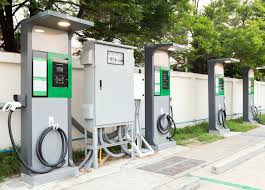
Hyderabad has added another public electric vehicle charging hub in its fast-growing northwestern corridor, marking a small but significant step in the city’s evolving clean mobility ecosystem. A new EV charging facility has begun operations in the Bachupally–Bowrampet stretch, an area witnessing rapid residential expansion, rising commercial activity and increasing dependence on private and shared electric transport.
Urban mobility planners say such locations are becoming critical as Hyderabad’s growth pushes outward, often faster than public transport infrastructure can keep pace. The new facility has been developed on previously unused private land, demonstrating how underutilised urban parcels can be repurposed to support essential low-carbon infrastructure without triggering complex land acquisition processes.The station features a high-capacity fast charger designed to support a range of vehicles, from two-wheelers and three-wheelers to passenger cars and light commercial fleets. According to industry experts, chargers in the 60 kW category are particularly relevant for mixed-use corridors, where delivery vehicles, ride-hailing services and small businesses rely on quick turnaround times to remain viable.
What distinguishes this project from many early charging deployments is its operating model. The site functions as an open-access public facility and does not require users to rely on proprietary mobile applications. Transport researchers note that app-agnostic access remains an important factor in accelerating EV adoption, especially among commercial operators and first-time users who prioritise reliability over brand ecosystems.The project has been executed through a franchise-led model, allowing individual landowners to convert vacant plots into revenue-generating mobility assets. Urban economists argue that such decentralised approaches could play a larger role in expanding Hyderabad EV charging infrastructure, particularly in peripheral zones where municipal investments are slower to materialise. By lowering entry barriers for private participation, the model also distributes economic opportunity beyond large institutional developers.
Hyderabad’s EV adoption has been rising steadily, driven by state-level incentives, lower operating costs and growing acceptance of electric two- and three-wheelers. However, the availability of reliable neighbourhood charging remains uneven. While central business districts and IT corridors have seen early infrastructure rollout, suburban clusters like Bachupally are only now beginning to see dedicated facilities aligned with daily commuting and logistics needs.Sustainability specialists point out that the reuse of idle land for EV charging carries broader environmental benefits. It limits greenfield development, reduces construction intensity and integrates clean transport infrastructure into existing urban fabric. When combined with renewable energy sourcing in the future, such stations could meaningfully reduce transport-related emissions at the neighbourhood scale.
Looking ahead, the challenge for Hyderabad EV charging infrastructure will be scale and integration. Experts emphasise the need to link charging rollout with public transport nodes, affordable housing clusters and last-mile freight routes. As more private landowners and operators enter the space, city authorities will also need clear standards on safety, grid capacity and equitable access to ensure that clean mobility growth remains inclusive and resilient.
Also Read:India Power Sector Oversight Shifts Focus
Hyderabad EV Charging Infrastructure Expands Into Suburbs
