


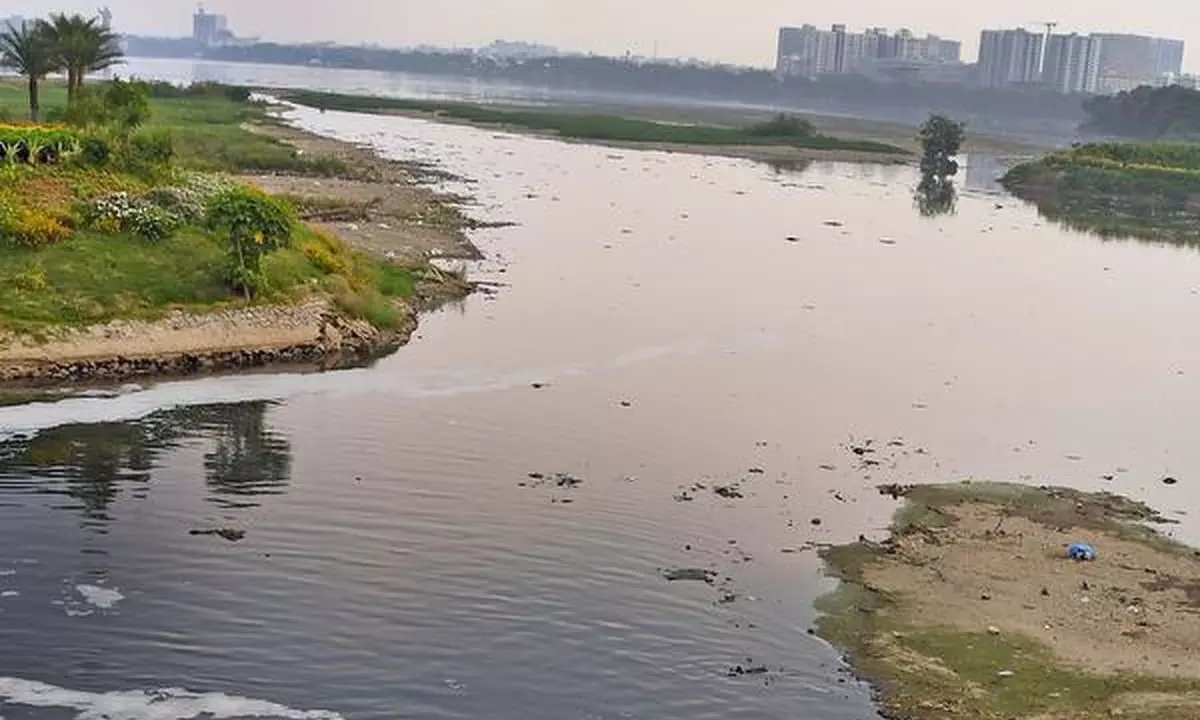
Concerns over deteriorating urban lakes and their growing impact on public health dominated a citizen grievance forum in Hyderabad this week, underscoring the mounting pressure on city authorities to address sewage inflows, encroachments and stalled restoration works. Residents from multiple neighbourhoods used the platform to highlight how polluted water bodies are affecting daily life, signalling broader challenges in managing Hyderabad’s fragile urban ecology.
Callers reported persistent odour, unchecked aquatic weed growth and rising mosquito populations around several lakes, conditions that have intensified health risks in adjoining residential areas. Urban health experts note that polluted lakes often become breeding grounds for disease vectors, particularly in dense neighbourhoods where open water bodies interact closely with housing and informal drainage systems.The grievances were received during a scheduled public phone-in programme conducted by the city’s lake protection and development authority. Officials overseeing the initiative said the expanded access, including weekend grievance registration, was intended to bridge the gap between residents and enforcement agencies, especially for those unable to attend in-person hearings.
Beyond pollution, a significant number of complaints pointed to encroachments on lake beds, feeder channels and adjoining public land. Urban planners have long warned that such intrusions disrupt natural hydrology, increasing flood risk during intense rainfall while accelerating lake degradation during dry seasons. Several callers flagged unauthorised construction on parks, roads and stormwater channels, issues that directly affect pedestrian safety and neighbourhood liveability.Authorities acknowledged that lake restoration is currently being undertaken in phases, with a limited number of water bodies taken up initially and additional sites proposed for subsequent stages. Officials clarified that the lake protection body’s jurisdiction is limited to areas within the city’s outer development boundary, leaving peripheral water bodies under different administrative frameworks.
From an urban development perspective, experts say fragmented governance remains a key obstacle to comprehensive lake revival. While restoration projects often focus on beautification, long-term sustainability depends on preventing sewage entry, protecting buffer zones and integrating lakes into city-level water management and climate adaptation strategies.The forum also highlighted tensions between rapid real estate expansion and the protection of commons. Allegations of illegal plotting, diversion of natural drains and construction on public land reflect the strain placed on oversight mechanisms in fast-growing urban corridors. For city residents, the consequences are immediate—reduced open space, compromised drainage and declining environmental quality.
Officials assured complainants that reported violations would be examined and routed to relevant enforcement teams, with follow-up mechanisms in place. Urban governance specialists stress that consistent monitoring and transparent action will be critical if public trust in such platforms is to be sustained.As Hyderabad continues to expand, the state of its lakes is increasingly seen as a measure of urban resilience. Whether citizen-led grievance mechanisms can translate into systemic improvements will depend on coordinated planning, enforcement and long-term investment in water-sensitive urban design.
Also Read:Hyderabad Rail Investment Push Reshapes Regional Connectivity
