


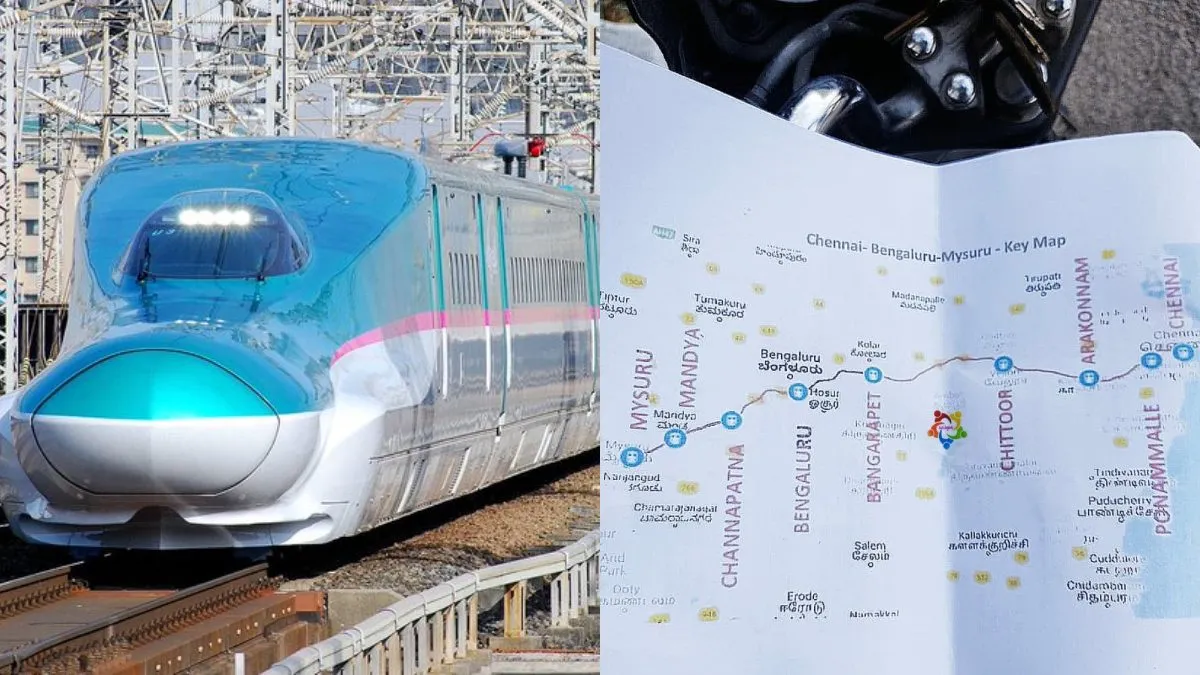
Vision India’s high-speed rail ambitions are gathering pace, with the Hyderabad-Chennai bullet train corridor entering its study phase. The project, expected to drastically cut travel time between the two southern metros, marks another step towards modernising national transport networks while aligning with the country’s sustainability goals.
Officials confirmed that the study will assess technical feasibility, environmental impact, and integration with broader climate-conscious urban planning.The corridor, proposed under the National Rail Plan, seeks to connect Hyderabad and Chennai with cutting-edge high-speed infrastructure. Rail experts believe this will not only reduce dependency on short-haul flights but also lower vehicular emissions by shifting passenger traffic towards a cleaner rail alternative.
Also Watch: An Exclusive Interview with Sanjeev Jaiswal (IAS), CEO MHADA
The planned service, travelling at speeds of up to 320 kmph, could bring down the current journey time of nearly 12 hours by road to just a few hours by rail.
According to transport specialists, the study will take into account land acquisition requirements, energy-efficient construction methods, and integration with renewable-powered grid systems. Early indications suggest that the line will be built with a strong focus on minimising its carbon footprint, using modern tunnelling and bridge-building practices designed to reduce disruption to natural landscapes.
For both Hyderabad and Chennai, cities already grappling with population growth and congestion, the corridor holds transformative potential. Urban planners highlight that a high-speed rail line could redistribute economic activity, stimulate transit-oriented development, and reduce the environmental strain caused by rising highway traffic. If executed with a green lens, the project could serve as a model of sustainable infrastructure for the rest of the country.Experts also point out that the bullet train will enhance regional equity by improving access to jobs, markets, and services across tier-2 and tier-3 towns along the route. For citizens, it promises not just speed but also safer, gender-inclusive, and more reliable travel compared to road journeys.
