


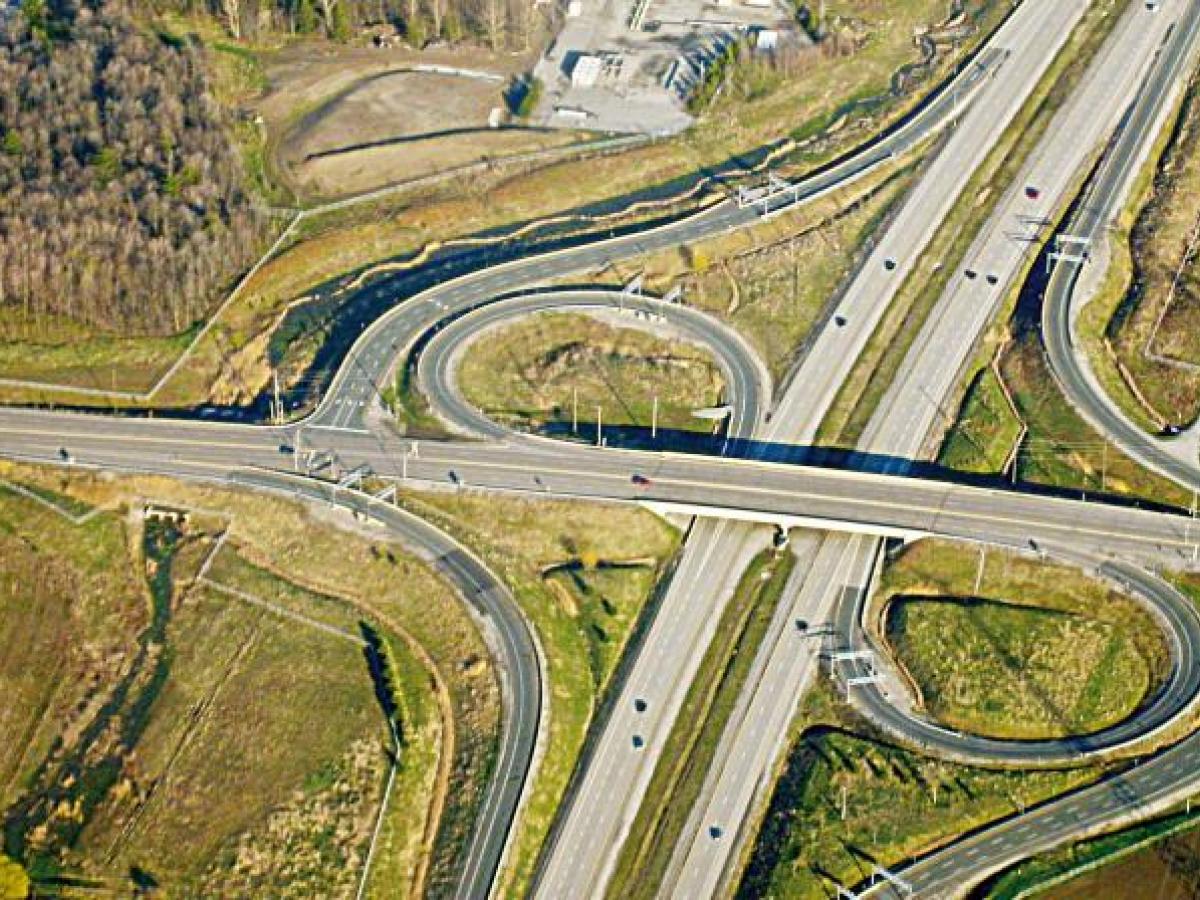
Hyderabad is preparing for another significant road infrastructure upgrade with plans for a ₹488-crore Budvel interchange along the city’s Outer Ring Road, a move expected to reshape connectivity in the fast-urbanising south-western corridor. The proposed trumpet-style structure at Budvel in Rajendranagar is being positioned as a strategic mobility intervention, linking emerging residential layouts and future growth zones with the regional highway network.
The Hyderabad Metropolitan Development Authority (HMDA) has initiated tender processes for the project, according to officials familiar with the development. The agency had earlier considered a different configuration at the site, but has since opted for a large, international-standard trumpet interchange, citing traffic modelling and long-term capacity requirements.The Budvel interchange will serve as a critical node between the Outer Ring Road (ORR), the airport corridor near Shamshabad and the IT-driven Gachibowli stretch. Urban planners say the shift to a trumpet configuration — a design that allows smoother directional movement without traffic signals — indicates expectations of rising vehicular load from both residential expansion and logistics movement in the corridor.
Equally significant is the parallel proposal to build Radial Road-2, a 55-kilometre arterial route planned to run from the Shamshabad ORR exit toward the proposed Regional Ring Road near Parigi. Together, Radial Road-2 and the Budvel interchange could open up large land parcels for development, influence real estate valuations and alter commuting patterns across western Hyderabad.Industry analysts note that the Budvel interchange is likely to accelerate formal layout development near Himayatsagar and Rajendranagar, where public land auctions in recent years have drawn private investment interest. However, they caution that infrastructure-led growth must be synchronised with public transport integration, drainage planning and environmental safeguards, given the ecological sensitivity of water bodies in the zone.
For commuters, the immediate benefit could be reduced congestion on approach roads leading to the airport and financial districts. For the metropolitan economy, the Budvel interchange strengthens last-mile connectivity between growth clusters, potentially improving logistics efficiency and investor confidence.Yet, transport experts emphasise that such high-capacity interchanges should be accompanied by non-motorised transport provisions, bus priority corridors and pedestrian safety measures to ensure inclusive mobility. As Hyderabad expands outward, the challenge will lie in ensuring that new road infrastructure does not merely induce additional traffic but supports balanced, climate-resilient urbanisation.
With tenders expected to move forward, the Budvel interchange signals the next phase of Hyderabad’s ring-road-anchored development model — one that could redefine access to the city’s western periphery while testing its ability to build infrastructure that is efficient, equitable and future-ready.
Also Read:Sony Pictures Expands Mumbai Office Footprint
Hyderabad Budvel Interchange to Boost Connectivity
