


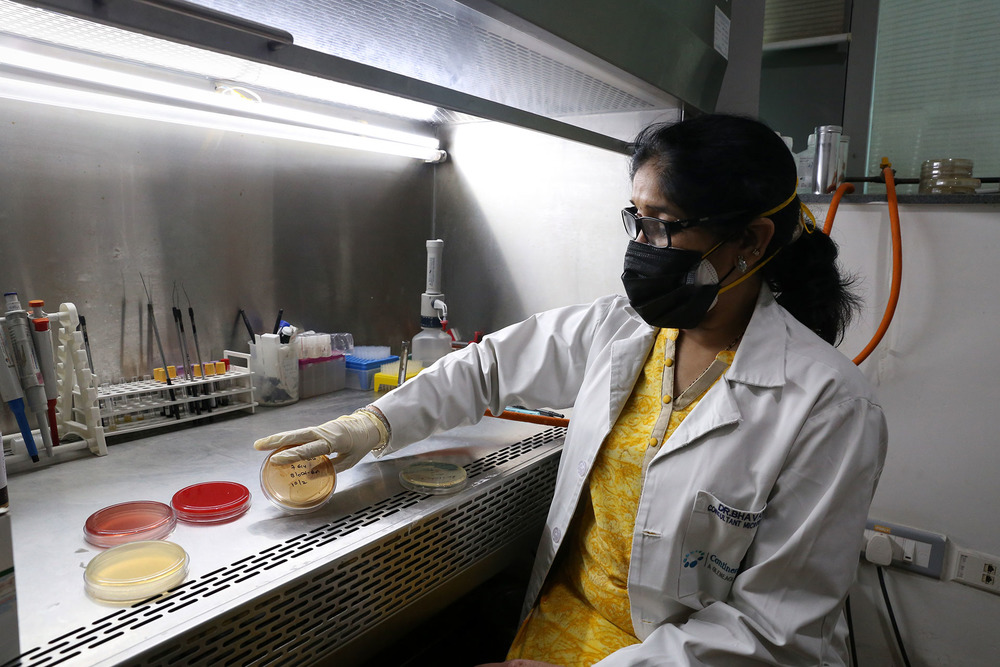
A new scientific investigation has found that untreated hospital effluents entering Hyderabad’s drainage network are accelerating the spread of antibiotic resistant bacteria, raising concerns about urban wastewater management and long-term public health resilience. Researchers analysing samples from city drains and stretches of the Musi River have detected high concentrations of drug-resistant pathogens, particularly near major healthcare clusters.
The study, conducted by scientists from Centre for Cellular and Molecular Biology and Tata Institute for Genetics and Society, examined water samples from 17 locations, including open drains and river segments within a two-kilometre radius of multi-speciality hospitals. Their findings indicate that hospital-linked sewage carries residual antibiotics that persist in municipal wastewater systems.Public health researchers explain that hospitals routinely administer last-resort antibiotics to treat critical infections. When wastewater from laundry systems, cleaning processes or clinical operations enters civic drains without advanced treatment, it can contain low doses of these medicines. Such concentrations may not eliminate bacteria but instead encourage them to develop and exchange resistance genes.
The analysis identified nearly 90 pathogenic organisms in sampled sewage, many linked to urinary tract infections, pneumonia and gastrointestinal illnesses. Several strains showed resistance to widely used antibiotics, including azithromycin and tetracycline. Drains located close to hospital clusters exhibited a higher diversity of resistance markers compared with other sites.The presence of antibiotic resistant bacteria in open drains has implications beyond hospital premises. In dense urban areas, untreated wastewater often flows into natural water bodies such as the Musi River, which passes through residential neighbourhoods and peri-urban agricultural zones. Environmental experts warn that such contamination can affect groundwater, irrigation systems and downstream communities.
Urban infrastructure specialists argue that the findings highlight a systemic gap in wastewater governance. While biomedical solid waste disposal has seen regulatory tightening in recent years, liquid effluents require more sophisticated pre-treatment before entering municipal sewer lines. Advanced effluent treatment plants (ETPs) within hospital campuses, coupled with regular monitoring, could reduce antibiotic load at the source.From a city planning perspective, Hyderabad’s rapid healthcare expansion has outpaced parallel upgrades in sewage networks. As the metropolitan region positions itself as a medical and life sciences hub, aligning infrastructure investment with environmental safeguards becomes critical. Experts note that antimicrobial resistance is not only a health crisis but also an economic risk, potentially increasing healthcare costs and productivity losses.
Strengthening decentralised wastewater treatment, enforcing discharge standards and investing in modern sewer infrastructure are emerging as priorities. Without such measures, antibiotic resistant bacteria could undermine both public health and the sustainability credentials of a growing city.For Hyderabad, the study serves as a reminder that resilient urban development depends as much on invisible systems — drains, treatment plants and regulatory oversight — as on visible growth. The next phase of infrastructure planning may determine whether the city can contain a silent but escalating biological threat.
Also Read:Bengaluru Peripheral Ring Road Faces Traffic And Environmental Concerns
Hyderabad Antibiotic Resistant Bacteria Alarm
