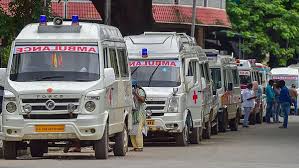
A major safety gap in Hyderabad’s emergency healthcare system has come into focus, with nearly half of Telangana’s ambulances reportedly operating without mandatory fitness certification. The lapse raises serious concerns about patient safety, regulatory enforcement, and the reliability of critical urban health infrastructure at a time when demand for emergency services continues to rise.
Recent assessments indicate that out of more than 10,000 registered ambulances in the state, around 5,400 lack valid fitness certificates, while a significant share have exceeded their operational lifespan. These inspections, required under transport regulations, are meant to ensure roadworthiness and functionality of life-saving equipment—making their absence particularly alarming.The Hyderabad ambulance safety crisis highlights deeper structural issues in enforcement and oversight. Despite legal mandates for annual inspections, compliance remains weak, with only limited penalties imposed on violators. Officials acknowledge that monitoring challenges are compounded by the large number of privately operated ambulances, many of which are attached to smaller hospitals and operate with minimal regulatory scrutiny.For urban systems, the implications extend beyond healthcare. Ambulances are a critical link in the “golden hour” response chain, where timely and safe transport can determine survival outcomes. Faulty vehicles or unverified equipment introduce risks not only for patients but also for other road users, particularly in densely populated cities like Hyderabad.
The issue is further complicated by operational misuse. Authorities have flagged widespread improper use of emergency features such as sirens, with a large proportion of ambulances reportedly not adhering to standard protocols. Such practices dilute the effectiveness of emergency response systems and contribute to traffic inefficiencies in already congested urban corridors.Urban planners and public health experts argue that the Hyderabad ambulance safety crisis reflects a broader gap in integrating transport regulation with healthcare delivery systems. While investments in hospitals and medical infrastructure have increased, supporting systems like emergency transport have not kept pace in terms of quality control and governance.The problem also exposes inequities within the healthcare ecosystem. Publicly operated ambulance networks tend to follow stricter protocols, while private operators—often catering to smaller facilities or informal demand—may cut costs on maintenance and compliance. This creates uneven service quality across different segments of the population.
From a policy standpoint, experts recommend a coordinated approach involving transport authorities, health departments, and law enforcement agencies. Measures such as digital tracking of fitness certificates, stricter penalties for non-compliance, and periodic joint inspections could help improve accountability.There is also a growing case for integrating technology into emergency response systems, including real-time monitoring of vehicle condition and driver compliance. Such interventions could enhance both safety and efficiency, particularly in large urban regions.
As Hyderabad continues to expand, ensuring the reliability of emergency mobility systems will be critical to building resilient cities. Addressing the Hyderabad ambulance safety crisis is not just a regulatory necessity—it is central to safeguarding public health and maintaining trust in essential urban services.